Pilates for Women Over 50
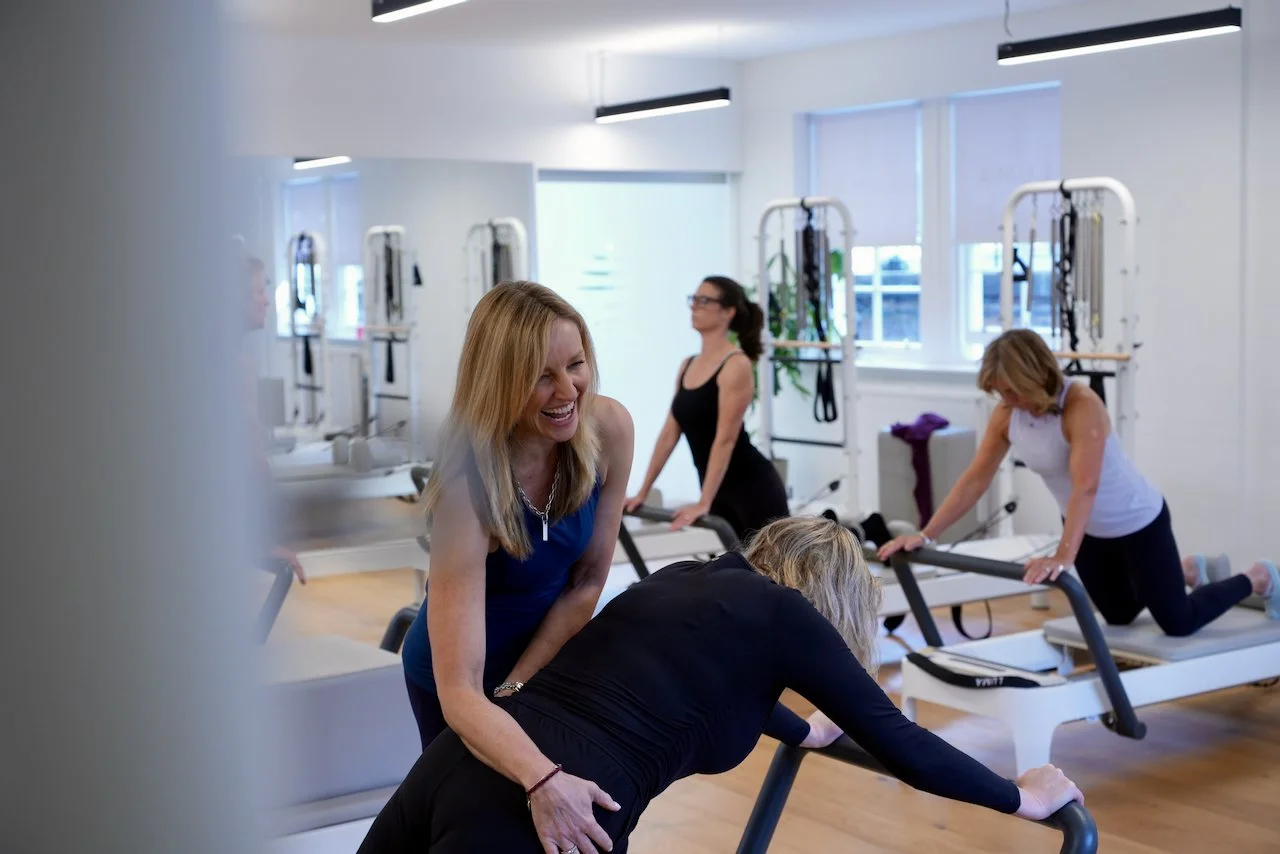
Reformer Pilates at Luma Pilates, Edinburgh. Expert instruction in a small group setting, exactly what makes the practice work for women over 50
Short answer
Reformer Pilates is one of the most effective movement practices available to women over 50. It builds and maintains muscle mass, supports bone density, develops the joint stability that matters more with each decade, and produces flexibility gains that most women in this age group have stopped expecting. The results are consistent, the practice is sustainable, and the entry point is wherever you currently are.
I have been teaching Pilates for 26 years. The clients I see making the most consistent, most transformative physical progress at Luma are often in their fifties and sixties. Not despite their age. Because of what they bring to the practice: patience, self-knowledge, and a genuine motivation to move well rather than just move hard.
This guide is for women in that group, or approaching it, who are trying to understand whether Reformer Pilates is right for them. The short answer is yes. Here is the longer one.
What changes in the body after 50
The physical changes that accompany the years after 50 are real, and understanding them makes it easier to understand why Reformer Pilates addresses them so directly.
Muscle mass decreases more rapidly without resistance training to counteract it. Bone density reduces, increasing the risk of osteoporosis over time. Joint stability can decrease as connective tissues change. The posterior chain, the muscles of the glutes, hamstrings, and back, tends to weaken progressively if not specifically trained. Posture shifts. The thoracic spine stiffens. Hip flexors shorten.
None of this is inevitable in the sense of being irreversible. But it does not reverse on its own. It requires the right kind of movement, done consistently, over time.
Why Reformer Pilates is particularly well suited to this stage
The Reformer addresses the specific physical changes of this stage of life with a precision that most other forms of exercise cannot match.
It builds and maintains muscle mass. The spring resistance of the Reformer provides genuine load for the muscles, stimulating the kind of adaptation that counteracts age-related muscle loss. Unlike high-impact exercise, it does this without placing excessive stress on joints that may already be managing the effects of decades of use.
It supports bone density. Resistance-based and weight-bearing exercise are among the most effective ways to maintain bone density. The Reformer provides both, across a wide range of movement patterns and loading angles. This is not a marginal benefit. For women in their fifties and beyond, it is one of the most significant long-term investments a movement practice can make.
It develops flexibility in ways that stretch-based approaches do not. One of the things clients in this age group mention most consistently is the flexibility gains. Not the modest, temporary kind that comes from a stretching routine, but lasting changes in range of movement that they had stopped expecting. The Reformer achieves this through eccentric loading, strengthening muscles in lengthened positions, which signals to the nervous system that extended ranges are safe and supported. See our guide to Does Pilates Improve Flexibility for more on how this works.
It stabilises joints without loading them excessively. The deep spinal stabilisers, the deep hip rotators, and the muscles around the shoulder girdle are exactly the muscles that protect joints under load. Pilates trains them directly and consistently, in a controlled environment that does not ask the joints to do more than they currently can.
It is sustainable. This is not a minor point. The practice needs to be one the body can sustain over years, not weeks. The low-impact, controlled nature of Reformer Pilates makes it genuinely sustainable through every decade that follows.
Lower back pain, posture, and scoliosis
Lower back pain is one of the most common reasons women over 50 come to Luma. The combination of decades of sitting, hormonal changes affecting connective tissue, and the progressive weakening of the deep spinal stabilisers creates a pattern that Reformer Pilates addresses directly and consistently. See our full guide to Pilates for lower back pain.
Postural change is one of the results clients in this group notice most visibly. The shoulder rounding, the forward head position, the compressed upper back that accumulates over decades of desk work and daily life responds well to the specific muscular work of the Reformer. See our guide to Why Pilates Improves Posture.
For clients with scoliosis, the Reformer's precise, adjustable resistance and the emphasis on spinal alignment and stabiliser activation make it one of the most appropriate forms of exercise available. Tell your instructor about your diagnosis before class. The more we know, the better we can support your practice from the very first session.
Recovery after surgery
Last July I had a hip replacement. I am telling you this not to be self-referential but because my recovery has been the most direct evidence I’ve encountered, from the inside, of what consistent Pilates practice does for the body's ability to rebuild itself.
The deep stabiliser strength, the body awareness, and the movement quality built through years of practice meant my recovery was faster and more complete than my surgical team expected. I was back on the Reformer within weeks. I am now moving better than I was before the surgery.
Hip and knee replacements are increasingly common among women in their fifties and sixties, and the recovery period is one where Reformer Pilates has a direct and meaningful role. The controlled, low-impact nature of the machine means it is accessible at a much earlier stage of rehabilitation than most other forms of exercise. If you are preparing for or recovering from joint replacement surgery, speak to your surgeon or physiotherapist first, and then come and talk to us. See our guide to Pilates after hip replacement for more on what recovery can look like.
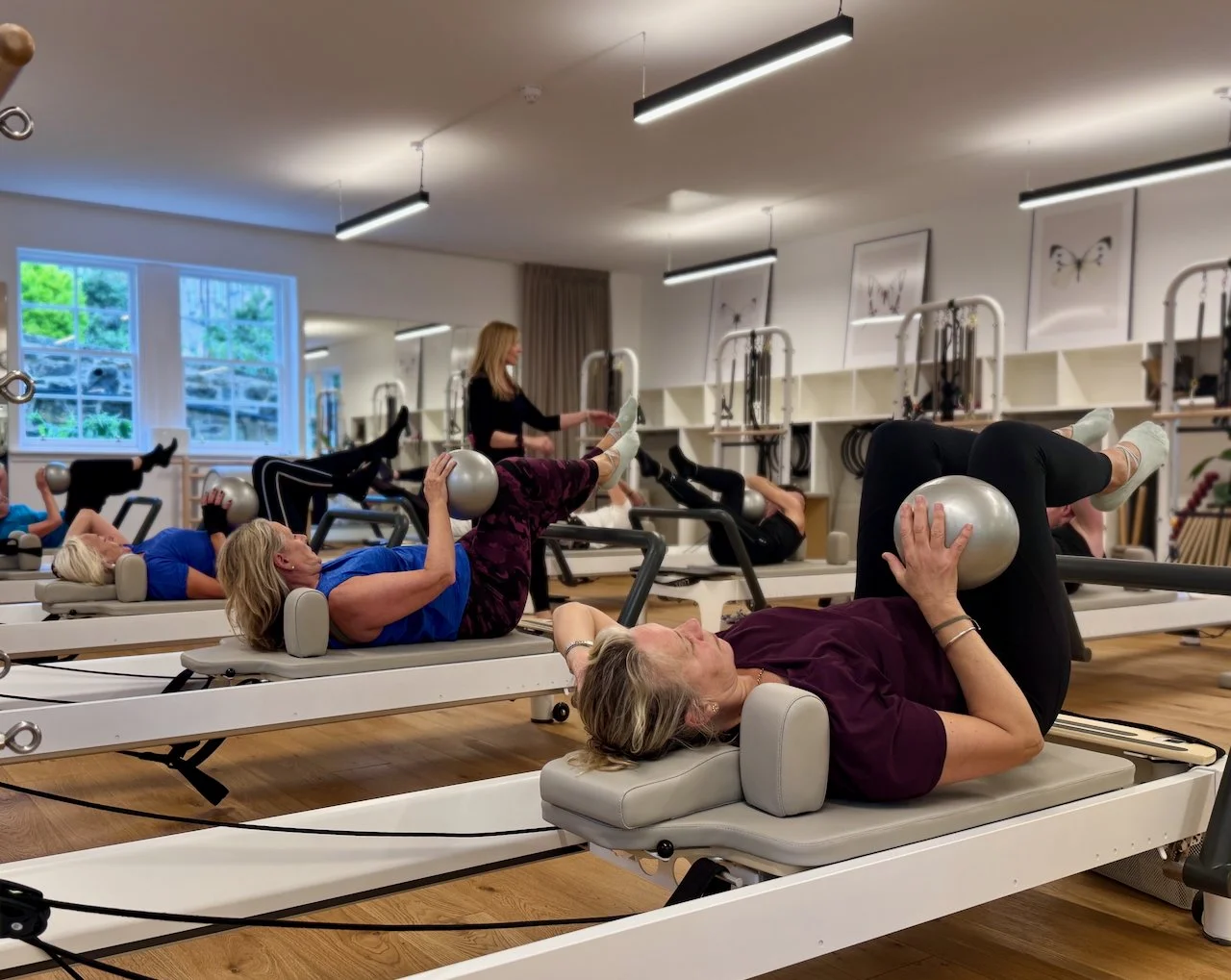
A group Reformer class at Luma Pilates, Edinburgh. Precise, supported work that builds the strength and stability that matters more with each decade
Pilates and Yoga in recovery from illness
Some of the most meaningful conversations I have had at Luma have been with clients who came to us during or after treatment for cancer. I want to be direct about what Pilates and Yoga can offer in this context, and what they cannot.
They are not treatments. They do not cure anything. What they offer is a practice that supports the body's physical resilience, that develops strength and mobility in a controlled and sustainable way, and that provides a community of people who are also showing up, week after week, for their own reasons.
For clients who have been through chemotherapy, surgery, or radiotherapy, the physical deconditioning can be significant. The Reformer's adjustable resistance means it meets the body wherever it currently is. The low-impact nature means it does not ask more than the body can currently give. And the community at Luma, the instructors and the clients who fill the studio each week, offers something that is genuinely hard to quantify but consistently reported as one of the most important parts of the experience.
If you are in treatment or recovery and considering Pilates or Yoga, please speak to your oncologist or medical team first. And then come and talk to us. We will take it from there.
Yoga as a complement
For women over 50, adding Yoga alongside Reformer Pilates produces a more complete practice than either in isolation. The nervous system support, the flexibility and joint mobility work, and the psychological dimension of a well-taught Yoga class address aspects of physical and mental health that the Reformer approaches less directly.
At Luma, Kat Aydin is a fully qualified Yoga for Perimenopause and Menopause instructor. If the hormonal dimension of the transition is relevant to where you are, her classes and our guide to Pilates and Yoga during menopause are the right next step.
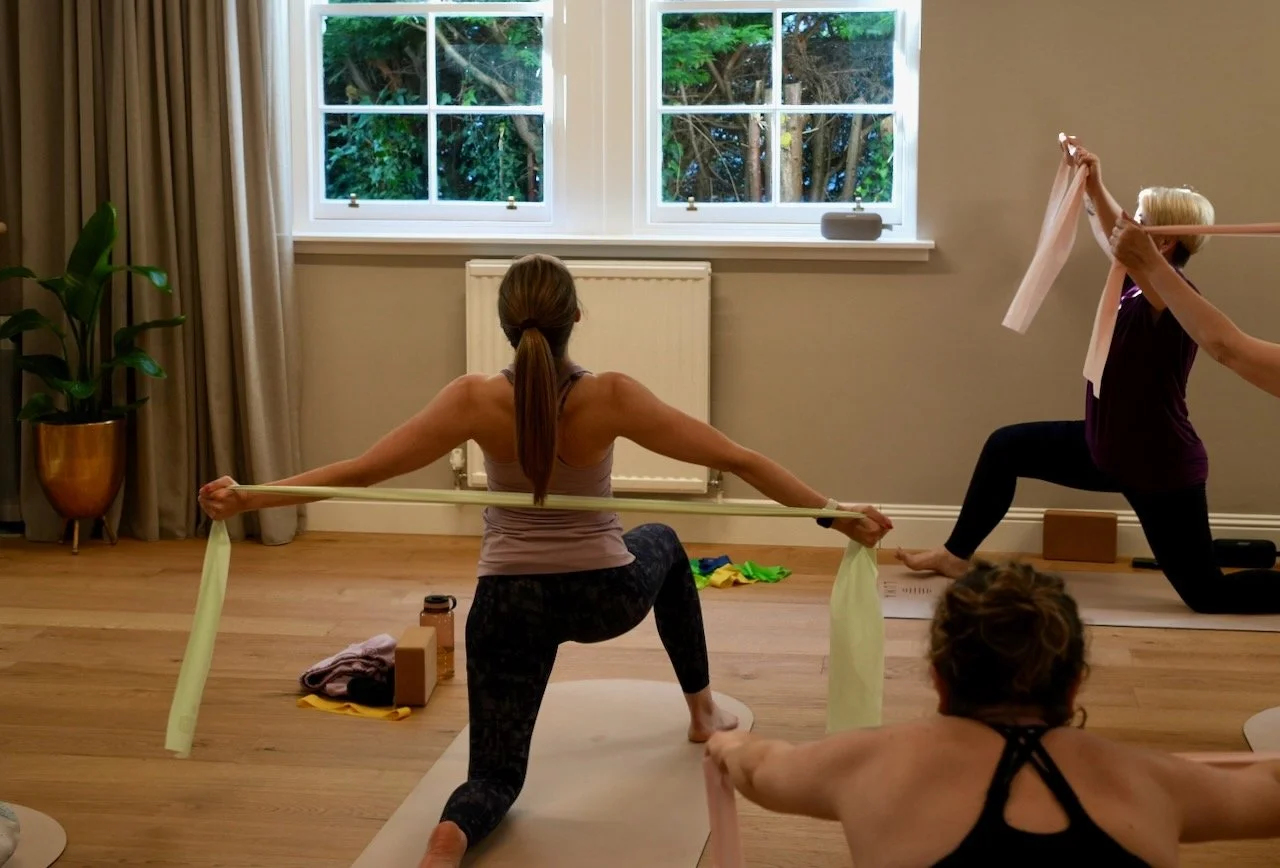
Yoga at Luma Pilates, Edinburgh. A natural complement to Reformer Pilates for women over 50, taught by specialist instructor Kat Aydin
Where to start
If you are new to Reformer Pilates, Reformer Fundamentals is the right entry point. The class is designed for people who are new to the machine, regardless of age or fitness level. Nothing is assumed and nothing is rushed.
And if you’d prefer to begin with a private session, a 1:1 gives your instructor the space to understand your specific background and design the session around your body. Private sessions at Luma start at £90. View all pricing.
Our introductory offer of 3 Reformer or Tower classes for £48 is designed for exactly this starting point. View our class schedule, browse all classes, or get in touch if you would like to talk through your situation before booking. It is always a conversation worth having.
Frequently asked questions
Is Reformer Pilates good for women over 50? Yes. Reformer Pilates builds and maintains muscle mass, supports bone density, develops joint stability, and produces lasting flexibility gains. It is low impact and sustainable through every decade that follows. At Luma Pilates in Edinburgh, many of our most committed and consistent clients are women in their fifties and sixties.
Can I start Reformer Pilates if I've never done it before? Yes. Reformer Fundamentals at Luma is designed specifically for people who are new to the machine, regardless of age or fitness level. Nothing is assumed and nothing is rushed.
Is Pilates good for bone density after 50? Yes. Resistance-based and weight-bearing exercise are among the most effective ways to maintain bone density. The Reformer provides both, across a wide range of movement patterns and loading angles. This is one of the most significant long-term benefits of consistent Reformer practice for women in this age group.
Can Pilates help with menopause symptoms? Yes. Reformer Pilates builds muscle mass and supports bone density, both of which become more important through perimenopause and menopause. At Luma, Kat Aydin also teaches specialist Yoga for Perimenopause and Menopause classes. Our guide to Pilates and Yoga during menopause covers this in more detail.
Is Pilates safe after hip or knee replacement? In most cases, yes. The controlled, low-impact nature of the Reformer makes it accessible at a much earlier stage of rehabilitation than most other forms of exercise. Speak to your surgeon or physiotherapist first. See our guide to Pilates after hip replacement for more on what recovery can look like.
How often should women over 50 do Pilates? Two sessions per week produces the clearest and most consistent results. One session per week is genuinely useful and maintains what you build. Our guide to How often you should do Pilates covers frequency and programming in more detail.
Written by Lucia Poulter
Lucia is lead instructor and co-founder at Luma Pilates, with 26 years of teaching experience and Comprehensive BASI certification. She has worked with women at every stage of life and has a clear view of what the practice does for the body over time. She also knows it from the inside: her recovery from a hip replacement last year was faster and more complete than anyone expected. She teaches Reformer Pilates at Luma.