
How Often Should I Do Pilates?
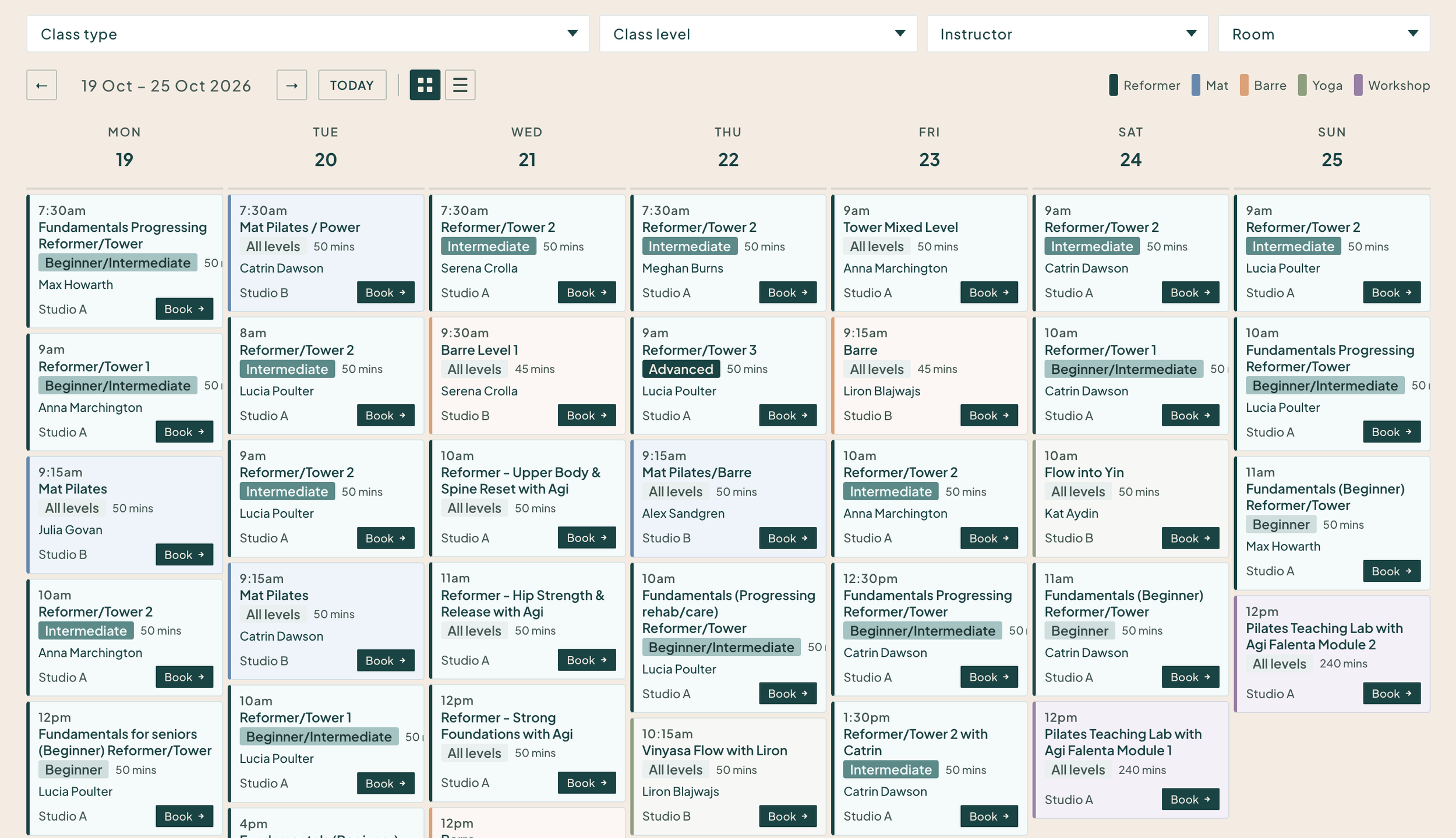
A typical week at Luma. Classes running seven days, across all levels, from 7.30am.
Short answer
Most people benefit from two to three Pilates sessions per week. One session a week is a sustainable and worthwhile practice, particularly alongside other exercise. Three sessions suits those who want Pilates to be a significant part of their training week. The most effective schedule is the one you can maintain consistently.
The principle that matters most
Pilates rewards consistency more than short bursts of enthusiasm.
Two steady sessions a week for several months will usually give you more opportunity to develop than five classes crammed into a fortnight followed by three weeks away. Strength, coordination, body awareness, and familiarity with the movement vocabulary all build through repetition over time.
That does not mean you need to come several times a week for Pilates to be worthwhile.
One regular class can still give you a meaningful point of movement in your week, particularly if Pilates sits alongside walking, running, cycling, gym training, Yoga, or other activity.
UK physical activity guidance recommends that adults include both aerobic activity and muscle-strengthening work across the week. Pilates can contribute to the strengthening side of that picture and, depending on the class and the individual, may also contribute some moderate-intensity activity. It should not automatically be counted minute-for-minute toward an aerobic target.
The useful question is not whether Pilates alone ticks every exercise box. It’s where it fits within the rest of your week.
Once a week: a solid anchor
One class a week is a legitimate and sustainable practice for many people.
At this frequency, you have regular exposure to the exercises, cueing, and movement principles without needing Pilates to dominate your schedule. If you are also active in other ways, that may be exactly what you need.
If you are new to the Reformer, one weekly session in Reformer Fundamentals can also give you time to absorb what you have learned before coming back to it.
Once a week is not a magic maintenance dose, and it will not produce the same training volume as two or three sessions. It is simply one useful way of practising consistently.
Can Pilates once a week make a difference?
Yes. One session a week is enough to maintain regular movement, build familiarity with the exercises, and experience the cumulative benefits of a consistent practice. It will not produce the same training volume as two or three sessions, but for many people – particularly those with full schedules or who are active in other ways – it is a meaningful and sustainable commitment.
A rough way to think about frequency is:
| Goal | A useful starting point |
|---|---|
| Pilates alongside other exercise | Around 1 session per week |
| Building a regular Pilates practice | Around 1 to 2 sessions per week |
| More opportunity to build familiarity and strength | Around 2 to 3 sessions per week |
| Pilates as a major part of your training week | 3 or more sessions, if recovery and schedule allow |
Twice a week: where the practice starts to compound
Two sessions a week is where many Luma clients find Pilates fits naturally into their routine.
At this frequency, there is less time between sessions, so the movement vocabulary tends to feel familiar more quickly. You have more opportunities to practise the same principles, build strength, and apply corrections from one session to the next.
Lucia Poulter, Luma's lead instructor with Comprehensive BASI certification and 26 years of teaching experience, often recommends two or three sessions a week to clients who want Pilates to play a significant role in their exercise routine.
That is not because there is a physiological threshold at two sessions.
It is simply enough regular exposure for the work to become familiar without requiring most people to organise their entire week around it.
If twice a week is realistic for you, it is a very good place to settle. If you're attending consistently and want to make the most of it, it's also worth looking at Luma membership and subscription options. Regular attendance is where subscriptions start to make financial sense.
Three times a week: purposeful progress
Three Pilates sessions a week gives you considerably more exposure to the method.
For someone who enjoys Pilates, wants to develop their practice more quickly, or uses it as a major part of their strength and movement work, that can be a very good fit.
More sessions mean more opportunities to practise, but they do not guarantee a particular result within a particular number of weeks. Changes in strength, mobility, confidence, and movement depend on the individual, the content and challenge of the sessions, recovery, and what else is happening in their life.
At three sessions a week, mixing class types can also be useful.
You might combine Reformer Pilates with Mat Pilates, Barre, or Yoga, depending on what you enjoy and what you want from your week.
Variety is optional, not compulsory. If you love the Reformer and want to do three appropriately levelled Reformer sessions, that can work perfectly well too.
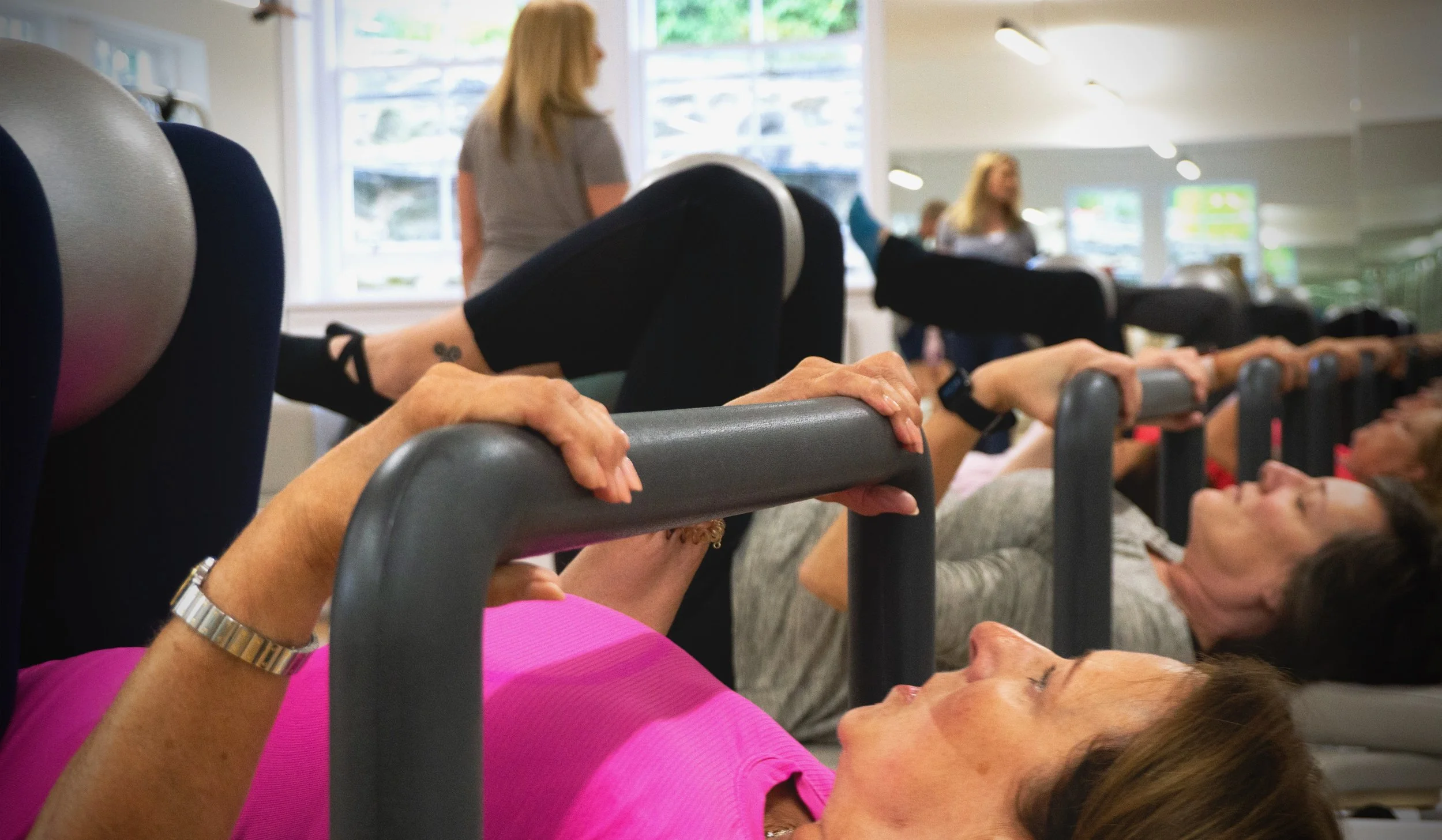
A Reformer class at Luma Studio A. Three weekly sessions give you more opportunities to practise and progress
Does it matter which classes you do?
Yes, because frequency and progression are not the same thing.
If your goal is to develop your Reformer practice, your sessions should be at the level appropriate for you. Doing more classes does not mean you should move through the levels more quickly.
At Luma, the progression is:
| Level | Suitable for |
|---|---|
| Reformer Fundamentals | Complete beginners, new to the machine |
| Reformer Fundamentals Progressing | Building confidence, foundations established |
| Reformer Pilates 1 | Solid technique, ready for more challenge |
| Reformer Pilates 2 | Strong practice, comfortable with complexity |
| Reformer Pilates 3 | Experienced practitioners, fluent in the vocabulary |
There is no fixed timetable for moving from one level to another. Your instructor will advise when the foundations required for the next class are genuinely in place.
For a full breakdown, see our guide to how to progress through the Luma class levels.
If broader movement variety is what you are looking for, there is also nothing wrong with combining Pilates with Yoga, Barre, running, cycling, swimming, walking, or gym training.
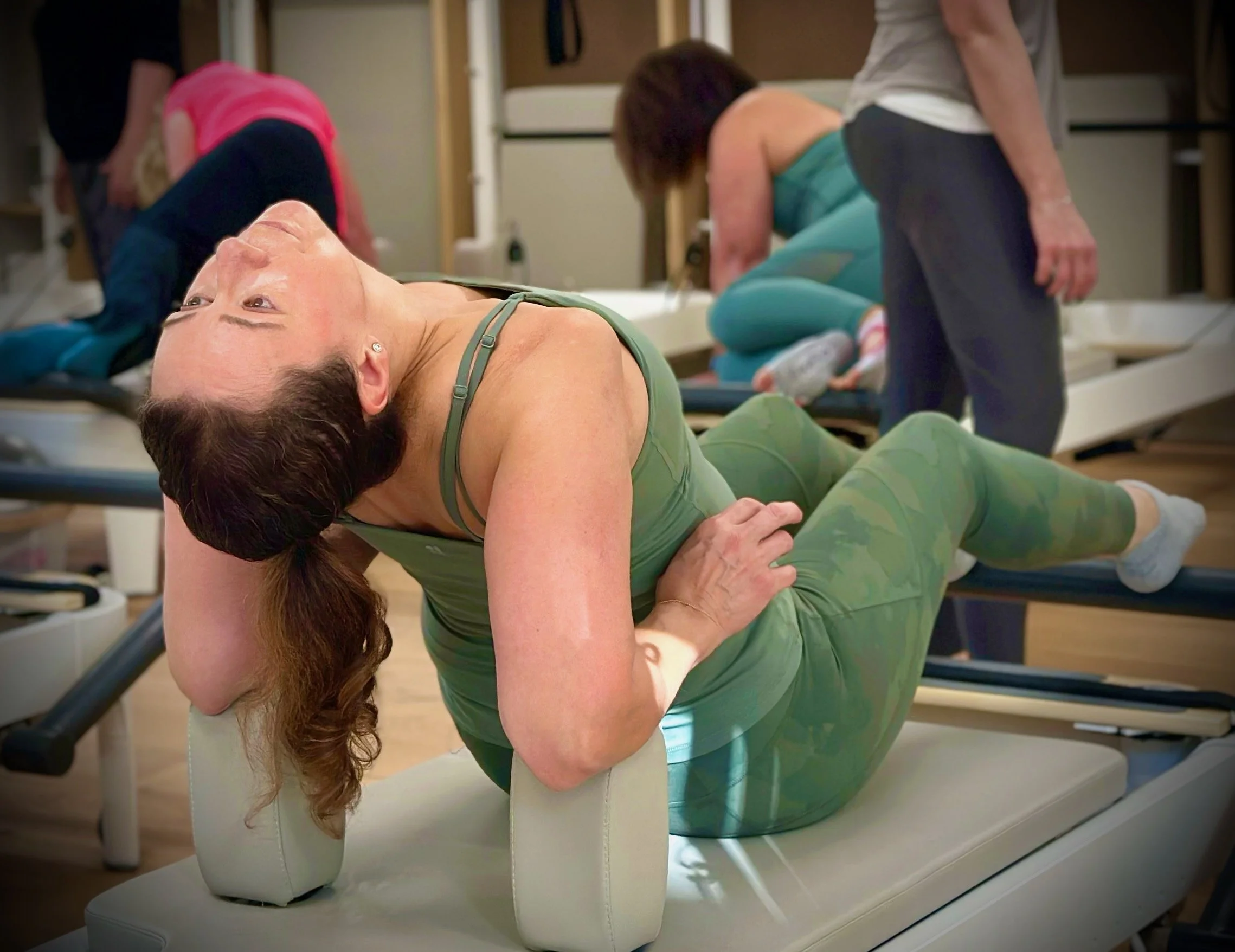
Even within a class, the reformer gives you somewhere to land. Rest is part of the work
What about rest?
Rest still matters.
Pilates is generally lower impact than activities such as running or jumping, but that does not mean every Pilates session is easy or that recovery is irrelevant. A challenging Reformer, Tower, Mat, or Barre class still places demand on muscles and connective tissues.
How much recovery you need depends on the intensity of the sessions, your training history, sleep, general activity levels, and what else you are doing. Some weeks you’ll want more. Some weeks less.
The frequency that actually works
The best schedule is the one you can maintain without Pilates becoming another obligation you constantly fail to meet. That sounds obvious, but it rules out a lot of ambitious plans.
Catrin Dawson, one of our Reformer and Mat instructors, came to Pilates through injury. Not as someone looking for another fitness challenge, but as someone trying to rebuild confidence in movement.
She has practised consistently ever since, and that experience shapes how she teaches clients who are working around their own limitations.
Her view on frequency is simple: after a while, she stopped thinking about how often she should practise and became more aware of how she felt when she had not moved for a while.
A lot of long-term clients describe something similar.
The question gradually stops being, What is the perfect number of classes?
It becomes, What amount of Pilates makes sense in my life right now?
That is a much more useful question. Here are a few of the most common ones answered directly.
Is Pilates twice a week enough?
Yes. For many people, two Pilates sessions a week is a practical and sustainable frequency. It gives you regular opportunities to practise the movements, build strength and apply corrections from one session to the next without requiring Pilates to dominate your training week.
How often should beginners do Pilates?
For many beginners, one to two sessions a week is a manageable starting point. That gives you time to learn the movements and recover between sessions. If you are new to Reformer Pilates, starting with an appropriately levelled Fundamentals class matters more than trying to attend as often as possible.
Can you do Pilates every day?
Some people can practise Pilates frequently, but whether daily sessions make sense depends on the intensity of the classes, your experience, recovery and other training. More is not automatically better. Rest and variety still matter, particularly if you are doing challenging Reformer, Mat, Tower or Barre classes.
How to get started
If you’re new to Luma, our introductory offer gives you three sessions to learn how the Reformer works and start working out what sort of routine suits you.
For Reformer, begin with Reformer Fundamentals.
You don’t need to decide in advance whether you are going to become a once-a-week, twice-a-week, or three-times-a-week person.
Start. See how your body responds. See how the classes fit into your week. Then build from there.
View our schedule and browse all classes to find your starting point.
Written by Max Howarth
Max is co-founder of Luma Pilates. He discovered Reformer Pilates in his fifties, expecting very little, and has practised consistently ever since. He will tell anyone who asks that the hardest part is booking the first class. Everything after that tends to sort itself out.