How to Progress Through the Luma Class Levels
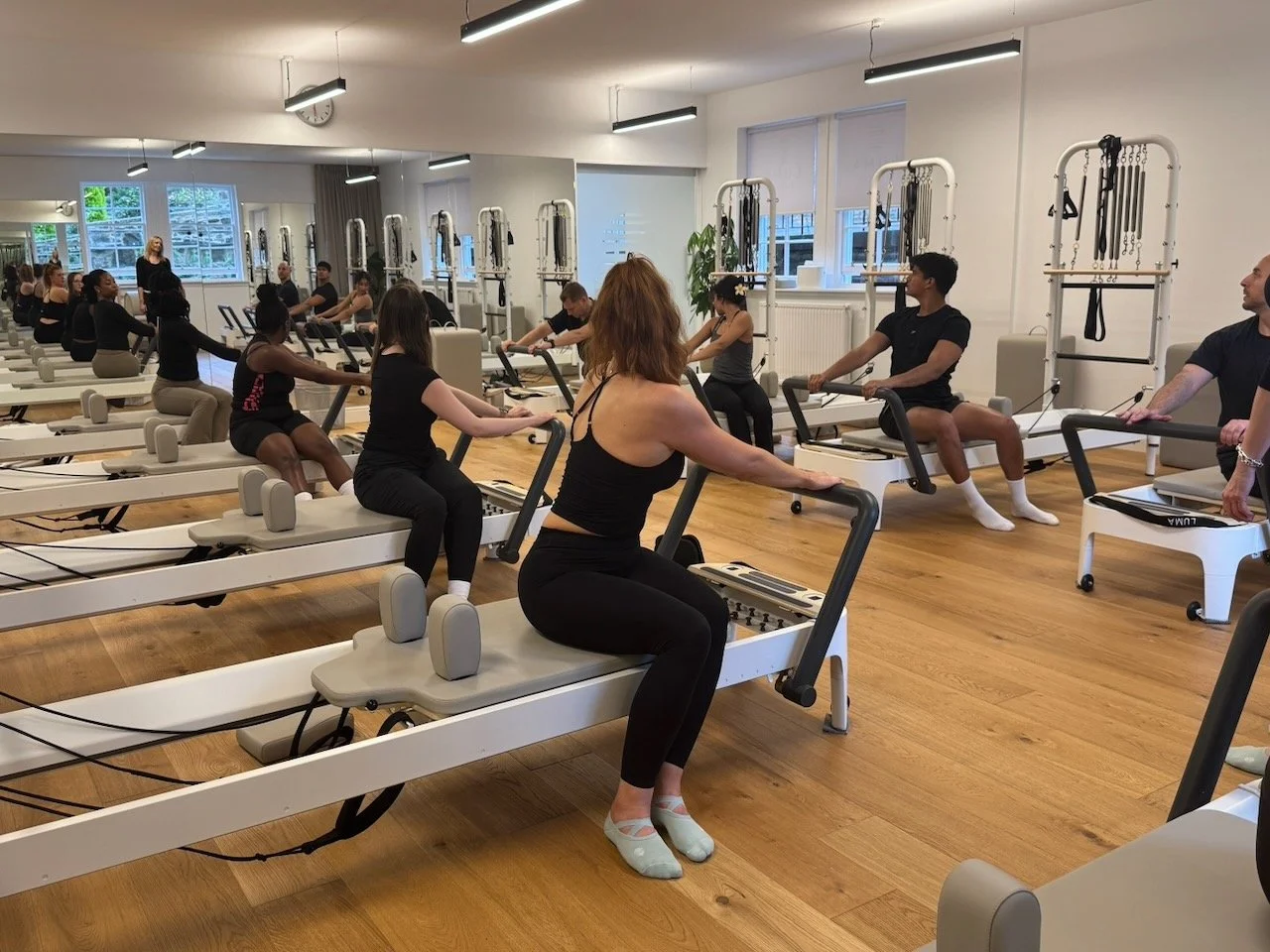
A Reformer class at Luma Pilates, Edinburgh. Every level starts with learning to move well, not just move fast
Short answer
Luma's Reformer classes run from Reformer Fundamentals through Reformer Fundamentals Progressing and into Reformer Pilates 1, 2, and 3. Each level builds on the previous one. Your instructor will advise when you are ready to move up, and that conversation is always open. The most important thing is not to rush it. The foundations are where the real work happens.
One of the questions I hear most often from clients in their first few months at Luma is some version of: how long until I can move up? It's a good question, and it deserves a direct answer.
The progression through Luma's class levels is deliberate. It's not about gatekeeping or keeping people at a lower level longer than necessary. It's about building a practice on foundations that are actually solid, rather than ones that look solid until something more demanding reveals the gaps. In my experience, clients who move through the levels at the right pace progress faster and more sustainably than those who jump ahead.
Here’s what each level involves, what it’s building toward, and how to know when you are ready for the next one.
Reformer Fundamentals
Reformer Fundamentals is where everyone begins. It doesn't matter whether you are fit, flexible, or experienced in other forms of exercise. The Reformer is a specific environment with its own logic, and Fundamentals is where you learn it.
In Fundamentals you'll learn how the machine works: how the carriage moves, how the springs create resistance, how to set the footbar and headrest for your body, and how to use the straps safely and effectively. You'll learn the foundational movement vocabulary of the practice: footwork, leg press, spinal articulation, pelvic alignment, and basic arm and abdominal work.
More importantly, you'll begin to develop centring, the ability to initiate movement from the deep spinal stabilisers rather than the superficial muscles. This is the single most important skill in Pilates, and it takes time to develop. Fundamentals is where that process begins.
Most clients spend several weeks in Fundamentals before moving on. There's no fixed timeline. What matters is that the foundational patterns are genuinely established, not just approximately correct.
Reformer Fundamentals Progressing
Fundamentals Progressing is a bridge. It assumes you understand the machine and the basic movement principles, and it begins to introduce more complexity and more demand.
The exercises in this level build on the Fundamentals vocabulary and start to layer in more challenging variations. The pace is still measured and the instruction is still detailed, but the class asks more of your body and your awareness. You will begin to encounter exercises that require genuine strength in the deep spinal stabilisers, more demanding footwork variations, and the early stages of the posterior chain and shoulder girdle work that becomes increasingly central as the practice develops.
This is also the level where body awareness starts to deepen. Clients in Fundamentals Progressing begin to feel the difference between doing an exercise and doing it well. That distinction is what the rest of the progression is built on.
At a glance: the Luma progression
The table below gives a rough sense of where each level sits and how long most clients spend there. The timeframes are approximate: every body is different, and progression is always agreed between you and your instructor based on whether the foundations are genuinely in place, not how many classes you’ve attended.
| Level | Suitable for | Typical timeframe |
|---|---|---|
| Reformer Fundamentals | Complete beginners, new to the machine | First 4 to 8 weeks |
| Reformer Fundamentals Progressing | Building confidence, foundations established | 1 to 3 months |
| Reformer Pilates 1 | Solid technique, ready for more challenge | 3 to 6 months |
| Reformer Pilates 2 | Strong practice, comfortable with complexity | 6 to 12 months |
| Reformer Pilates 3 | Experienced practitioners, fluent in the vocabulary | 12 months plus |
Reformer Pilates 1
Reformer Pilates 1 is where the practice starts to feel like a practice rather than a learning process. The foundations are in place. The class moves with more pace and introduces a wider range of exercises, including more lateral and rotational work, more demanding abdominal sequences, and the beginning of the kinetic chain integration that makes Pilates training distinct from most other forms of exercise.
At this level, Tower work is introduced as a component of the class. The Tower attachment extends the range of possible exercises and adds a vertical dimension to the spring resistance work that the Reformer alone does not offer.
Clients at level 1 are typically working on developing genuine strength in the posterior chain, improving thoracic spine mobility, and building the shoulder stability that underpins more advanced upper body work. The class is physically demanding in a way that Fundamentals is not, and most clients find it challenging in new and productive ways.
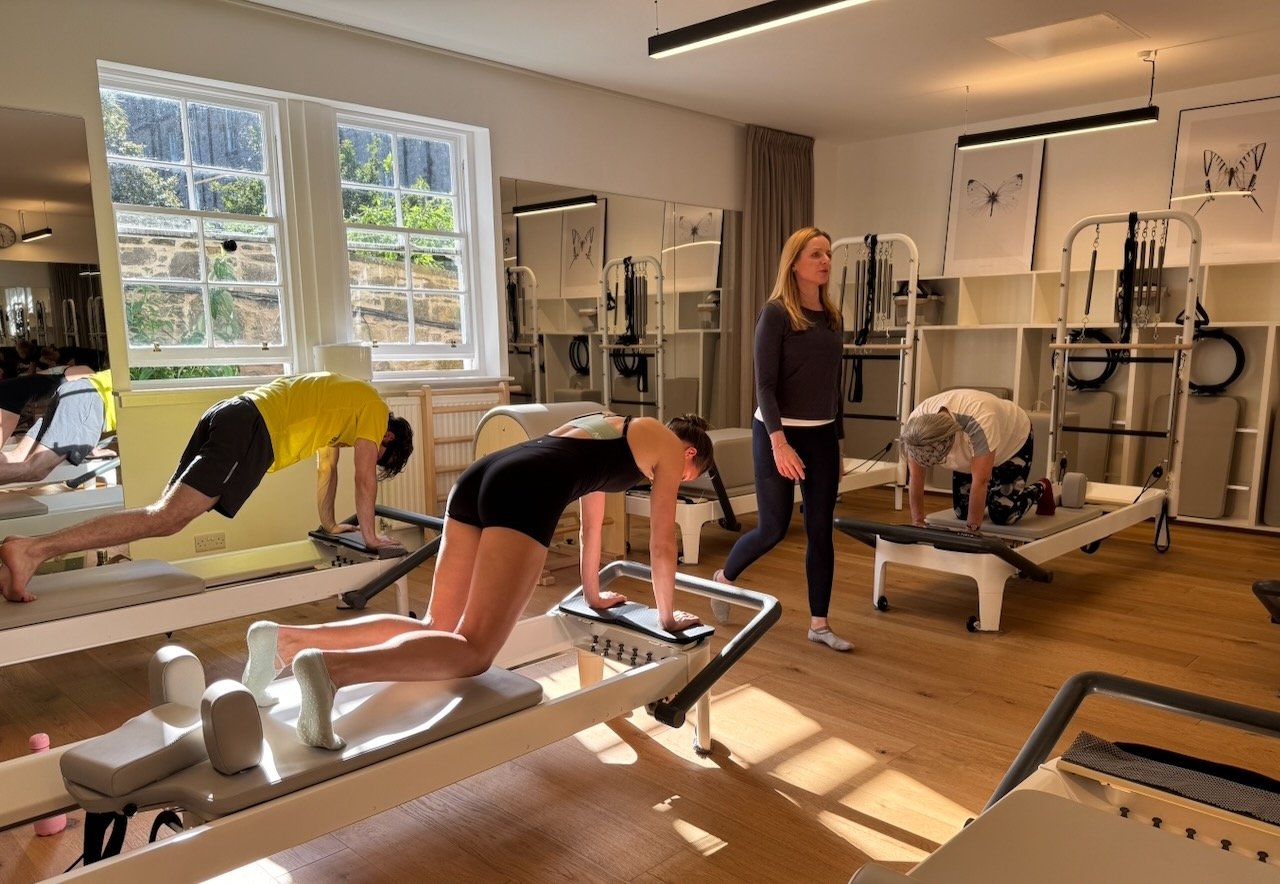
Reformer Pilates 2 at Luma Pilates, Edinburgh. Where consistency starts to show
Reformer Pilates 2
Reformer Pilates 2 develops everything introduced at level 1 with greater complexity, greater range, and greater demand on the body's ability to stabilise under load. The exercises are more varied, the transitions are faster, and the class requires a level of body awareness and stabiliser strength that takes consistent practice to develop.
At this level, single-leg work becomes more central. The lateral and rotational challenges increase. The kinetic chain work requires the whole body to function as a coordinated system rather than a collection of parts. For runners, desk workers, and anyone training for athletic performance, this is the level where the carryover to everyday movement and sport becomes most direct.
The Tower work at level 2 introduces more demanding sequences and requires a confident understanding of how to work with the spring resistance in both directions.
Reformer Pilates 3
Reformer Pilates 3 is the most advanced class in the Luma progression. It’s for clients who have developed a strong, confident practice and are ready for exercises that require significant strength, control, and body awareness.
At this level, the exercises are complex, the demands on the deep spinal stabilisers and posterior chain are substantial, and the class moves with a pace and precision that assumes fluency with the Reformer and its vocabulary. This is not a level to arrive at quickly. It is a level to earn.
That said, reaching level 3 is not the end of the practice. It is the beginning of a deeper one. The most experienced practitioners at Luma find that the practice continues to reveal new things and demand new things, regardless of the level they are working at.
View Reformer Pilates 3
How progression actually works
Your instructor will talk to you about progression. It's not something that happens without a conversation, and it's never a judgment about your ability or your effort. It is a practical assessment of whether the foundations are solid enough to support what comes next.
The signals that you are ready to progress are usually clear: the foundational exercises feel genuinely supported rather than effortful, your body awareness has developed to the point where you can feel the difference between correct and incorrect alignment, and you are consistently working at the edge of what the current level asks of you.
The signals that you are not yet ready are equally clear: you are still developing the centring and stabiliser activation that the current level requires, the movement still feels like conscious effort rather than integrated habit, or your instructor can see compensatory patterns that more advanced work would reinforce rather than resolve.
Neither set of signals is a problem. They are simply information. The practice works best when it is honest.
A note on patience
I've taught Pilates for 26 years. The clients who progress fastest are almost never the ones who move through the levels most quickly. They're the ones who do the foundational work thoroughly, who stay curious about what each level is actually asking of them, and who understand that the quality of the practice matters more than the speed of the progression.
The foundations are not a waiting room for the real work. They are the real work. Everything that follows is built on them.
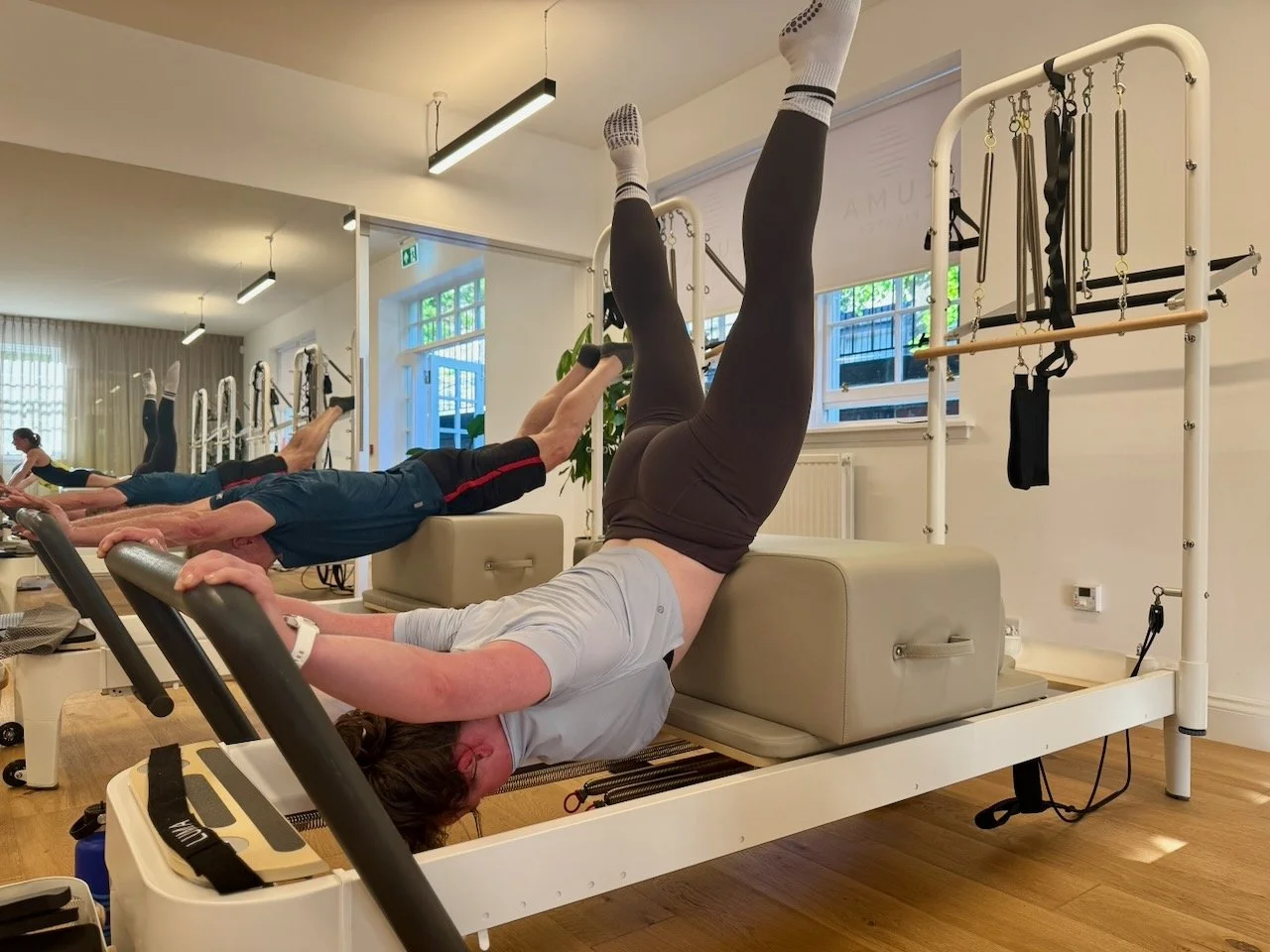
The Swan Dive in a Reformer Pilates 3 class at Luma Pilates, Edinburgh. This is what progression is building toward
Find your starting level
Three questions. No wrong answers, just a rough idea of where to begin. Your instructor will sort the rest.
Have you ever been on a Reformer before?
Where to start
If you’re new to Luma, Reformer Fundamentals is where you begin. If you are unsure which level is right for you, speak to us before booking and we will help you find the right starting point. Get in touch or view our full class schedule to see all levels and times.
Our introductory offer of 3 Reformer or Tower classes for £48 is designed for exactly the Fundamentals phase. Three sessions is enough to understand the machine, begin developing the foundational skills, and make an informed decision about how you want to continue.
Browse all classes or view all pricing.
Written by Lucia Poulter
Lucia is lead instructor and co-founder at Luma Pilates, with 26 years of teaching experience and Comprehensive BASI certification. She has guided hundreds of clients through their Pilates progression, and her view on rushing it has not changed: the foundations are where the practice lives. Everything else follows from there.