
Does Pilates Improve Flexibility?
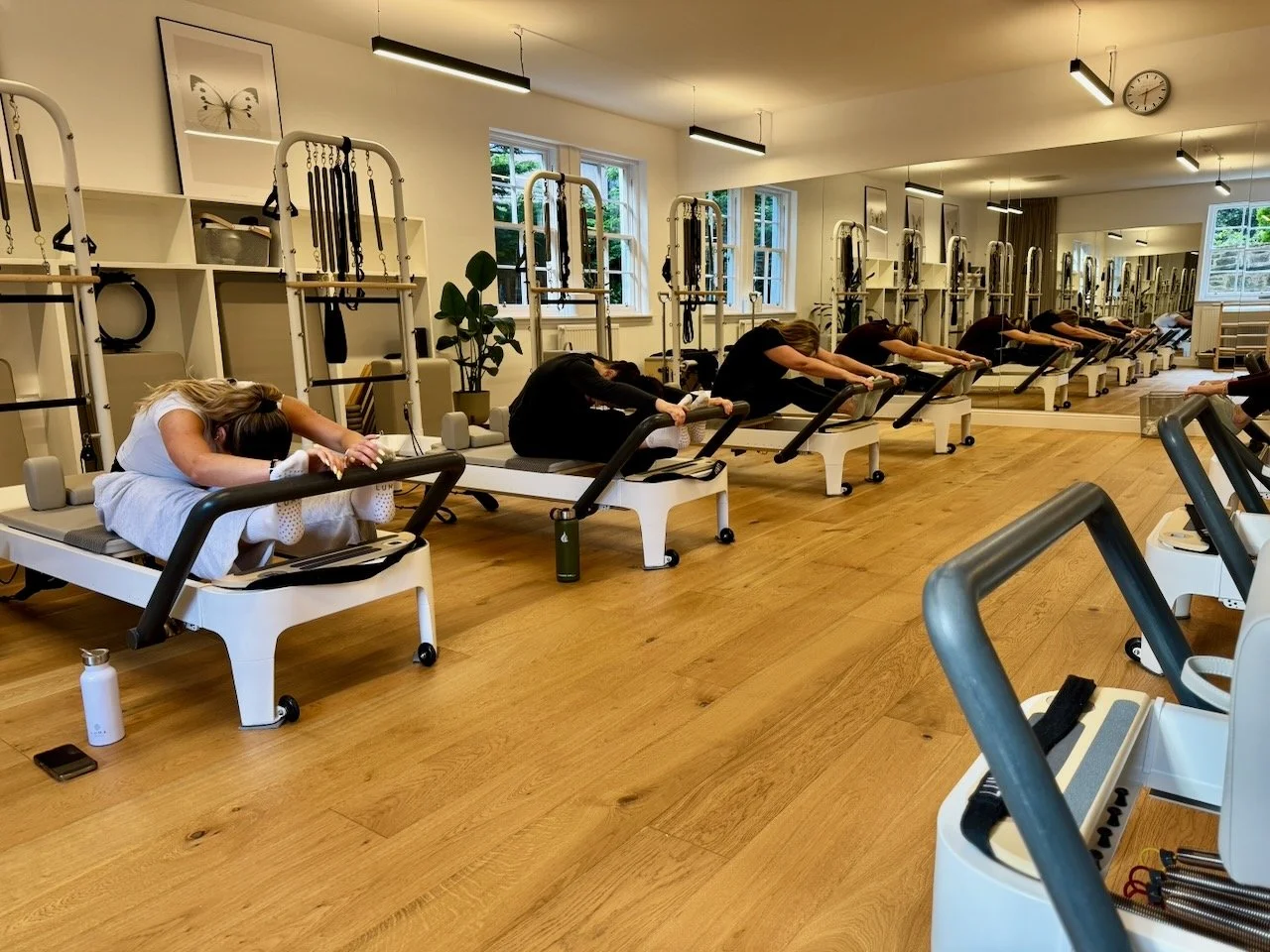
Clients enjoying a lower spine release and hamstring stretch with a forward fold
Short answer
Yes. Pilates improves flexibility through a different mechanism than stretching, and the results are more durable. Rather than applying passive force to a muscle, the Reformer strengthens muscles in lengthened positions and signals to the nervous system that extended ranges are safe. Most clients notice improved range of movement within four to eight weeks of regular practice.
What flexibility actually is
Flexibility is not simply a property of muscles. It is the product of several interacting systems: muscle length, fascial extensibility, joint mobility, and the nervous system's tolerance for lengthened positions.
The nervous system plays a larger role in limiting range of movement than most people realise. When a muscle is stretched, the nervous system monitors the tension and applies a protective brake to prevent what it perceives as potential damage. This brake, not muscle tightness alone, is often the primary limiter of range of movement. It’s why passive stretching produces limited lasting change. You are working against a protective mechanism, not simply lengthening a short tissue.
Effective flexibility training needs to address both the tissue and the nervous system's relationship with it.
How Pilates improves flexibility differently
Reformer Pilates develops flexibility through several mechanisms that passive stretching does not replicate.
It strengthens muscles in lengthened positions. The spring resistance of the Reformer allows muscles to be loaded through eccentric loading, as they lengthen under tension. This develops strength through the full range of movement and, over time, signals to the nervous system that the lengthened position is safe and supported. The protective brake releases not because it has been overridden, but because the nervous system has learned that the body can manage the position.
It works the full kinetic chain. Tightness in one area is rarely isolated. Tight hip flexors are often connected to a stiff thoracic spine, or overactive hip rotators. The Reformer works the body as a connected system, addressing the movement chain rather than individual muscles in isolation.
It develops active flexibility. The distinction between active and passive flexibility matters. Passive flexibility is the range you can achieve when someone else moves your limb. Active flexibility is the range you can control and move through under your own power. Pilates develops active flexibility, which is the kind that translates into better movement in everyday life and sport.
It addresses the fascia. The slow, sustained, multidirectional movement of Reformer Pilates has a meaningful effect on the fascial system, the connective tissue that surrounds and connects muscles throughout the body. Fascial restriction is a significant contributor to the feeling of tightness that many people experience, and it responds much better to the kind of movement Pilates provides than to static stretching.
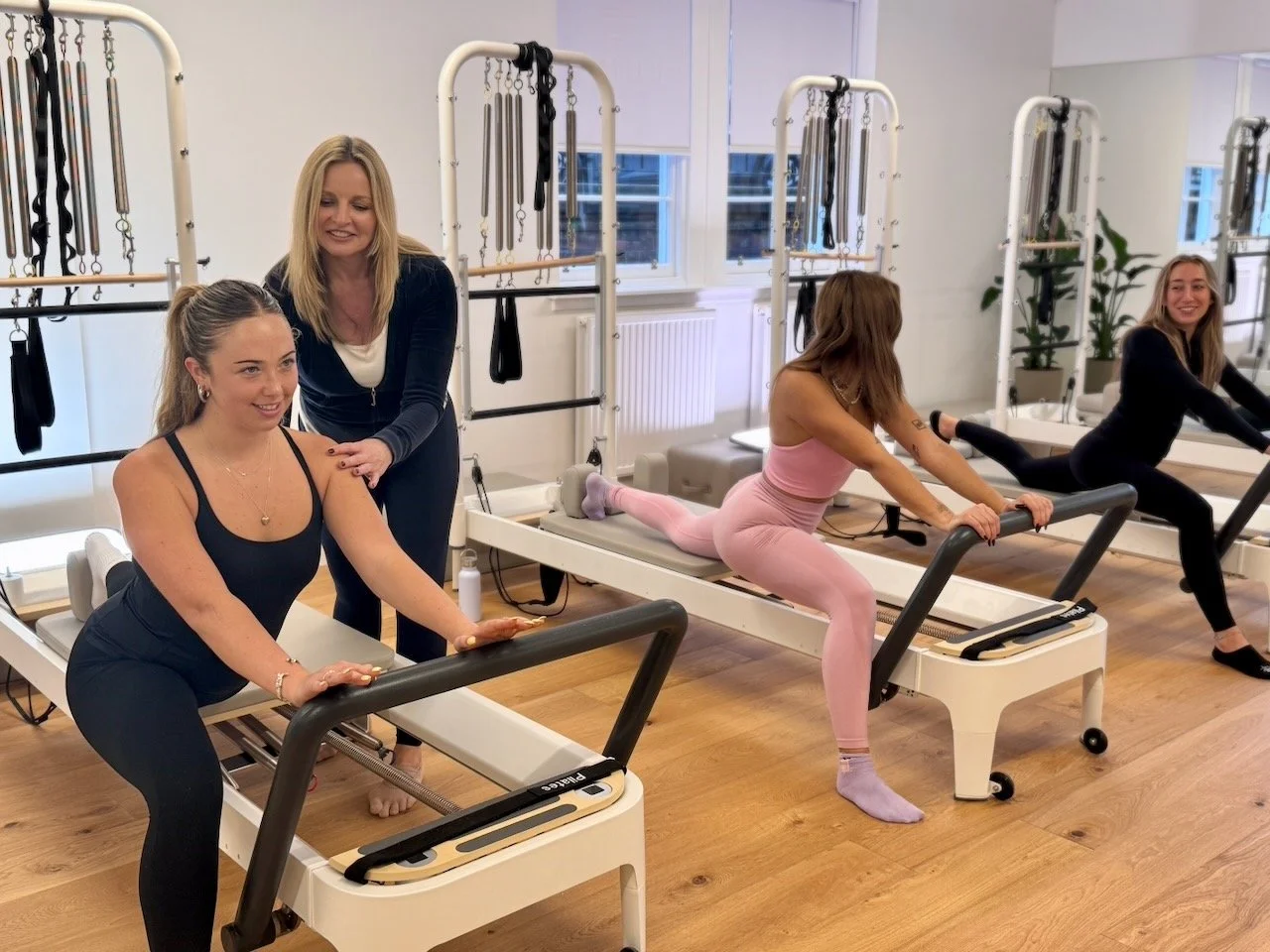
Lucia cueing alignment and range of movement in a Reformer class at Luma Pilates, Edinburgh's New Town
What changes and when
Most clients notice improved range of movement within four to eight weeks of regular practice. The changes tend to be felt first in the hips and the thoracic spine, which are typically the areas most restricted by desk-based lifestyles.
The changes that come from Reformer Pilates tend to be more lasting than those from stretching programmes because they involve genuine neuromuscular adaptation rather than temporary tissue lengthening. The body does not return to its previous state when you stop stretching, because the nervous system's relationship with those positions has changed.
With consistent practice of two to three sessions per week, meaningful, lasting improvements in range of movement are typically established within three to four months.
Flexibility and the other benefits of Pilates
Improved flexibility is rarely the primary reason people come to Luma. It tends to be a welcome consequence of practising for other goals. Clients who come for lower back pain find their hamstrings loosening. Runners who come for injury prevention find their hip flexors releasing in ways that years of stretching never achieved. People who come for posture find their thoracic spine mobile for the first time in years.
This is largely because Pilates addresses flexibility as part of a complete movement practice rather than as an isolated goal. The flexibility gains last because they are built into the practice, not bolted onto it.
See our related guides to why Pilates improves posture and Pilates for lower back pain for more on how these benefits connect.
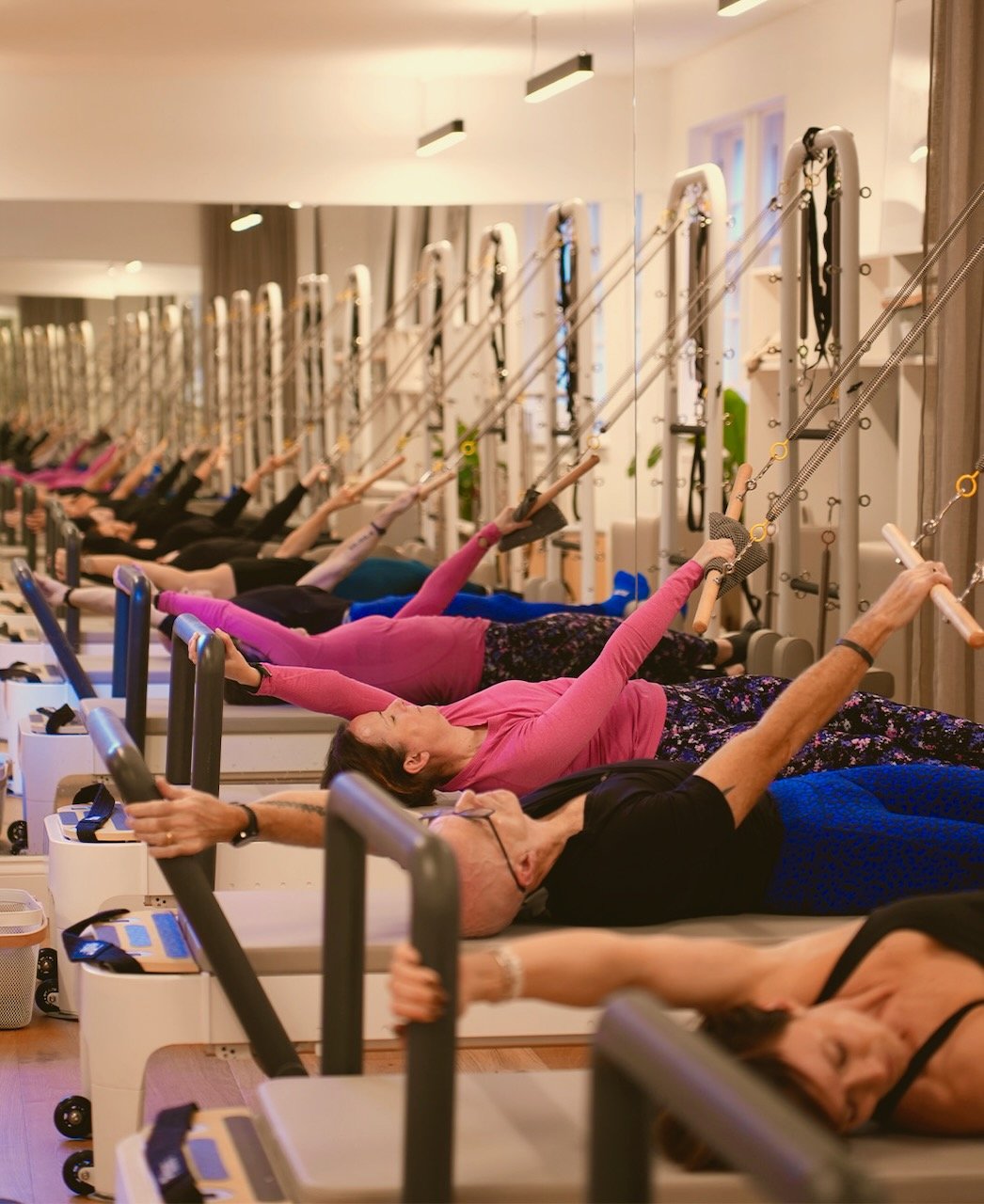
Clients in a banana stretch at the end of a Tower class at Luma Pilates, Edinburgh
Getting started
If improved flexibility is your primary goal, Reformer Fundamentals is the right starting point. The foundational hip mobility, spinal articulation, and footwork sequences in that class directly address the areas where most people carry restriction.
Yoga classes at Luma are also excellent for flexibility, working through sustained holds and breath-supported movement that complements the Reformer work. Many clients find the combination of Reformer Pilates and Yoga produces the most complete results.
Our introductory offer of 3 Reformer or Tower classes for £48, or 3 Barre or Yoga classes for £30, is the best place to begin. View our class schedule, browse all classes, or get in touch if you would like to talk it through before booking.
Written by Lucia Poulter
Lucia is lead instructor and co-founder at Luma Pilates, with 26 years of teaching experience and Comprehensive BASI certification. Flexibility is one of the things clients ask about most in their first few weeks of practice. Her answer is always the same: stop trying to stretch it and start training through it. The results speak for themselves.