Pilates for Lower Back Pain in Edinburgh
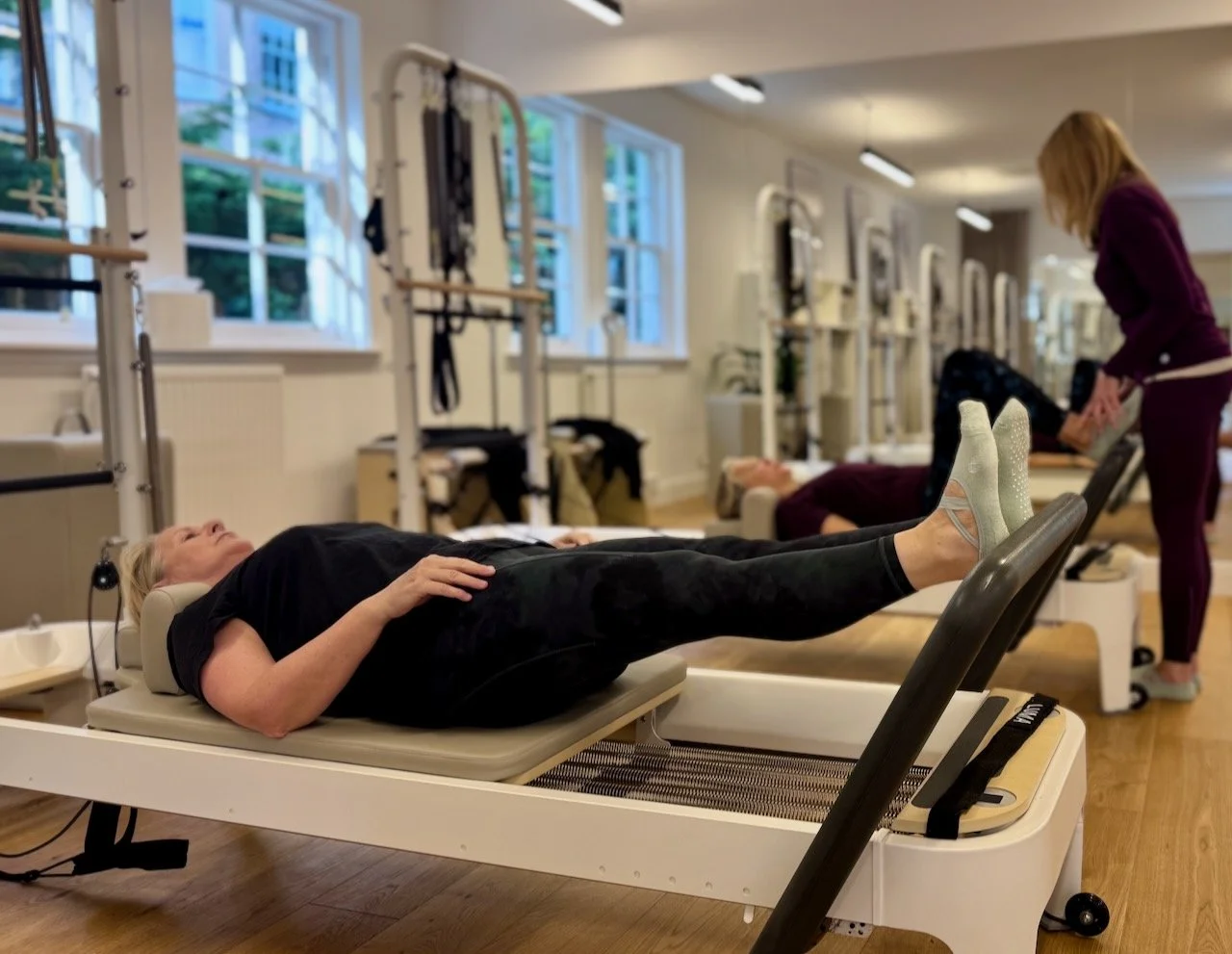
A client working through footwork and spinal alignment at Luma Pilates, Edinburgh. Lucia cueing in the background.
Lower back pain is one of the most common things people mention when they first come to Luma. Sometimes it is acute and recent. More often it is something they have been managing for years, in the background, flaring up after long days at a desk or a run that went a bit far. Either way, it is the reason a significant number of our clients found Reformer Pilates in the first place.
It is also one of the conditions that the practice addresses most directly and most consistently, targeting the specific muscular causes that sit behind the majority of lower back problems.
So, does it work?
Short answer
Yes. Reformer Pilates addresses the specific muscular causes behind the majority of lower back problems: weak deep spinal stabilisers and tight hip flexors. It does this in a controlled, low-impact way that is accessible to most people currently experiencing discomfort, not just those who have already recovered from it.
Why lower back pain is so common
The lower back is asked to do a great deal. It connects the upper and lower body, absorbs load during movement, and is involved in almost every physical activity from sitting at a desk to lifting shopping. When the muscles that support it are weak, shortened, or unbalanced, the structures of the lumbar spine end up carrying load they were not designed to manage alone.
The two most common underlying causes of non-specific lower back pain are weak deep spinal stabilisers and tight hip flexors. They are closely related. Prolonged sitting shortens the hip flexors and tilts the pelvis forward into anterior pelvic tilt, which increases the curve in the lower back and reduces the ability of the deep stabilisers to engage properly. The result is a spine that is working harder than it needs to, in a position it was not designed to sustain.
This pattern is extremely common. It is also very responsive to the right kind of movement work.
The sitting problem
Most lower back pain is not the result of a single injury. It is the result of hours spent in a position the spine was not designed to sustain, repeated day after day over months and years.
When you sit, the hip flexors are held in a shortened position. Over time they adapt to that length, becoming both tight and overactive. A shortened hip flexor pulls the pelvis forward into anterior pelvic tilt, which increases the lumbar curve and shifts load onto the posterior elements of the spine. The deep spinal stabilisers, meanwhile, disengage. They are designed to work in movement, not in sustained static positions, and prolonged sitting effectively switches them off.
The result is a spine that arrives at the end of a working day already compromised: hip flexors shortened and overactive, stabilisers inhibited, posterior chain underused. Add a run, a gym session, or simply the demands of an active evening, and the lower back is asked to manage load it no longer has the muscular support to handle well.
This is the pattern behind the majority of non-specific lower back pain in people who work at desks. It is also precisely the pattern that Reformer Pilates addresses.
What Reformer Pilates does for the lower back
The Reformer addresses lower back pain through several specific mechanisms. The evidence for this is stronger than for almost any other musculoskeletal condition. NICE guidelines (NG59) recommend exercise, including Pilates, as a first-line treatment for low back pain. A Cochrane systematic review found that Pilates reduces pain and improves functional ability in people with chronic lower back pain more effectively than minimal intervention. The NHS recommends staying active and avoiding rest as the primary approach to managing back pain. Reformer Pilates delivers exactly that, in a controlled format that works for people who are currently in pain, not just those who have already recovered.
It activates and strengthens the deep spinal stabilisers. The multifidus and the transverse abdominis are the primary muscles responsible for segmental spinal stability. In people with lower back pain, these muscles are often inhibited or underdeveloped. Reformer Pilates trains them directly, in every class, through exercises that require the spine to be actively supported rather than passively loaded.
It works the hip flexors through their full range. Rather than simply stretching shortened hip flexors, the Reformer loads them in lengthened positions, developing both flexibility and strength through the range that matters for daily life and movement.
It rebalances the posterior chain. Weak glutes and hamstrings are a consistent feature of lower back dysfunction. The Reformer's footwork and leg press sequences load these muscles progressively and precisely, restoring the balance between the front and back of the body that chronic sitting tends to undermine.
It teaches the body to move from its centre. One of the foundational principles of Pilates is centring: that all movement originates from the deep stabilisers rather than the superficial muscles. Developing this habit of movement reduces the compensatory patterns that place excessive load on the lumbar spine.
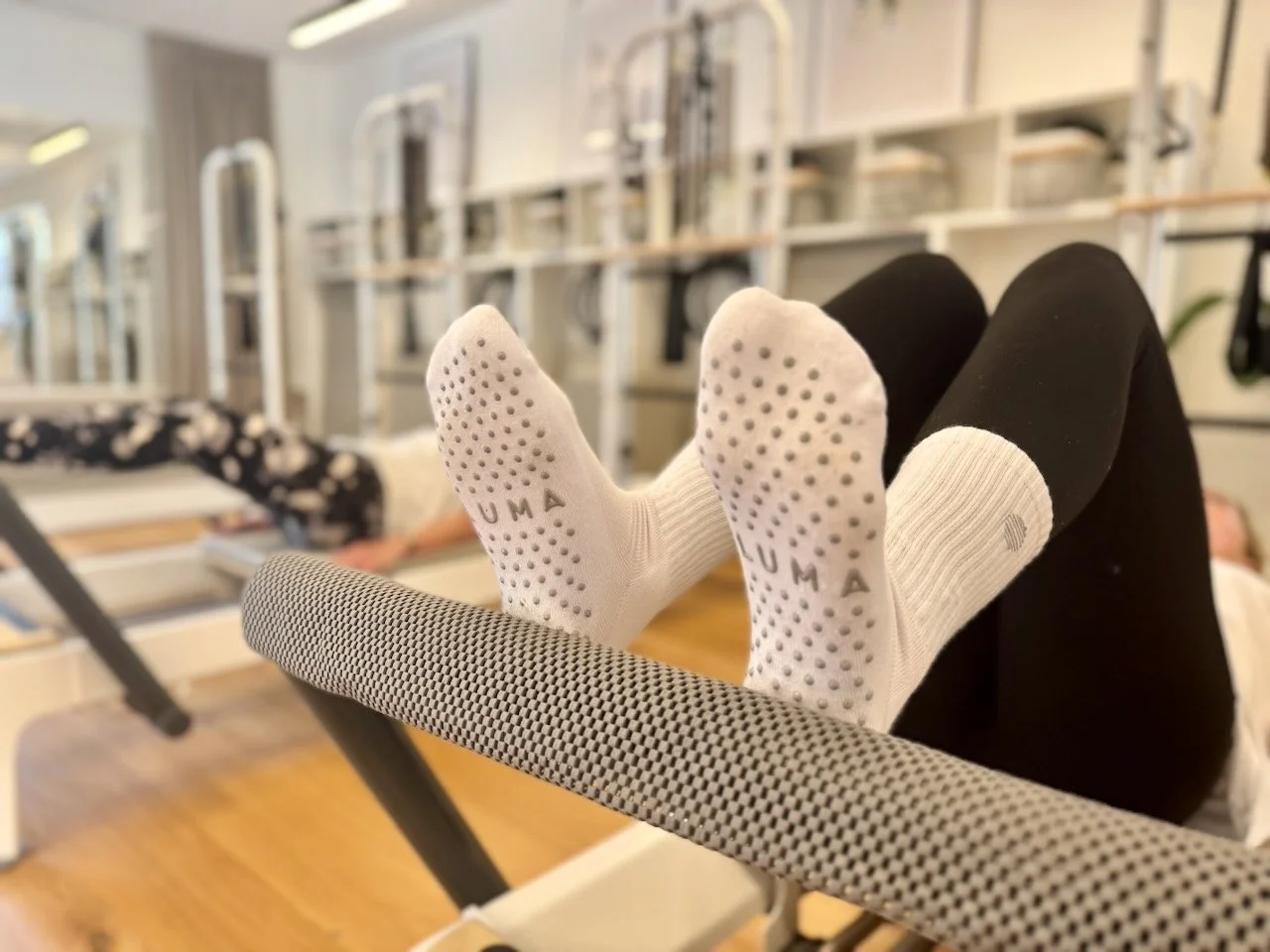
Footwork on the Reformer at Luma Pilates, Edinburgh. The foundation of every class and one of the most effective exercises for lower back health
Who it is suitable for
Reformer Pilates is suitable for most people with non-specific lower back pain, including those who have been told by a physiotherapist or GP to avoid high-impact exercise or heavy loading. The controlled, low-impact nature of the Reformer means it is genuinely accessible to people who are currently in pain, not just those who have already recovered.
If you are in acute pain, or if your lower back pain is connected to a specific diagnosis such as a disc herniation, spinal stenosis, or spondylolisthesis, please speak to your physiotherapist or GP before starting. In many cases Reformer Pilates will still be appropriate, but your doctor or physio should be involved in that decision.
If you’re coming to Luma with a history of lower back problems, please tell your instructor before class. The more we know about your background, the better we can support you from the very first session.
Non-specific lower back pain vs specific diagnoses
The term non-specific lower back pain refers to pain that cannot be attributed to a specific structural cause such as a disc herniation, nerve compression, or vertebral fracture. It accounts for the large majority of lower back pain presentations, and it is the category that responds most consistently to movement-based interventions like Reformer Pilates.
Specific diagnoses require a different approach, and in most cases your physiotherapist or GP should be involved before you begin. That said, Reformer Pilates is not automatically contraindicated for people with structural lower back conditions. The controlled, low-impact nature of the Reformer, and the emphasis on spinal alignment and stabiliser activation throughout every session, means it is often appropriate even where higher-impact exercise is not. The key is ensuring your instructor knows your history.
A rough guide to the categories most people fall into:
Muscle and soft tissue pain. The most common presentation. Often described as a dull ache, stiffness, or tightness across the lower back, worse after prolonged sitting or standing and relieved by movement. Reformer Pilates is well suited to this group and often produces noticeable improvement within the first four to six sessions.
Disc-related pain. Pain originating from a bulging or herniated disc can range from localised lower back discomfort to radiating pain down the leg. If your pain travels into the leg, our guide to Pilates for sciatica covers that presentation in more detail. Reformer Pilates can be appropriate here, particularly in the subacute and chronic phases, but the specific exercises need to be selected carefully. Tell your instructor about your diagnosis before class.
Sacroiliac joint dysfunction. Pain at the junction of the spine and pelvis, often described as a deep ache on one side of the lower back or into the buttock. The stabiliser and pelvic alignment work in Reformer Pilates is directly relevant to this presentation. Again, inform your instructor.
If you are unsure which category applies to you, a consultation with a physiotherapist before starting is always worthwhile. See our guide to Pilates vs physiotherapy for more on how the two disciplines work together.
What to expect
Most clients with lower back pain notice something shifting within the first four to six sessions. Not a dramatic resolution, but a reduction in the background tension, a greater sense of support through the lower back, and often a reduction in the frequency of flare-ups.
The more consistent the practice, the more sustained the improvement. Two sessions per week over three months tends to produce meaningful, lasting change in the muscular patterns underlying most lower back pain. See our guide to how often to do Pilates for more detail.
Anna Marchington works with lower back clients at Luma more consistently than almost any other presentation. In her experience, the clients who see the most lasting change are not necessarily those who come most frequently, but those who develop a genuine understanding of how their body is moving and why it was producing pain in the first place. That understanding is what the practice builds over time.
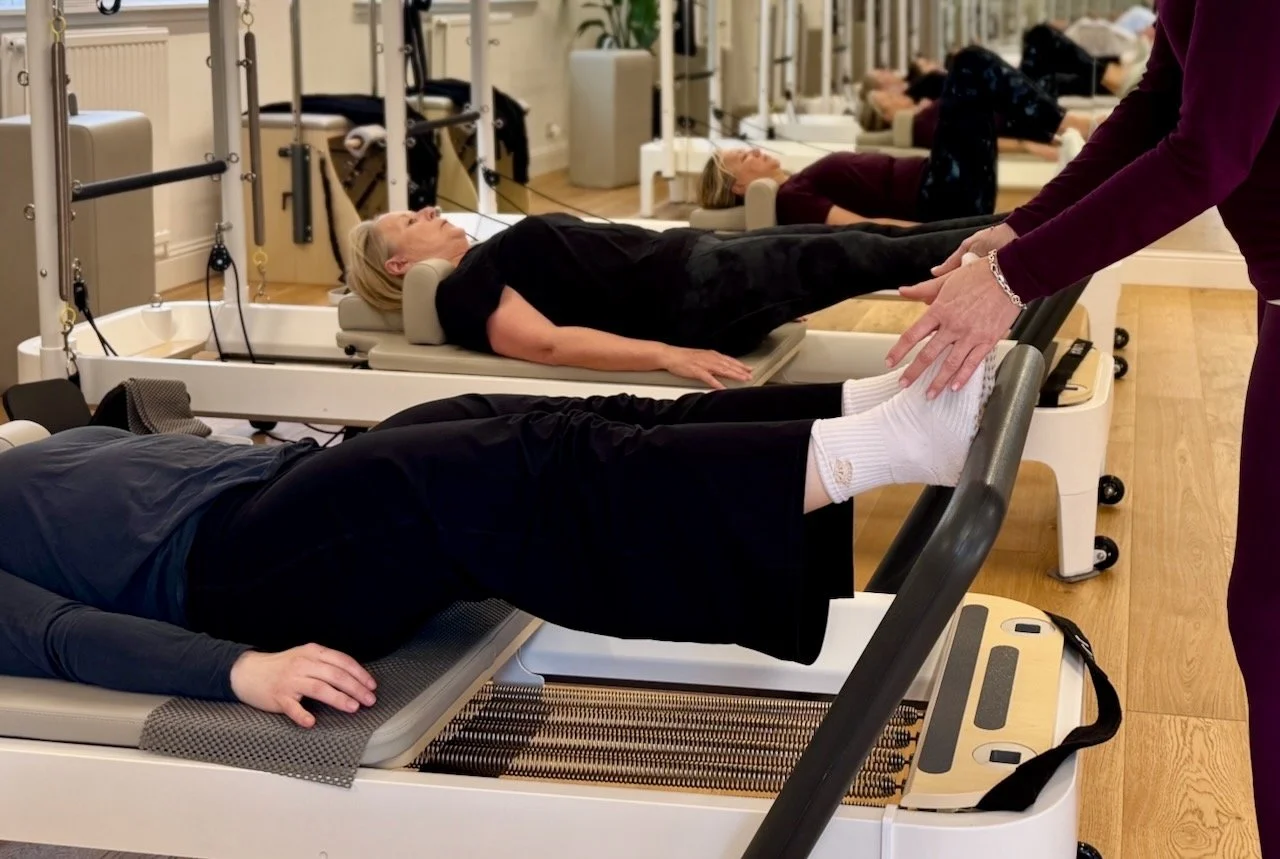
Lucia cueing foot placement during footwork at Luma Pilates, Edinburgh. Precise instruction in every class, regardless of level
When to see a GP or physiotherapist first
Reformer Pilates is appropriate for most lower back pain. There are some symptoms, however, that need medical assessment before you start exercise of any kind.
Seek advice from your GP first if you have pain that radiates down one or both legs below the knee, numbness or tingling in the legs or feet, any loss of bladder or bowel control, lower back pain following a fall or accident, unexplained weight loss alongside back pain, or pain that is constant and not affected by movement or position.
These can indicate nerve compression, cauda equina syndrome, or other conditions that require prompt medical attention. None of them mean Pilates is permanently off the table, but they need to be assessed first.
If your back pain is longstanding and you have already been assessed by a GP or physiotherapist, share their findings with your instructor before your first class.
Where to start
If you are new to Reformer Pilates, Reformer Fundamentals is the right starting point. The foundational work in that class, including spinal articulation, pelvic alignment, and deep stabiliser activation, is directly relevant to lower back health and gives you the physical vocabulary to get more from every class that follows.
If you would prefer to work with an instructor one to one before joining a group class, a private session gives your instructor the space to assess your specific presentation and design the session around your body. Private sessions at Luma start at £90. View all pricing.
Our introductory offer of 3 Reformer or Tower classes for £48 is a good place to begin. View our class schedule, browse all classes, or get in touch if you would like to talk through your situation before booking.
Key Takeaways
Most lower back pain has muscular causes: weak deep spinal stabilisers and tight hip flexors from prolonged sitting. Reformer Pilates addresses both directly.
NICE guidelines (NG59) and the NHS recommend exercise, including Pilates, as a first-line treatment for low back pain.
The Reformer is accessible even during a flare, not just for people who have already recovered.
Most clients notice a reduction in background tension within four to six sessions. Two sessions per week over three months tends to produce lasting change.
If your pain radiates below the knee, or you have any bladder or bowel changes, seek medical advice before starting.
Written by Anna Marchington
Anna is a Pilates instructor at Luma Pilates in Edinburgh. She trained through the Advanced Teacher Training at The Pilates Center in Boulder, Colorado, one of the most rigorous Pilates programmes in the world, and has spent over 20 years working with clients across a wide range of physical backgrounds. Lower back rehabilitation is one of the areas she returns to most consistently. Her approach is methodical, unhurried, and built around understanding why the problem is there before addressing it.