Pilates vs Physiotherapy
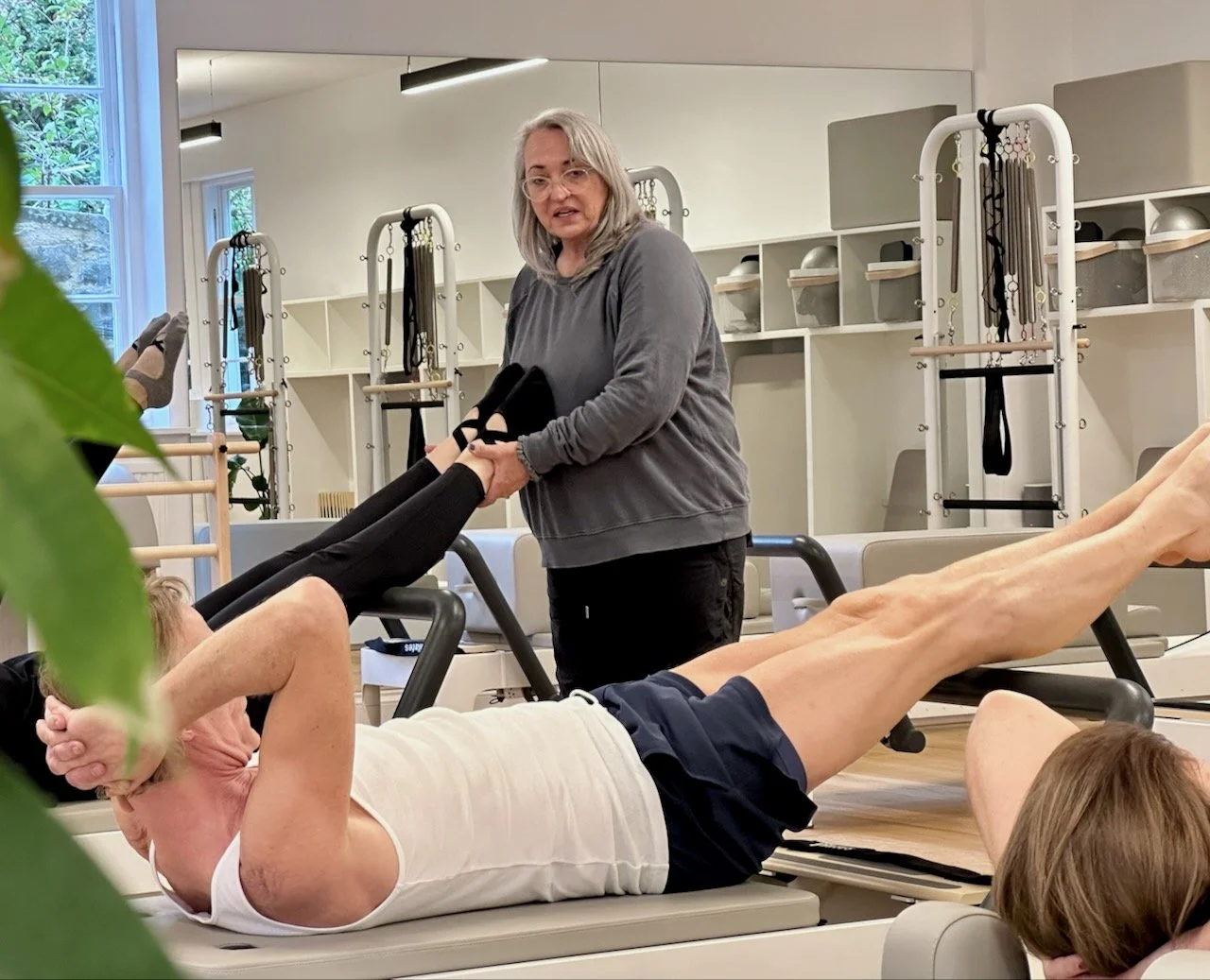
Anna Marchington cueing clients through Reformer core work at Luma Pilates, Edinburgh. Precise instruction, every class
Short answer
Pilates and physiotherapy are complementary, but they are not interchangeable. Physiotherapy is a regulated healthcare profession used to assess, diagnose and manage injury, pain and rehabilitation needs. Pilates is a form of exercise that can help build strength, mobility, control and movement confidence. For some people, Pilates can be a useful progression alongside or after physiotherapy, depending on their condition and the advice of their healthcare professional.
People often arrive at this question from one of two directions. Either they have been through physiotherapy and are wondering whether Pilates might help them maintain or build on the progress they made. Or they have an injury or physical problem and are trying to decide which to try first.
Both are good questions, and the answer to both starts in the same place: Pilates and physiotherapy are not opposites. They are complementary disciplines that, at their best, work together.
What physiotherapy does
Physiotherapy is a regulated healthcare profession focused on the assessment, diagnosis, and treatment of physical conditions. A physiotherapist will assess the specific nature of your injury or condition, identify the underlying causes, and design a treatment programme accordingly. That programme might include manual therapy, specific rehabilitation exercises, advice on movement and load management, and referral to other specialists where needed.
Physiotherapy is the appropriate first response to acute injury, significant pain, post-surgical rehabilitation, and any condition that requires clinical diagnosis. If you are in pain, or if you have sustained a significant injury, see a physiotherapist.
What Pilates does
Pilates is not a medical treatment. It is a movement practice that develops strength, mobility, control, and body awareness through systematic, progressive exercise. On the Reformer, that practice is particularly precise: spring resistance, three-dimensional movement, and expert instruction can be used to work on strength, control and stability with adjustable resistance.
Pilates-based exercise has been studied in rehabilitation contexts, particularly for lower back pain. NICE guidance recommends exercise as part of the management of low back pain, and its evidence reviews include Pilates within biomechanical exercise approaches. NICE also recommends tailored therapeutic exercise as a core part of osteoarthritis management. This does not make Pilates a substitute for physiotherapy, but it helps explain why Pilates-based exercise can sit naturally alongside or after rehabilitation for some people.
Exercise is commonly used as part of the management of musculoskeletal conditions, and Pilates-based exercise has been studied in areas such as lower back pain and osteoarthritis. Pilates can therefore be useful for some people as part of a broader programme of exercise, particularly once any acute problem has been assessed and appropriately managed.
The transition from physiotherapy to Pilates can be a natural one for people who want to continue building strength, movement confidence and consistency after rehabilitation.
Where Pilates and physiotherapy meet is in the quality of the movement work. Many physiotherapy rehabilitation programmes include exercises that are closely related to Pilates principles. The focus on controlled movement, progressive loading, stability and rebuilding movement patterns is common to both disciplines.
| Factor | Physiotherapy | Reformer Pilates |
|---|---|---|
| What it is | Regulated healthcare profession | Movement practice, not a medical treatment |
| Primary role | Assess, diagnose and treat | Build strength, stability and movement quality |
| First response for | Acute injury, pain, post-surgical rehab | Not a first response; comes after clinical care |
| Typical timing | Diagnosis and initial rehabilitation | Progression once initial rehab is complete |
| Clinical status | The route for diagnosis and treatment | Not yet regulated in the UK; not a substitute for clinical care |
| Strongest overlap | Lower back, hip and knee, post-natal, shoulder | The same areas, as follow-on movement work |
| When it is right | In pain, injured, or needing a diagnosis | Post-rehab, or recurring issues with no acute episode |
Where the overlap is strongest
The crossover between Pilates and physiotherapy is most pronounced in a few specific areas.
Lower back rehabilitation is one clear example. Physiotherapy programmes for lower back problems often include work on trunk control, strength and movement confidence, and Reformer Pilates can continue developing some of those same qualities through progressive exercise. Many clients arrive at Luma having completed a physiotherapy programme and use Reformer Pilates as a way to keep building strength and consistency afterwards.
Hip and knee rehabilitation follows a similar pattern. Single-leg stability work, glute activation and controlled loading of the posterior chain can feature in both lower-limb rehabilitation and Reformer Pilates exercises.
Post-natal recovery is another area of overlap, where pelvic floor rehabilitation and deep abdominal retraining can connect closely with foundational Pilates work.
Anna Marchington trained at The Pilates Center in Boulder, Colorado and has spent over two decades working with clients navigating the intersection of movement and injury. In her experience, Pilates and physiotherapy often work best in sequence rather than in competition. Physiotherapy can assess and manage the clinical problem, while Pilates can provide an ongoing exercise framework for rebuilding strength, control and movement capacity once that is appropriate.
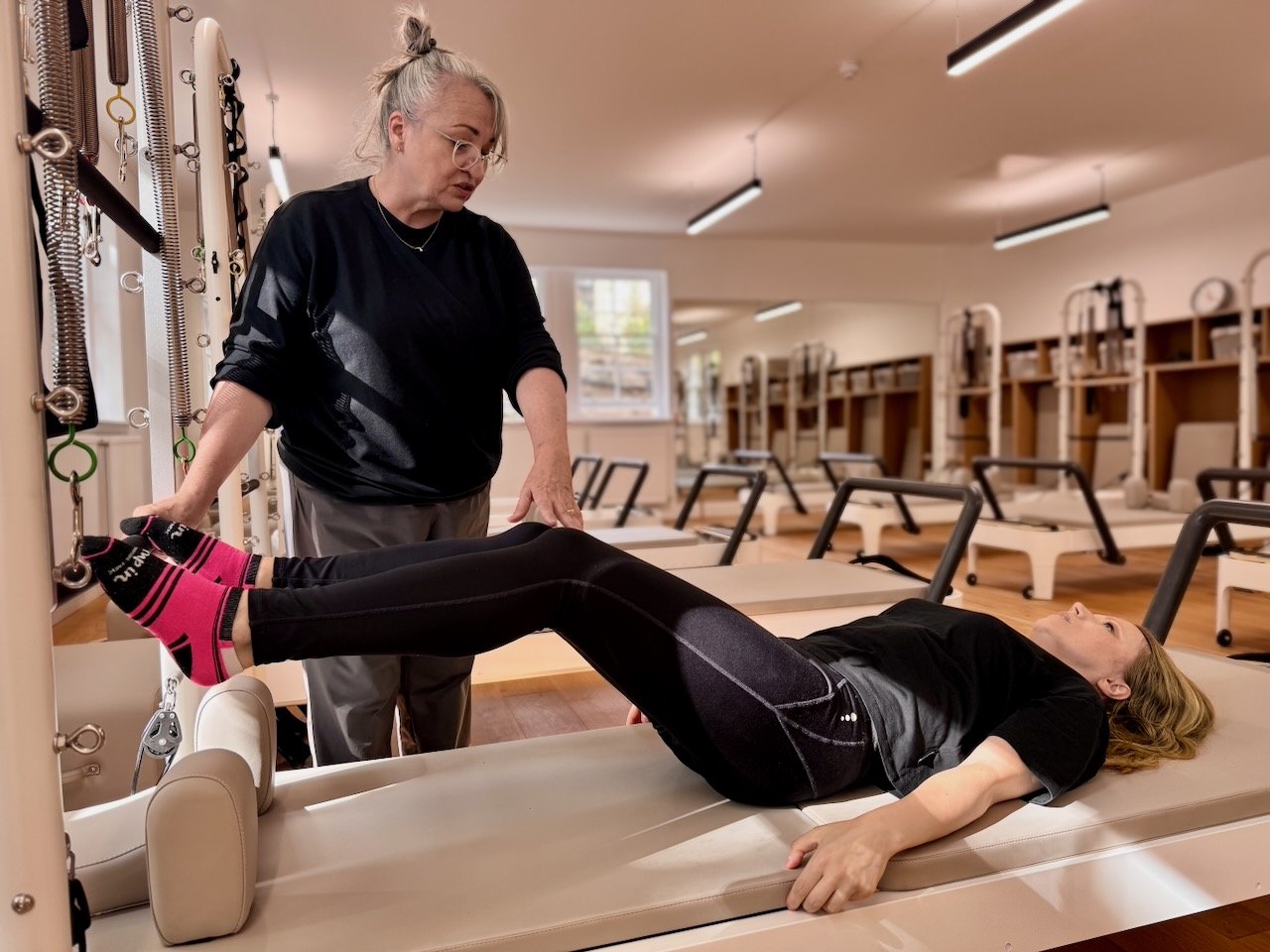
Anna Marchington cueing alignment during a private session at Luma Pilates, Edinburgh. The level of individual attention that makes the difference
What Pilates can and cannot do for specific conditions
The honest answer varies by condition. Here is a plain-English guide to the presentations where Reformer Pilates is most consistently useful, and where the boundaries lie.
Lower back pain. Lower back pain is one of the clearest areas of overlap between Pilates and physiotherapy. Physiotherapy programmes may include exercises designed to improve trunk control, strength and confidence with movement, and Reformer Pilates can continue developing some of those same qualities through progressive exercise. For people who have completed physiotherapy and have been advised that ongoing exercise is appropriate, Reformer Pilates can be a useful way to keep building strength and movement confidence. See our full guide to Pilates for lower back pain.
Hip and knee rehabilitation. Single-leg stability work, glute activation and controlled loading of the posterior chain are common themes in both lower-limb rehabilitation and Reformer Pilates.
For some people, the transition from physiotherapy to Pilates can feel natural because the Reformer provides adjustable resistance and a structured way to progress exercise once the initial rehabilitation phase is complete.
See our guide to Pilates after hip replacement for more on recovery and progression.
Post-natal recovery. Pelvic floor rehabilitation and deep abdominal retraining can feature in both post-natal physiotherapy and Pilates. Pilates may be appropriate once initial post-natal rehabilitation is complete, depending on your individual circumstances and the advice of your healthcare professional.
Tell your instructor how recently you gave birth and whether you are working with a women’s health physiotherapist.
Shoulder rehabilitation. Shoulder rehabilitation. The shoulder girdle work in Reformer Pilates, including exercises involving the serratus anterior and trapezius, shares some of the strength and control principles used in shoulder rehabilitation. Post-surgical shoulder clients should have clearance from their surgeon or physiotherapist before starting. Once exercise is appropriate, the Reformer's adjustable resistance can provide a controlled way to introduce progressive loading.
Chronic pain. Pilates is not a treatment for chronic pain conditions, and it would be misleading to suggest otherwise. For some people managing chronic pain, consistent exercise may help improve strength, movement confidence and physical capacity alongside appropriate clinical care.
How suitable Pilates is will depend on the individual, the nature of the condition and the advice of the healthcare professionals involved in your care.
When to choose physiotherapy
If you are in acute pain, have sustained a significant injury, or have a condition that requires diagnosis and clinical management, start with a physiotherapist. Pilates is not a substitute for clinical care, and a good Pilates instructor will tell you the same thing.
If you’re unsure whether your symptoms warrant physiotherapy, getting assessed is usually the safer starting point. A physiotherapist can determine whether anything needs clinical attention and advise you on when and how to return to exercise.
When to choose Pilates
If you have completed physiotherapy and want to sustain or build on your progress, Reformer Pilates can be a useful next step. The level of instruction at Luma means your instructor can take your history into account and adjust the work within the scope of Pilates teaching.
If you have a history of lower back problems, postural issues or recurring niggles without a current acute episode, Pilates may also be a useful form of ongoing exercise, provided you have been medically assessed where appropriate.
See our guide to Pilates for injury recovery for what to expect when you start, including what we ask before your first class and how the work is adapted around you.
In Lucia’s experience, some clients use Reformer Pilates as part of their longer-term movement routine after completing physiotherapy. The aim is not to replace clinical care, but to keep building strength, control and confidence once the acute phase has passed.
It’s a view that is shared by physiotherapists who work with Luma clients directly. New Town Therapy, a physiotherapy and massage clinic a short walk from the studio on Dundonald Street, regularly recommend Reformer Pilates to their clients as a complement to physiotherapy and hands-on care. In practice, the two disciplines can work in sequence: physiotherapy to assess and manage the clinical problem, and Pilates to provide ongoing, progressive exercise where appropriate.
That kind of working relationship between clinical care and movement practice is exactly what Pilates and physiotherapy, at their best, should look like.
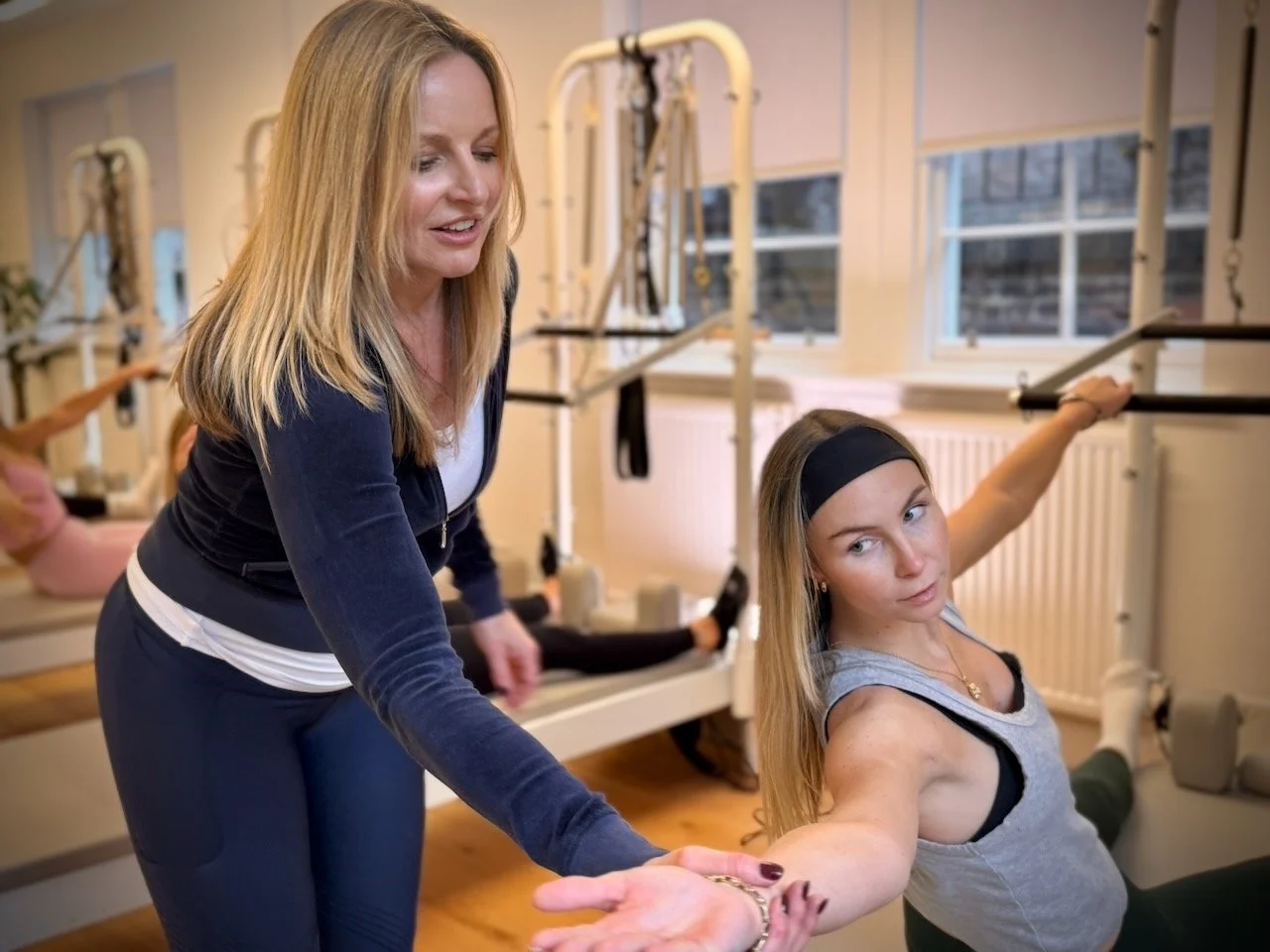
Lucia Poulter cueing a client at Luma Pilates, Edinburgh. Movement education at its most precise
A note on communication
If you are coming to Luma with a history of injury or a condition being managed by a healthcare professional, please tell us. Your instructor needs to know what they are working with. The more clearly we understand your background, the better we can support your practice.
It’s helpful to know the nature of the injury or condition, when it occurred, what treatment you have had, and whether you are currently under the care of a physiotherapist or other specialist. For many clients, a brief conversation before class is enough. For more complex, recent or unresolved conditions, we may suggest speaking with your healthcare professional before starting or returning to class. Get in touch before your first class if you would like to discuss your history, or simply let your instructor know when you arrive. We’ll take it from there.
Our introductory offer of 3 Reformer or Tower classes for £48 is a good way to begin. View our class schedule or browse all classes.
Written by Lucia Poulter
Lucia Poulter is lead instructor and co-founder at Luma Pilates. She holds Comprehensive BASI certification, has 26 years of teaching experience, and has worked alongside GPs and physiotherapists throughout her career to support clients navigating injury, chronic pain, and post-surgical recovery. Her view on the relationship between Pilates and physiotherapy has been formed through that work rather than in theory: they are most useful when they run in parallel, each doing what the other cannot. She teaches Reformer Pilates at Luma.