How Long Does It Take to See Results from Pilates?
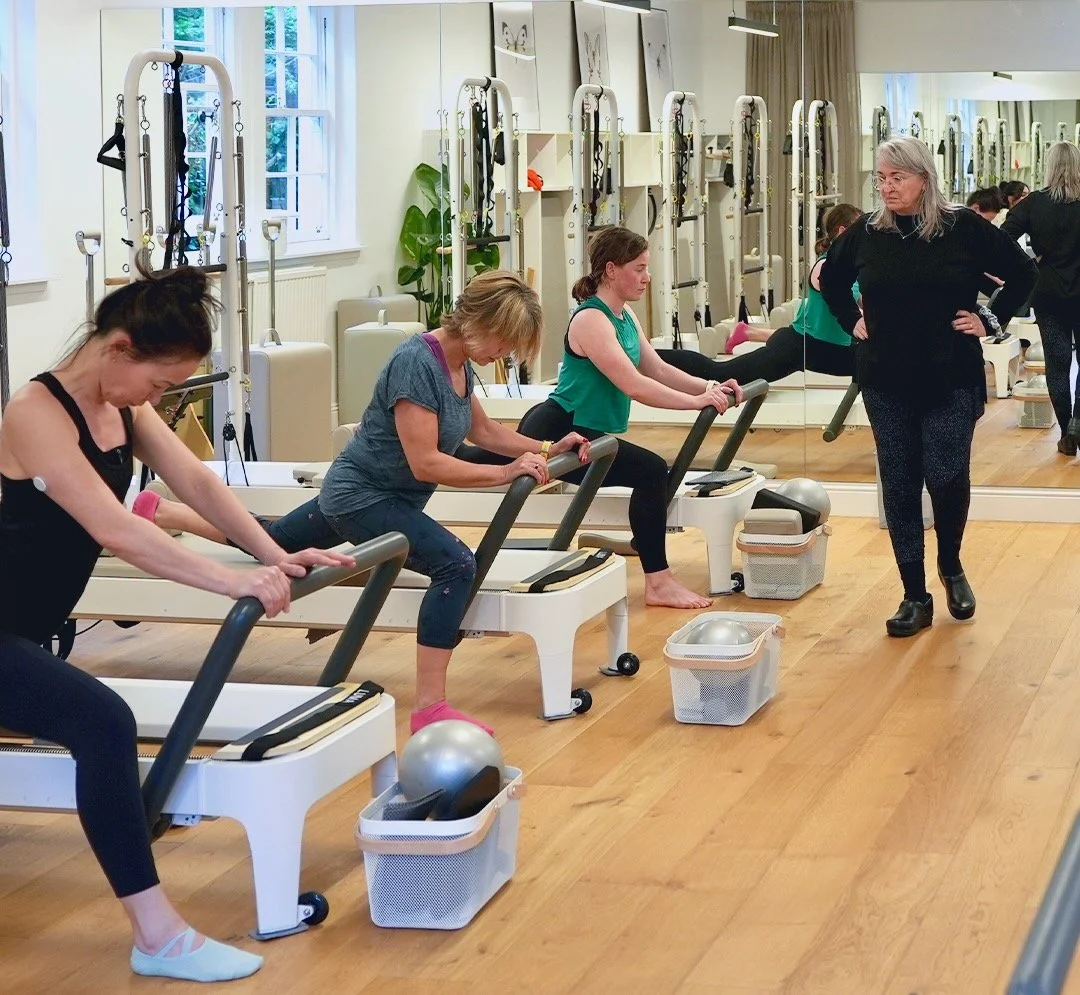
Anna Marchington cueing a Reformer class at Luma Pilates, Edinburgh. The results come from showing up consistently
Short answer
There is no single timeline for Pilates results. Some people notice changes in how they move or feel within the first few sessions, while changes in strength, control, mobility or posture usually develop gradually with consistent practice. How quickly you notice a difference depends on your starting point, how often you practise, the type and intensity of your sessions, recovery, and what you mean by results.
Results from Pilates tend to arrive on two timescales: some things you may notice relatively early, and some things develop gradually with sustained practice. Understanding which is which helps you stay consistent through the early weeks and know what you are working toward over months and years.
What changes first
Body awareness. This is often the first thing clients notice, sometimes within the first session. The Reformer asks for a quality of attention that most forms of exercise do not require. You become aware of muscles you did not know were underperforming, of habits of tension and compensation you had never noticed, of the difference between bracing and supporting. This is not a small thing. It is the foundation everything else builds on.
Muscle activation. With regular practice, most clients begin to feel the deep spinal stabilisers engaging in a way they did not in the beginning. The deep abdominals, the muscles around the shoulder blades, the hip stabilisers. These muscles are present in everyone, they simply need to be reactivated and trained to engage reliably. The early sessions are largely about establishing this connection.
Tension reduction. Some clients notice less tension in the neck and upper back with regular practice. This is partly the result of the shoulder girdle work and partly the result of the nervous system beginning to release the compensatory holding patterns that accumulate in muscles that have been working too hard for too long.
Sleep and recovery. A number of clients report improved sleep quality within the first few weeks. The parasympathetic activation that comes from the breath-led, focused nature of Pilates has a measurable effect on the nervous system that extends beyond the class itself.
What takes longer
Visible postural change. Most clients begin to feel different within four to six weeks. Visible postural change – the kind that others notice, and that shows up in how you carry yourself without thinking about it – tends to develop gradually with consistent practice over months rather than weeks.
The muscular rebalancing required is real and progressive, not instant. See our full guide to why Pilates improves posture for a detailed explanation of the mechanism.
Flexibility gains. Range of movement improves steadily with consistent practice, but the nervous system changes that produce lasting flexibility take time to consolidate. Most clients notice meaningful improvement in their hip mobility and thoracic spine rotation within six to eight weeks. More global flexibility changes typically become established within three to four months.
Strength gains. The Reformer builds genuine strength, particularly in the posterior chain, the deep stabilisers, and the shoulder girdle. These gains accumulate progressively over months. With consistent practice over several months, many clients notice meaningful strength changes in everyday movement: getting up from the floor with more ease, carrying things without lower back strain, feeling stable in situations that previously felt effortful.
Injury resilience. For clients coming to Pilates with a history of recurring injury – lower back problems, runner's knee, shoulder issues – the reduction in frequency and severity of episodes typically takes three to six months to become consistent. The underlying muscular imbalances that drive these injuries take time to rebalance. But the direction of change is reliable, and it continues for as long as the practice does.
The frequency question
Practising more frequently gives you more opportunities to learn and apply the movements, but more sessions do not guarantee faster results. Consistency, appropriate class level and recovery all matter. For a full breakdown of frequency options, see our guide to how often you should do Pilates.
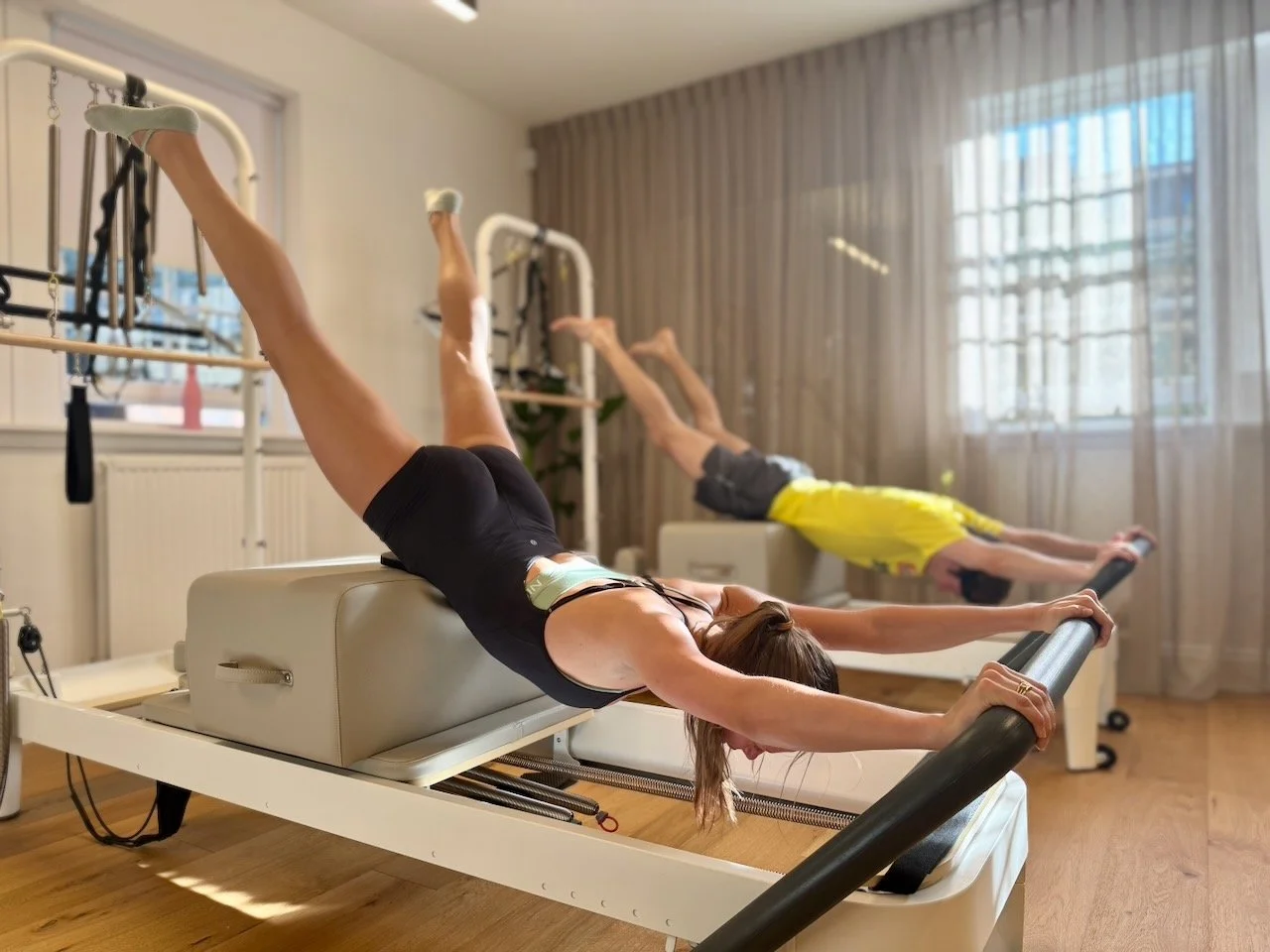
Swan dive on the box at Luma Pilates, Edinburgh. The range that builds over weeks, not days
What consistent practice produces over time
The clients I find most instructive are the ones who have been practising for two or three years. Not because the early changes are not real, but because the longer view reveals something the early weeks cannot.
At two to three years of consistent practice, the body has genuinely reorganised. The compensatory patterns that built up over decades – the hip flexors that had shortened, the stabilisers that had disengaged, the thoracic spine that had stiffened – have been progressively addressed. The practice has become sustaining rather than corrective. Clients at this stage are not working to fix something. They are working to maintain and develop a body that moves well.
Co-founder Max Howarth came to Reformer Pilates in his fifties with no movement background. He now teaches five classes a week at Luma and practises at least double that. His experience reflects what I see consistently: the clients who stay with the practice long enough to move through the early corrective phase and into the developmental phase rarely stop. The practice becomes something they would not want to be without.
A note on what Pilates is not
Pilates is not a rapid transformation programme. It does not promise visible physical change in two weeks or a dramatic before-and-after. What it offers instead is a practice that works reliably, that compounds over time, and that produces changes in how you move and feel that go considerably deeper than most forms of exercise reach.
The clients who are disappointed by Pilates are almost always the ones who stopped before the results they were looking for had time to consolidate.The ones who stay tend to find it becomes the practice they wish they had found earlier.
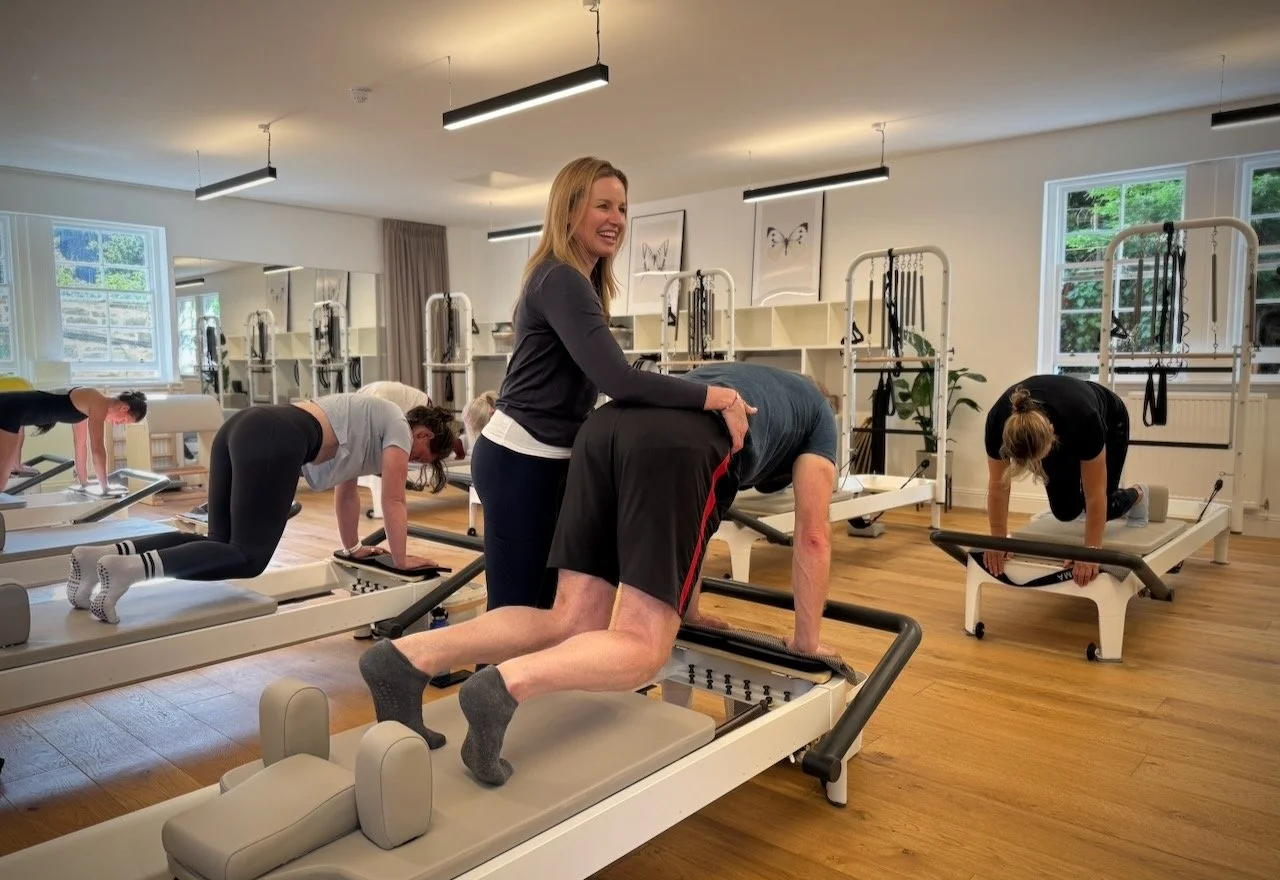
Lucia Poulter cueing a client at Luma Pilates, Edinburgh. Instruction that makes the difference over time
How to get started
Reformer Fundamentals is the right entry point. The introductory offer of 3 Reformer or Tower classes for £48 is designed to give you enough sessions to move past the initial unfamiliarity and start experiencing what the practice is actually about.
View our class schedule, browse all classes, or get in touch if you would like to talk through the right starting point for where you are now.
Written by Lucia Poulter
Lucia is lead instructor and co-founder at Luma Pilates, with 26 years of teaching experience and Comprehensive BASI certification. She has guided clients through every stage of the results timeline described in this guide, from the first session to years of sustained practice. In her experience, the clients who stay long enough always wish they had started sooner.