
Pilates vs Barre
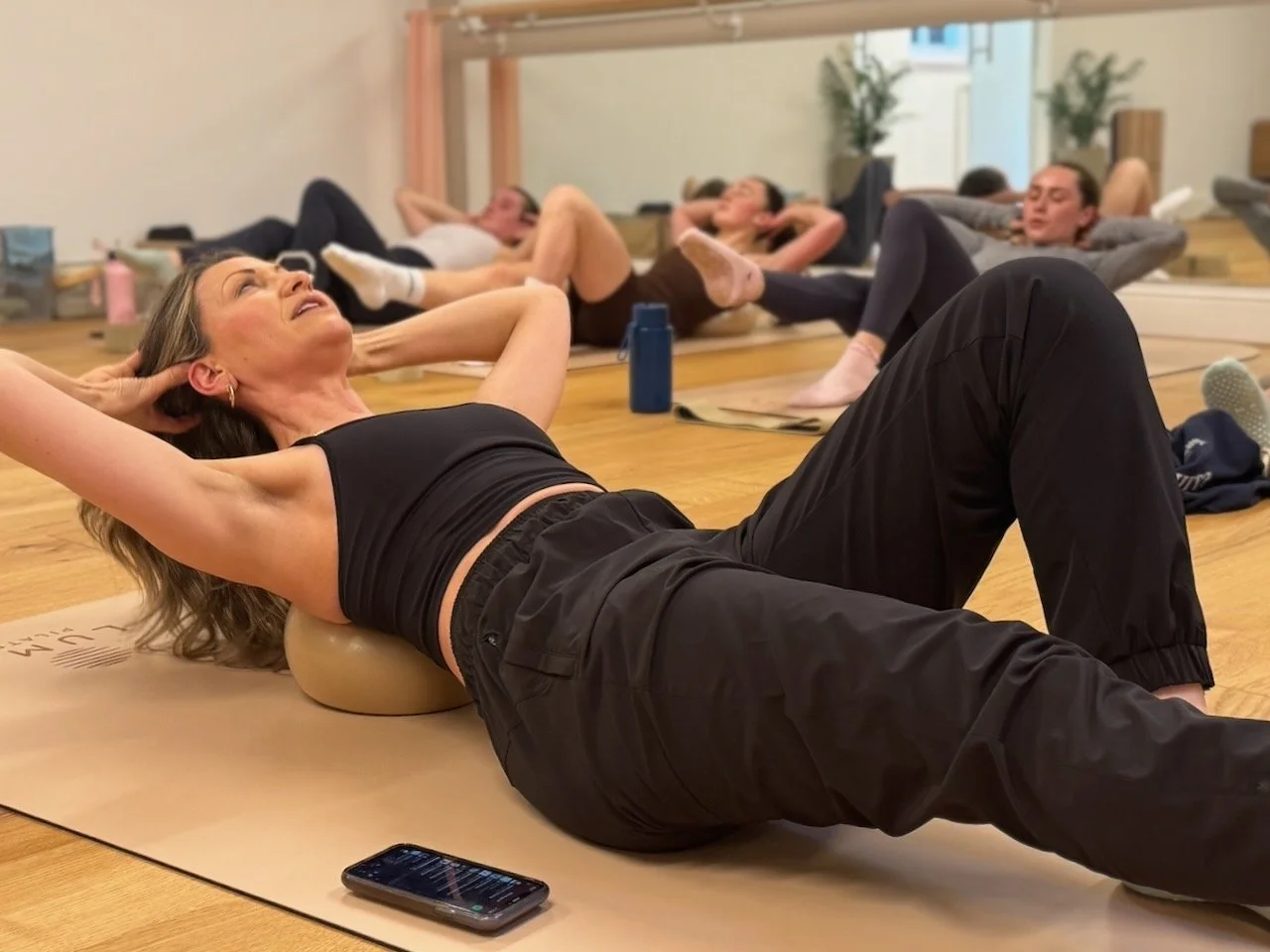
Serena Crolla working the core in a Barre class at Luma Pilates, Edinburgh. The kind of burn that stays with you
Short answer
Pilates and Barre share a foundation in precise, controlled movement and develop many of the same qualities: strength, stability, body awareness, and postural control. The Reformer works the whole body through a wide range of movement patterns with spring resistance. Barre focuses on standing work, single-leg stability, and the kind of sustained muscular endurance that leaves you shaking in ways you did not expect. Both are worth doing. They complement each other well.
People often ask whether Barre is just Pilates at a barre, or whether Pilates is just Barre on a machine. Neither is quite right. They share a lineage and a sensibility, but they are distinct practices that challenge the body in different ways and produce results that, at their best, build on each other.
I teach both at Luma. Here’s how I think about the difference.
What they share
Barre and Pilates are both rooted in precise, intentional movement. Both demand that you pay attention to alignment, to how you are holding yourself, to the quality of each repetition rather than just completing it. Both develop body awareness in a way that most conventional exercise does not.
Both also have a background in dance. Pilates was developed in part for dancers; Barre draws directly from ballet conditioning. That shared heritage shows in the emphasis on posture, on controlled range of movement, and on training the body to move with efficiency rather than just effort.
If you already do one, you will recognise something familiar in the other. The transition tends to be quicker than people expect.
What Reformer Pilates does
The Reformer works the whole body in three dimensions, across a much wider range of movement patterns than most forms of exercise reach. The spring resistance allows for eccentric loading, strengthening muscles as they lengthen. The moving carriage demands deep stabiliser engagement on every repetition.
The Reformer is particularly effective for posterior chain work, shoulder girdle strength, spinal mobility, and the kind of targeted lower back and hip work that runners, desk workers, and people recovering from injury tend to need most. See our guides to why Pilates improves posture and Pilates for lower back pain for more on the specific mechanisms.
It also develops active flexibility in a way that Barre approaches differently. The kinetic chain work on the Reformer addresses tightness at its source rather than treating it in isolation. See our guide to does Pilates improve flexibility for more.
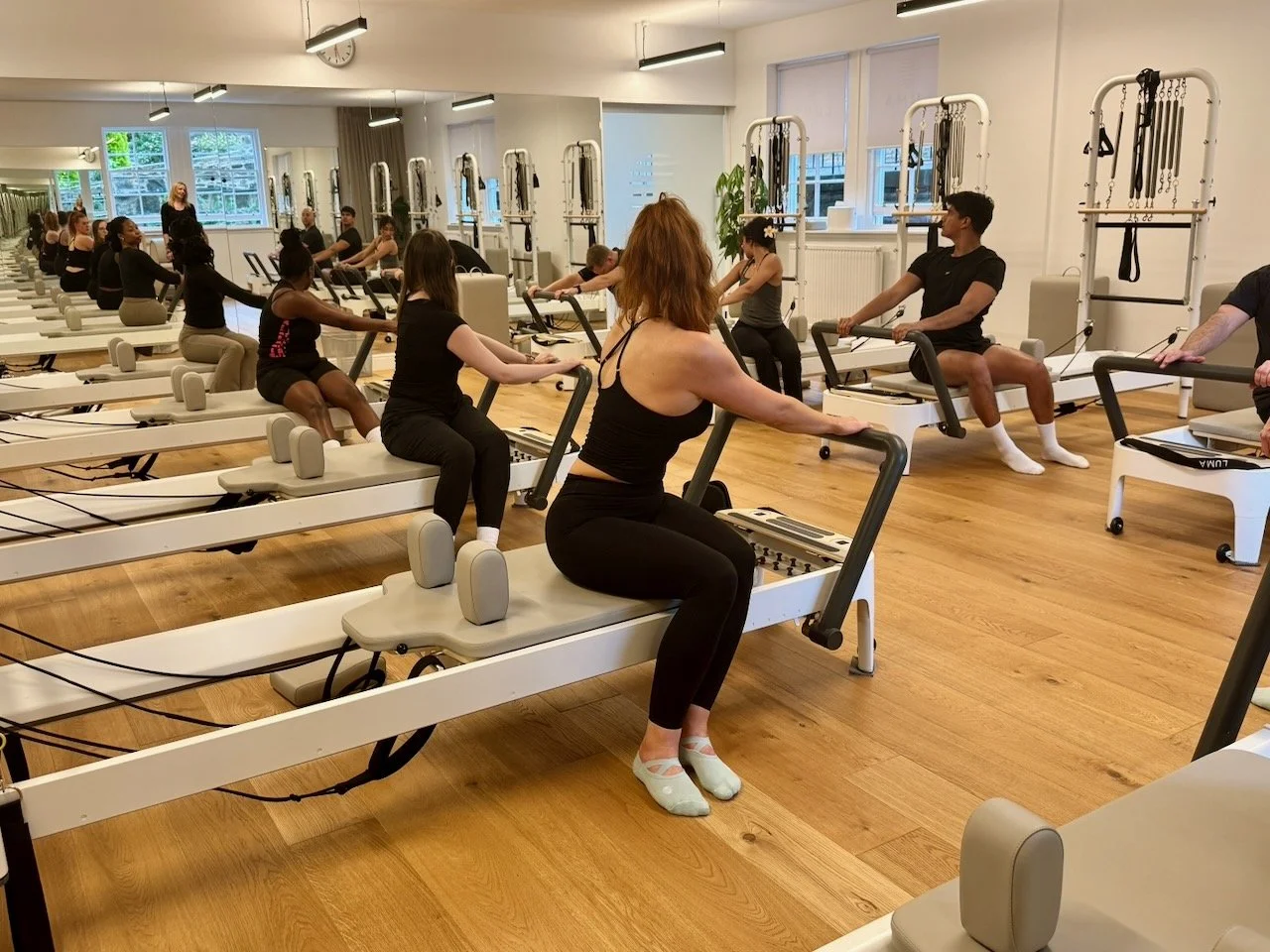
Lucia Poulter finishing a Reformer class with Mermaid Stretch and Spine Twist at Luma Pilates, Edinburgh. The full studio in action
What Barre does
Barre is standing work. It uses a ballet barre for support and develops strength, stability, and muscular endurance through sequences that are small in range, high in intention, and genuinely demanding in ways that surprise most people who try it for the first time.
The burn is real. Barre isolates muscles, particularly in the glutes, inner thighs, and calves, and holds them under sustained load in ways that the Reformer does not replicate directly. For single-leg stability, hip abductor strength, and the kind of balance and coordination that comes from standing work, Barre is hard to beat.
It also develops posture from a standing position, which is where posture actually matters. The alignment work in a Barre class translates directly into how you stand and move in everyday life. For clients who want to see postural change in their body off the mat, Barre reinforces what the Reformer builds from the inside out.
Barre at Luma is open to all levels. There is no prior dance experience required, and no particular level of fitness assumed. What is required is attention and a willingness to find your edge, which is something every client in my classes discovers quickly. See our full guide to what Barre is for more detail on the method, the instructors, and what to expect in your first class.
| Factor | Reformer Pilates | Barre |
|---|---|---|
| Format | Lying, seated, kneeling and standing on the carriage | Standing work, supported at a ballet barre |
| Resistance | Spring resistance, including eccentric loading | Bodyweight, high repetition and sustained holds |
| Range of movement | Whole body, three-dimensional, wide repertoire | Small range, high intention, isolated muscles |
| Particularly strong for | Posterior chain, shoulder girdle, deep stabilisers | Glutes, inner thighs, single-leg stability, endurance |
| Cardiovascular element | Low; not a cardio workout | More pronounced; the pace raises the heart rate |
| Flexibility | Active flexibility through kinetic-chain loading | Approached differently, less directly |
| Feel | Precise, controlled, internally focused | Rhythmic, music-driven, a different kind of hard |
| Fills the gap of | Deep strength and stability Barre builds on | Standing endurance and cardio the Reformer misses |
What Barre does that Pilates does not
The cardiovascular dimension of Barre is more pronounced than in a standard Reformer class. The standing sequences, the pace, and the sustained muscular work raise the heart rate in a way that the Reformer does not consistently replicate. For clients who want their movement practice to include a cardiovascular element without high-impact exercise, Barre fills that gap well.
The rhythmic, music-driven nature of Barre also makes it feel different to the Reformer. The curated playlists and the flow of a well-sequenced Barre class produce an energy that is distinct from Pilates, and that many clients find motivating in a different way. It is, in the best sense, a different kind of hard.
The case for both
The clients I see making the most consistent physical progress at Luma are almost always the ones doing both. Reformer Pilates builds the deep strength, spinal stability, and movement quality that makes everything else more effective. Barre develops the standing strength, single-leg stability, and muscular endurance that the Reformer approaches from a different angle.
The two practices reinforce each other directly. The hip stability developed on the Reformer makes you stronger at the barre. The standing balance and glute endurance from Barre makes you more stable on the carriage. Most clients who try both find they can't imagine doing just one.
I teach Barre alongside my Reformer classes at Luma, and the crossover is something I see every week.
Liron Bleischer, who brings 15 years of Pilates teaching experience and a deep dance background from training in New York and Tel Aviv, teaches both disciplines here too. Her experience of the relationship between the two is exactly what you'd expect from someone who has lived in both: they are most powerful in combination.
Fi Hendry also teaches Barre at Luma alongside her Mat Pilates classes, bringing the same precision and depth of instruction to both disciplines.
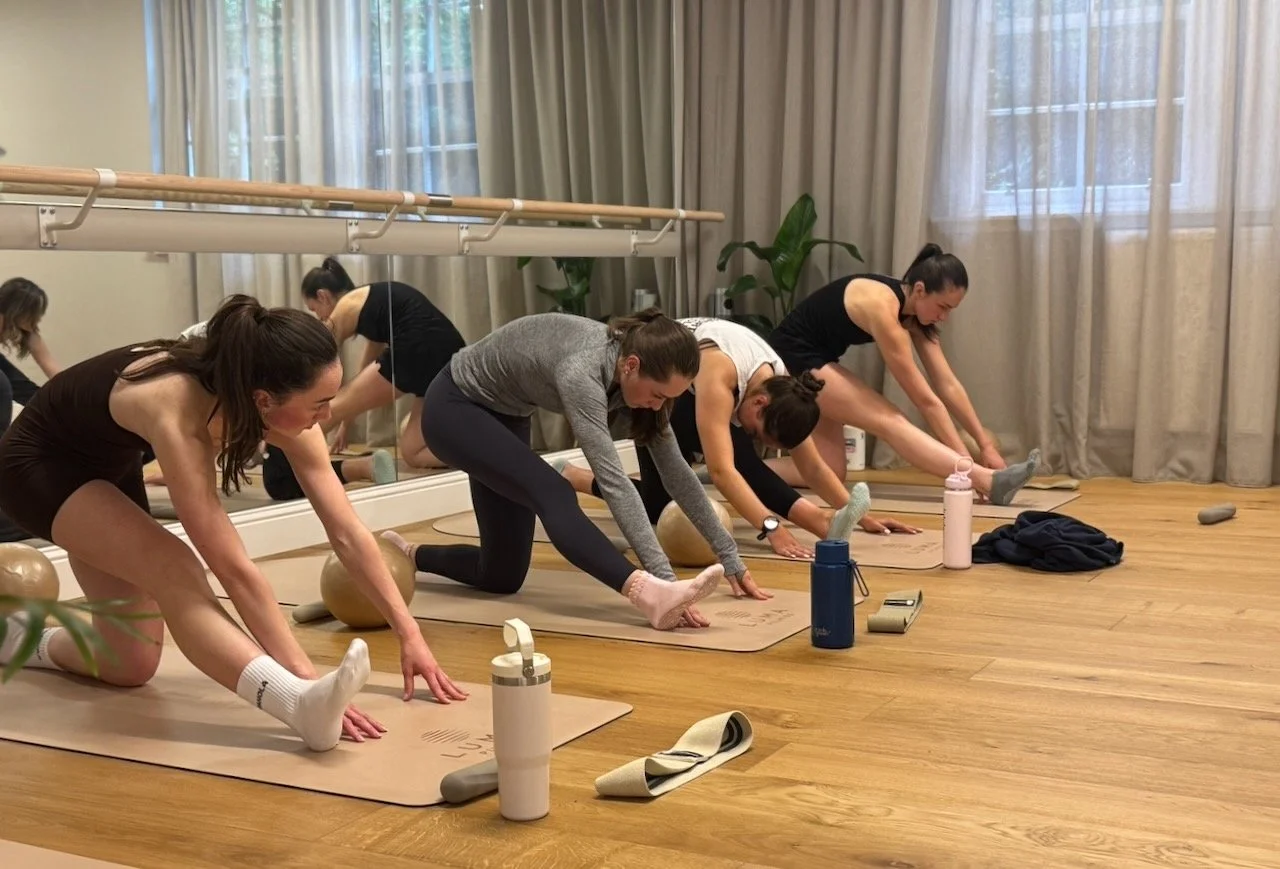
Hamstring stretch at the end of a Barre class at Luma Pilates, Edinburgh. Hard work, well earned
Where to start
Barre at Luma is open to all levels. No prior experience is required. View our class schedule to find when Serena, Fi, and Liron are teaching, or browse all classes to see the full timetable.
If you’re new to Luma, our introductory offer of 3 Barre or Yoga classes for £30 is the right starting point. If you are already a Reformer client looking to add Barre, speak to your instructor about which class to begin with. The two practices build on each other quickly.
Get in touch if you would like to talk it through before booking.
Written by Serena Crolla
Serena teaches Barre and Reformer Pilates at Luma. She brings a background in professional dance to everything she does, and her classes have earned a reputation for precise sequencing, creative programming, and a signature burn that stays with you. Her view on the Pilates vs Barre question is straightforward: do both, and do them consistently. The results compound.