Seven Things People Get Wrong About Reformer Pilates
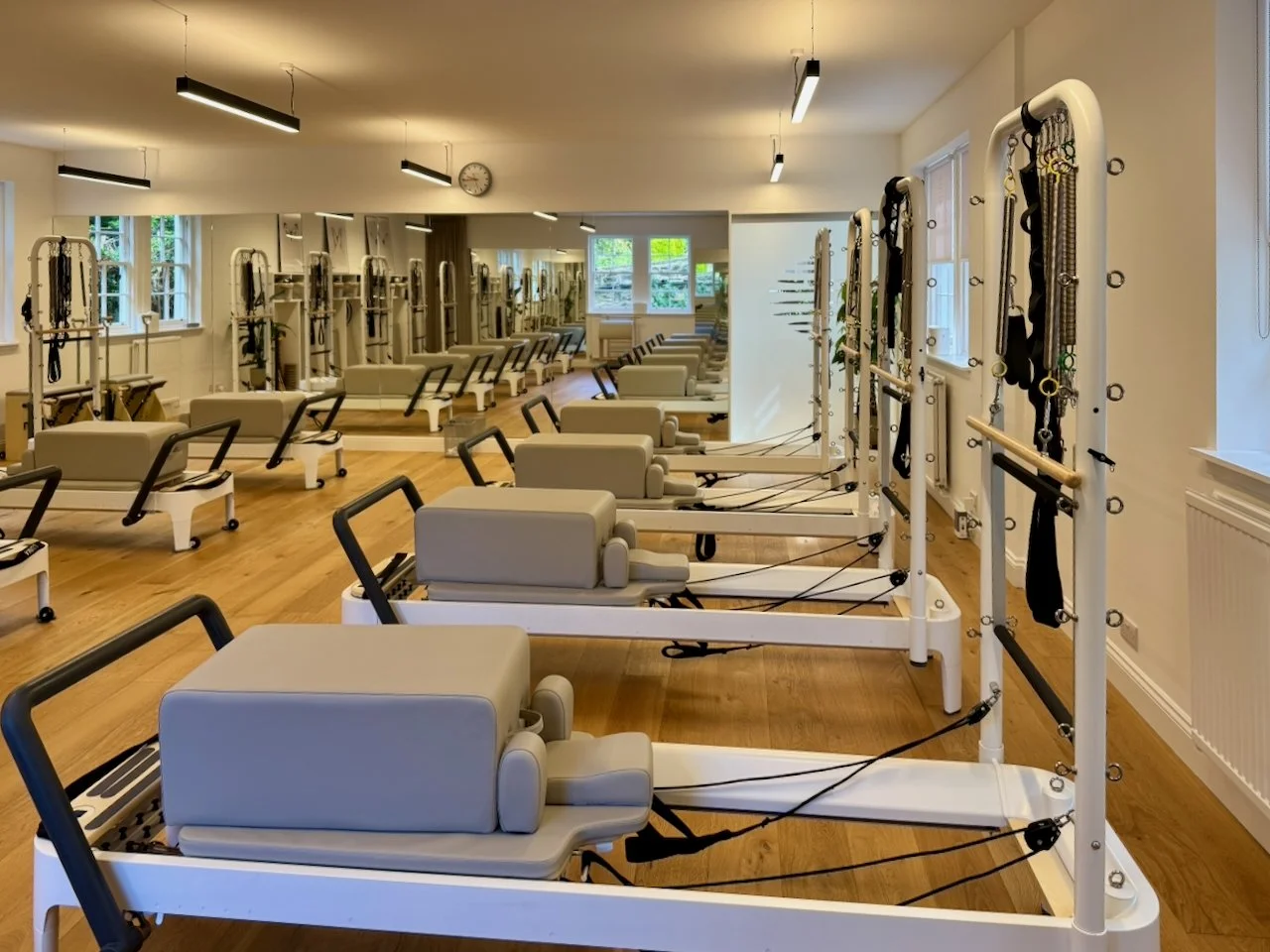
Studio A at Luma Pilates, 15 Northumberland Street NE Lane, Edinburgh
After 26 years of teaching, I have heard almost every reason someone gives for putting off their first Reformer class. Some of them are understandable. Some are based on things people have read online. Most of them are not true.
I’m not writing this to talk anyone into anything. If Reformer Pilates is not right for you, it's not right for you. But I'd rather you made that decision based on what this practice actually is, rather than on a version of it that exists mainly in people's assumptions.
What Reformer Pilates shouldn't be
It shouldn't be intimidating. It shouldn't require you to arrive already fit, flexible, or experienced. It shouldn't hurt. And it shouldn't be something you put off because you've decided in advance it isn't for you.
What follows are the eight things I hear most often from people who are on the fence, and what's actually true about each of them.
You need to be flexible before you start
This is the one I hear most often, and it is probably the most backwards thing on this list. Flexibility is not a prerequisite for Reformer Pilates. It's frequently a result of it.
The Reformer is a spring-based machine, and those springs can do a remarkable amount of work. They can support movement you couldn't yet do on your own, assist ranges of motion you haven't yet built, and meet you exactly where your body currently is. I have worked with people who could not touch their shins when they arrived, and within a few months were moving in ways that genuinely surprised them.
You don't need to arrive ready. You just need to arrive.
It’s too easy to be a real workout
I understand where this comes from. Reformer Pilates doesn’t look like what most people think of as hard exercise. There's no running, no heavy lifting, no one visibly suffering. The machines are quiet. The studio is calm. The movements are slow and precise.
And then someone does their first class and finds muscles they didn’t know they had.
The Reformer works in a specific way, through controlled resistance and full-body integration, that is genuinely demanding, particularly for muscles that standard gym training rarely reaches. The stabilisers. The deep core. The small muscles around the hips and shoulders that spend most of their lives switched off. Getting those muscles to do their job, consistently and correctly, is work. It just doesn't look like the kind of work most people are used to.
If you leave your first class and feel nothing, I'd be very surprised.
It only works your core
This one has always puzzled me a little, because I'm not sure where it started. The core is certainly involved in almost everything we do on the Reformer, but the idea that Pilates stops there is like saying swimming only works your arms.
A well-designed Reformer session works the legs, the glutes, the back, the shoulders, the arms, and yes, the deep abdominals. It works them together, in integrated movement patterns, rather than in the kind of isolated repetitions you would do on a gym machine. That's part of what makes it so effective for people who want to move better in everyday life, not just stronger individual muscles, but a body that works as a whole.
It’s only for women
Joseph Pilates was a man. He developed this method for male boxers and wrestlers. The idea that Pilates is somehow a female practice is a recent cultural artefact, not anything built into the method itself.
We have taught men throughout our time at Luma, including in our dedicated men's classes. What comes up again and again is that men with a background in sport or gym training often discover weaknesses they didn't know they had, particularly in hip stability, thoracic mobility and posterior chain integration, and that addressing those weaknesses changes how they feel in every other physical activity they do.
It's not a gentle alternative to real training. For many men, it is the thing that makes their other training work better.
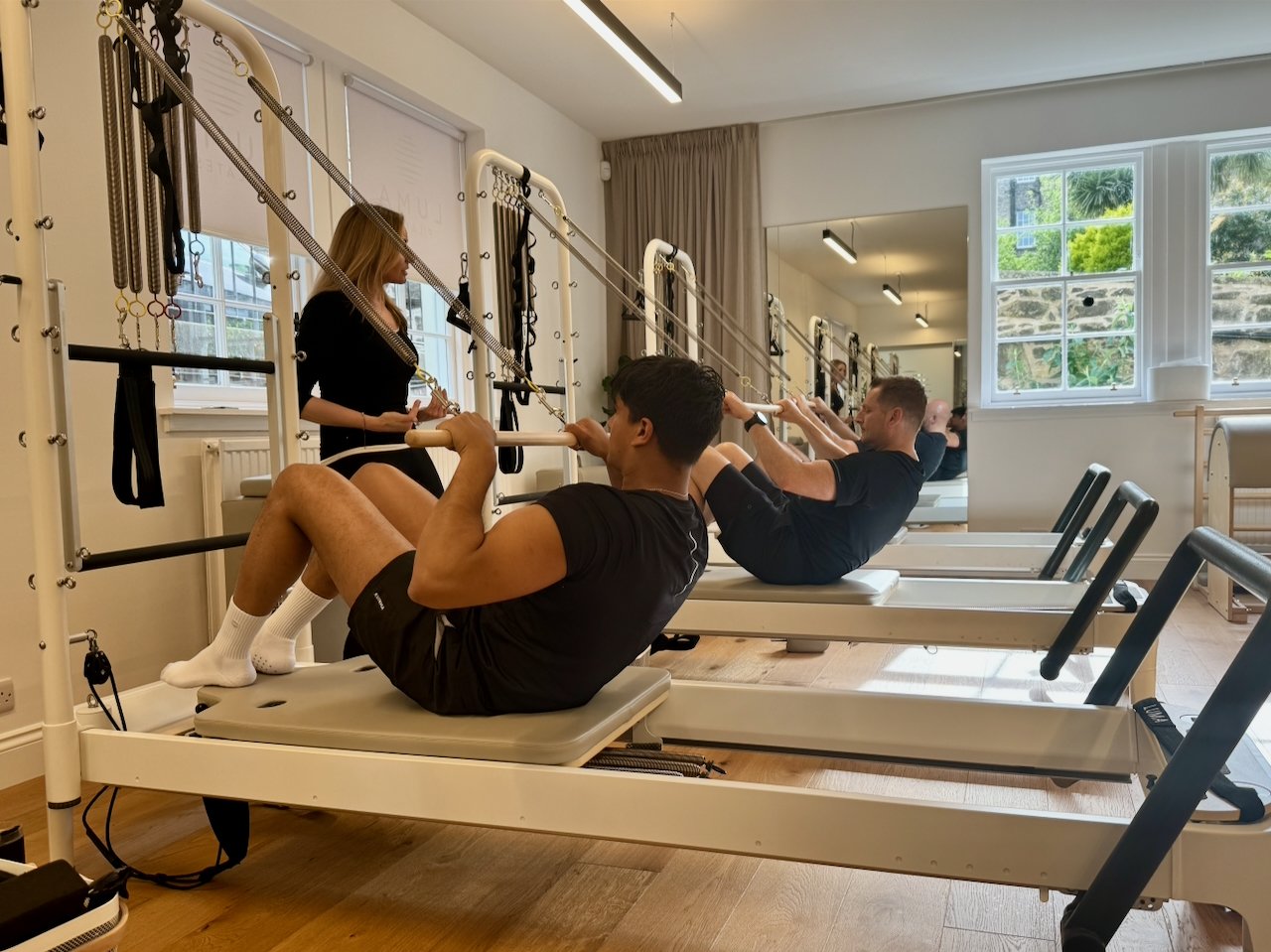
Lucia cueing men in a Reformer Fundamentals class at Luma Pilates, Edinburgh New Town
You need to already be fit
I think this one comes from the same place as the flexibility myth: a sense that you need to earn your place in a fitness class before you show up. That you should get in shape before you come to the place that will get you in shape.
It doesn’t work that way. Our Reformer Fundamentals class exists specifically for people who have never touched a Reformer machine before, regardless of their current fitness level. We start from the beginning. We take the time. We don't assume you've done this before, because we know you haven't.
The only thing you need to bring is a willingness to learn. The rest we can work with.
It’s only for certain body types
This is one I feel strongly about, because I’ve seen what it does when people believe it. It keeps people away from something that could genuinely help them, because they've decided in advance that they don't look like the person who does Pilates.
The Reformer is adjustable. The springs, the footbar, the headrest, the straps. Every element of the machine can be modified to suit different bodies, different proportions, different levels of strength and mobility. That's not an accident. It is fundamental to how the method works. Pilates is a practice built on the idea of meeting the body where it is, not where you think it should be.
I have taught people across a very wide range of ages, sizes, fitness levels, and physical histories. I do not think there is a body type that is wrong for this practice. I do think there are instructions that are not adapted well enough, and that's an instructor problem, not a student problem.
It’s expensive for what it is
I‘ll be honest: Reformer Pilates costs more than a gym membership. There is no version of this where that is not true, and I'd rather be straightforward about it than pretend otherwise.
What I'd ask is that you think about what you're actually comparing. A gym membership gives you access to equipment and space. A Reformer class at Luma gives you an instructor who knows your name, watches every movement you make, and will correct what needs correcting before it becomes a habit. The class sizes are small because they have to be. That level of attention is only possible when there are not too many people in the room.
That is not a luxury feature. It is the thing that makes the practice work. You can read more about how Reformer Pilates is priced in Edinburgh if you want to understand what you are comparing across studios.
If you've been thinking about trying it, our introductory offer is three Reformer classes for £48. It's designed to give you enough time to move past the unfamiliar and actually experience what the practice does. After that, you can decide. But I would rather you decided having tried it than having talked yourself out of it on the basis of things that aren't quite true.
View the class schedule and book a Reformer Fundamentals class whenever you are ready.
It shouldn't hurt, so it must not be working
There are two versions of this one, and both cause problems. The first is the belief that if something hurts, you should push through it because that's how progress works. The second is the belief that if nothing hurts, nothing is happening.
Neither is right.
Reformer Pilates should not be painful. Discomfort from muscles being genuinely challenged is normal and expected. Sharp pain, joint pain, or anything that feels wrong is a signal to stop and tell your instructor immediately. One of the reasons class sizes at Luma are kept small is precisely so that instructors can notice when something isn't right before a client has to say anything.
On the other side: the work in a Reformer class is often subtle, particularly in the early weeks. You may not leave your first class feeling destroyed, and that is not a sign that nothing happened. The muscles that Reformer Pilates targets are deep and often dormant. The feedback from working them is different from the feedback from a heavy squat session. Give it a few sessions before you judge what it is and isn't doing.
Is Reformer Pilates right for me?
Is Reformer Pilates suitable if I have an injury or chronic pain?
In most cases, yes. And for many people with injuries or chronic pain, it is one of the most appropriate forms of exercise available. The controlled, low-impact nature of the Reformer, combined with the ability to adjust resistance and range of movement for every individual, makes it genuinely therapeutic rather than simply cautious. We ask all new clients to let us know about injuries before class so we can adapt accordingly. If you have significant concerns, a private session before joining a group class is a sensible starting point.
Should I try Reformer Pilates if I have never done any exercise?
Yes. The Reformer Fundamentals class is built specifically for people starting from scratch, and no prior exercise background is assumed or required. Many of Luma's most committed clients came to us with no movement history at all. The practice meets you where you are and builds from there.
Is Reformer Pilates too intense for older beginners?
No. The adjustable resistance means the Reformer works equally well for someone in their sixties or seventies starting out as it does for a trained athlete. Co-founder Max Howarth began the practice in his mid-fifties with no background in exercise and now teaches six classes a week. Lucia regularly works with clients in their eighties. Age is not a barrier. Consistency is what matters, and the Reformer makes consistency easier, not harder.
Written by Lucia Poulter
Lucia is lead instructor and co-founder of Luma Pilates, comprehensive BASI-certified with 26 years of teaching experience. In that time she has heard every version of the myths above, usually from people who would have thrived on the Reformer if they'd started sooner. Her view is simple: the best time to try it was years ago, the second best time is now.