Pilates for Injury Recovery: What to expect at Luma
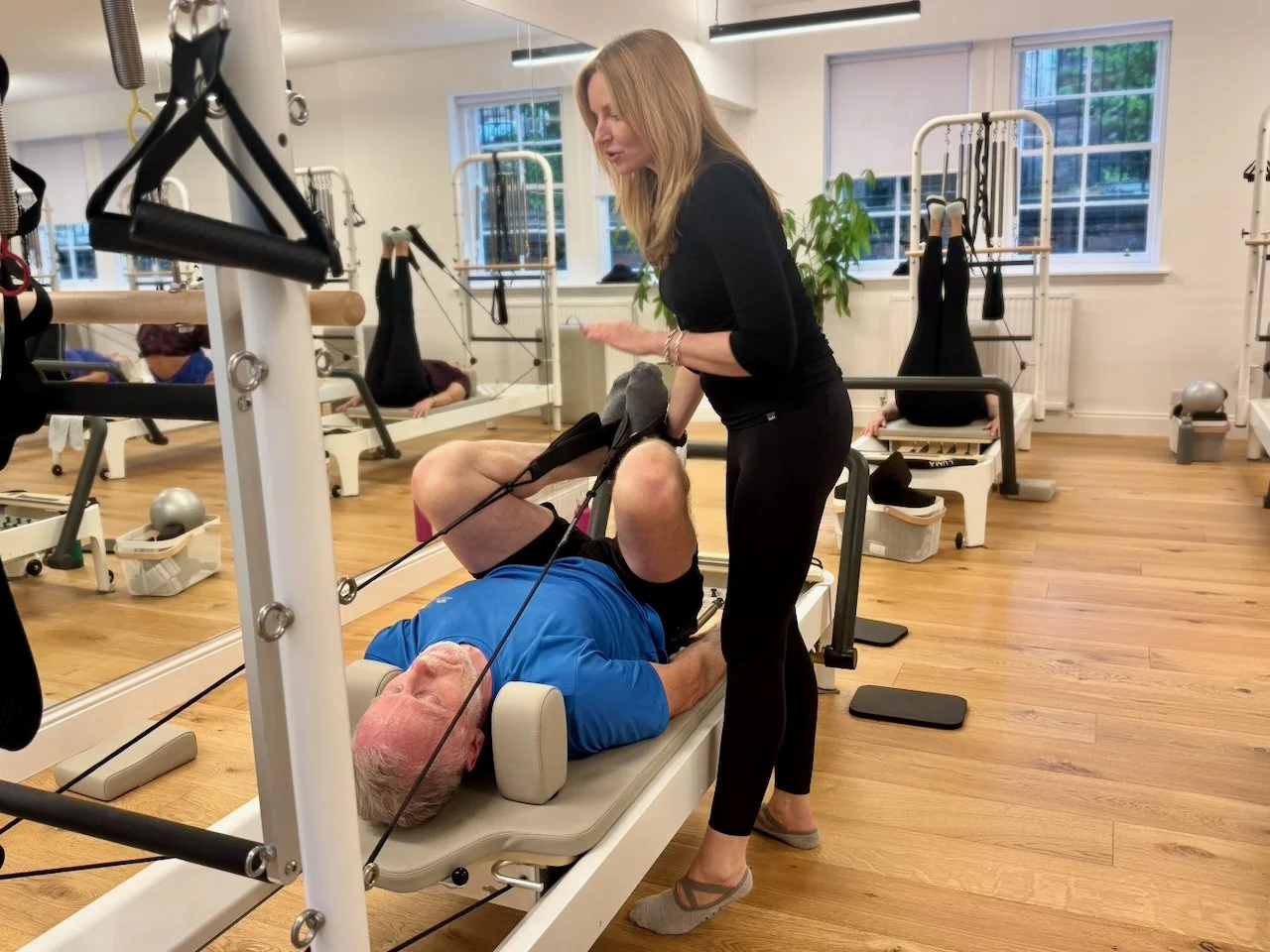
Lucia Poulter cueing Feet in Straps at Luma Pilates, Edinburgh. Adapting the work starts with understanding what your body needs
Short answer
Reformer Pilates can be an effective part of recovery from injury or surgery once you are cleared for movement, but it works alongside clinical care, not instead of it. At Luma, we ask about your history before your first class, adapt the work to what your body can currently do, and build your practice back gradually. If you are in acute pain or have not yet been assessed, see a physiotherapist or your GP first.
One of the questions we hear most often from clients starting Reformer Pilates after an injury is some version of: is this actually safe for me right now? It's the right question to ask, and it deserves a direct answer rather than a reassuring one.
Reformer Pilates can be a genuinely useful part of recovery, but only once you are cleared to move, and only when the work is properly adapted to what your body can currently do. This guide sets out exactly how that works at Luma, from what we ask before you book through to how a class is adapted around you.
Before you book
If you are recovering from an injury, the honest starting point is this: Reformer Pilates is not a substitute for clinical care. It is a movement practice, not a medical treatment, and it works best as a considered addition to recovery, not a replacement for diagnosis or treatment. If you have not yet been assessed by a physiotherapist or your GP, that is the right first step, especially for anything acute, recent, or still painful at rest.
If you have been assessed, have clearance to move, and are looking for a way to rebuild strength, mobility, and confidence, this is where Reformer Pilates tends to do its best work.
What we need to know about your injury
Before your first class, tell us about your injury. You do not need a formal referral or a detailed medical history. It helps to know the nature of the injury, when it occurred, what treatment you have had, and whether you are currently under the care of a physiotherapist or other specialist.
A brief conversation before you book, or a note when you book, is enough. Get in touch if you would like to talk it through, or let your instructor know when you arrive for your first class. The more clearly we understand what you are working with, the better we can adapt the class around it.
What to expect in your first class
Classes at Luma are taught in small groups, with individual attention throughout. If you have told us about an injury in advance, your instructor will already have it in mind before the class starts.
Expect modifications rather than a separate programme. Most exercises on the Reformer can be adjusted through spring resistance, range of movement, or position, so you can work at the level your body can currently manage while everyone else in the room continues with the full class. Your instructor will tell you what to leave out, what to adapt, and what to progress as you go.
If your injury is more significant, or you are earlier in recovery, a private session before joining group classes can be a useful way to build confidence and establish what works for your body without the pace of a group setting.
How we adapt the work
The Reformer is particularly well suited to adapting around injury because the spring resistance is assistive as well as resistive. Where a mat-based exercise might be too demanding early in recovery, the same movement pattern on the Reformer can often be supported by the springs, making it accessible sooner.
Common adaptations include reducing spring resistance to lighten the load, adjusting range of movement to stay within a comfortable range, changing position to take weight off an affected area, and substituting an exercise entirely where it does not yet suit your injury. None of this is improvised. It draws on the same Pilates principles used throughout every class: control, precision, and working within what the body can currently do safely.
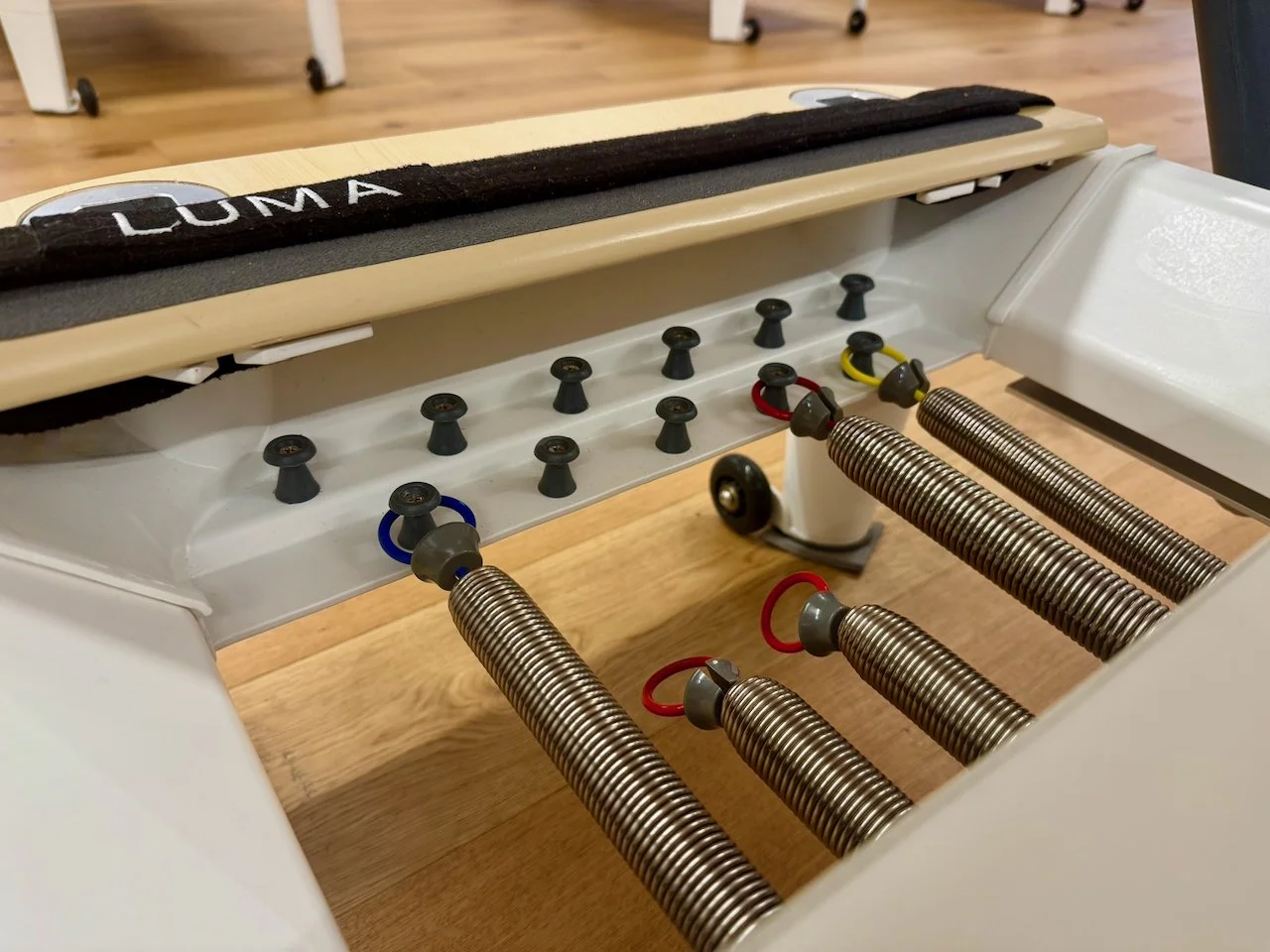
The spring resistance system on our Reformers at Luma Pilates, Edinburgh. Adjustable enough to support movement, not just load it
What Pilates can and cannot do for recovery
Pilates is not a treatment for injury, and it would be misleading to suggest otherwise. What consistent, well-adapted Reformer practice can do is support recovery once you are cleared to move: rebuilding strength in muscles that have weakened, restoring confidence in movements that have felt uncertain, and addressing the compensations that often develop around an injury.
The deep stabiliser work that runs through every Reformer class is closely related to the kind of rehabilitation exercises many physiotherapists prescribe, which is one reason the two disciplines sit well together. See our full guide to Pilates and physiotherapy for more on how they work in sequence.
What Pilates cannot do is diagnose, treat, or replace clinical care. If something feels wrong during a class, or an exercise causes pain rather than effort, stop and tell your instructor. Discomfort from working a muscle is normal. Pain is a signal to adjust.
When to see a physiotherapist first
If you are in acute pain, have sustained a significant or recent injury, or have not yet had anything diagnosed, see a physiotherapist or your GP before starting Reformer Pilates. This is not caution for its own sake. A physiotherapist can identify what is actually going on, rule out anything that needs specific clinical attention, and, in many cases, will recommend Pilates as part of your ongoing recovery once the acute phase has passed.
If your injury involves your lower back, hip, or shoulder specifically, our guides to Pilates for lower back pain, Pilates for hip pain, Pilates after hip replacement, and Pilates for shoulder and neck pain go into more detail on what is typically going on and how the work is adapted for each.
Building back gradually
Recovery is rarely linear, and a good instructor will not push you to progress faster than your body is ready for. Early sessions after injury are often about re-establishing basic patterns: activating the right muscles, moving through a comfortable range, and rebuilding the body awareness that an injury can disrupt. Progress from there tends to be steady rather than dramatic, and that is normal.
Clients who have been through physiotherapy for a specific injury often find Reformer Pilates is the most effective way to sustain and build on the strength they developed in rehab, since the muscles targeted in rehabilitation are frequently the same ones the Reformer trains in every class.
I know this from the inside as well as the outside. In July 2025 I had a total hip replacement, surgery rather than injury, but the recovery principles are the same: work within what the body can currently do, and let the pace be dictated by the body, not the calendar. I was back on the Reformer within weeks and teaching again not long after, which exceeded what my consultant expected.
That’s my own recovery, not a benchmark. Everybody's timeline is different, and a good instructor will never suggest otherwise. What it did confirm for me, after 26 years of teaching, is that the body is usually capable of more than we expect, given the right practice and the right conditions.
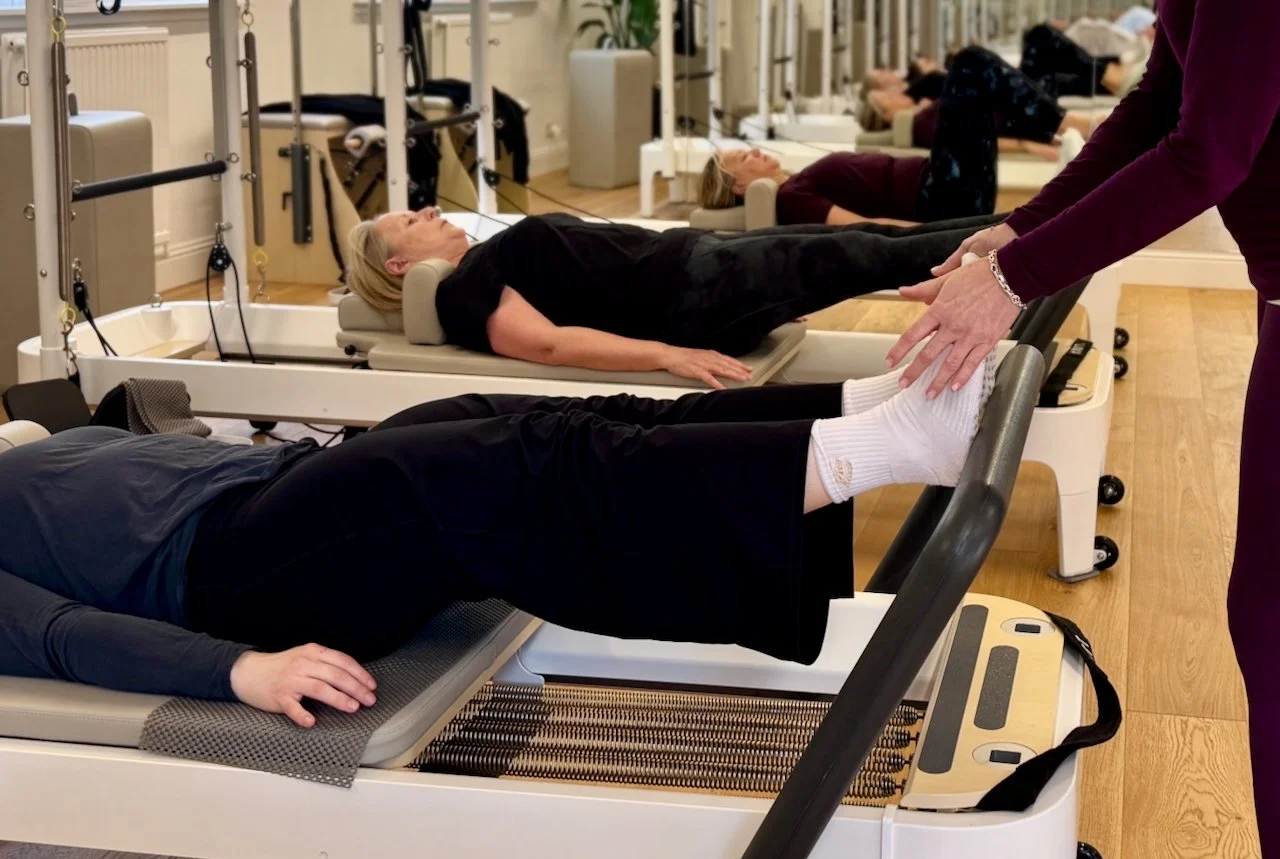
Lucia adjusting a client's position on the Reformer in Luma Studio A, Edinburgh. The kind of hands-on support that makes an exercise accessible sooner
Getting started
If you are recovering from an injury and thinking about starting, our Reformer Fundamentals class is a good place to begin, or speak to us first if you would like to talk through what might suit you best. Our introductory offer of 3 Reformer or Tower classes for £48 is a low-pressure way to start.
Get in touch before your first class if you would like to talk through your injury, or view our full class schedule to see what's coming up.
Written by Lucia Poulter
Lucia is lead instructor and co-founder at Luma Pilates, with 26 years of teaching experience and Comprehensive BASI certification. She has worked with clients navigating injury and recovery throughout her career, often alongside their physiotherapists and GPs. Her approach is straightforward: meet the body where it currently is, and build from there.