Pilates after hip replacement: Can it really help your recovery?
Short answer
Yes. Pilates is not only safe after hip replacement, it's actively recommended by many physiotherapists and surgeons as part of a structured recovery. Gentle mat work can begin within weeks of surgery; Reformer Pilates typically follows once your consultant is happy with your progress. The focus is on rebuilding strength around the joint, restoring range of movement, and retraining how your body moves. Pilates does all of this exceptionally well.
If you're reading this in the weeks or months after surgery, you're probably asking one version of the same question: when can I feel like myself again?
Hip replacement is one of the most common elective surgeries in the UK, and the results are often life-changing. But the recovery period can feel uncertain. You want to move, but you don't want to undo what the surgeon has done. You've been told to be careful, but you've also been told that movement is important.
Both things are true. And Pilates sits right at the intersection.
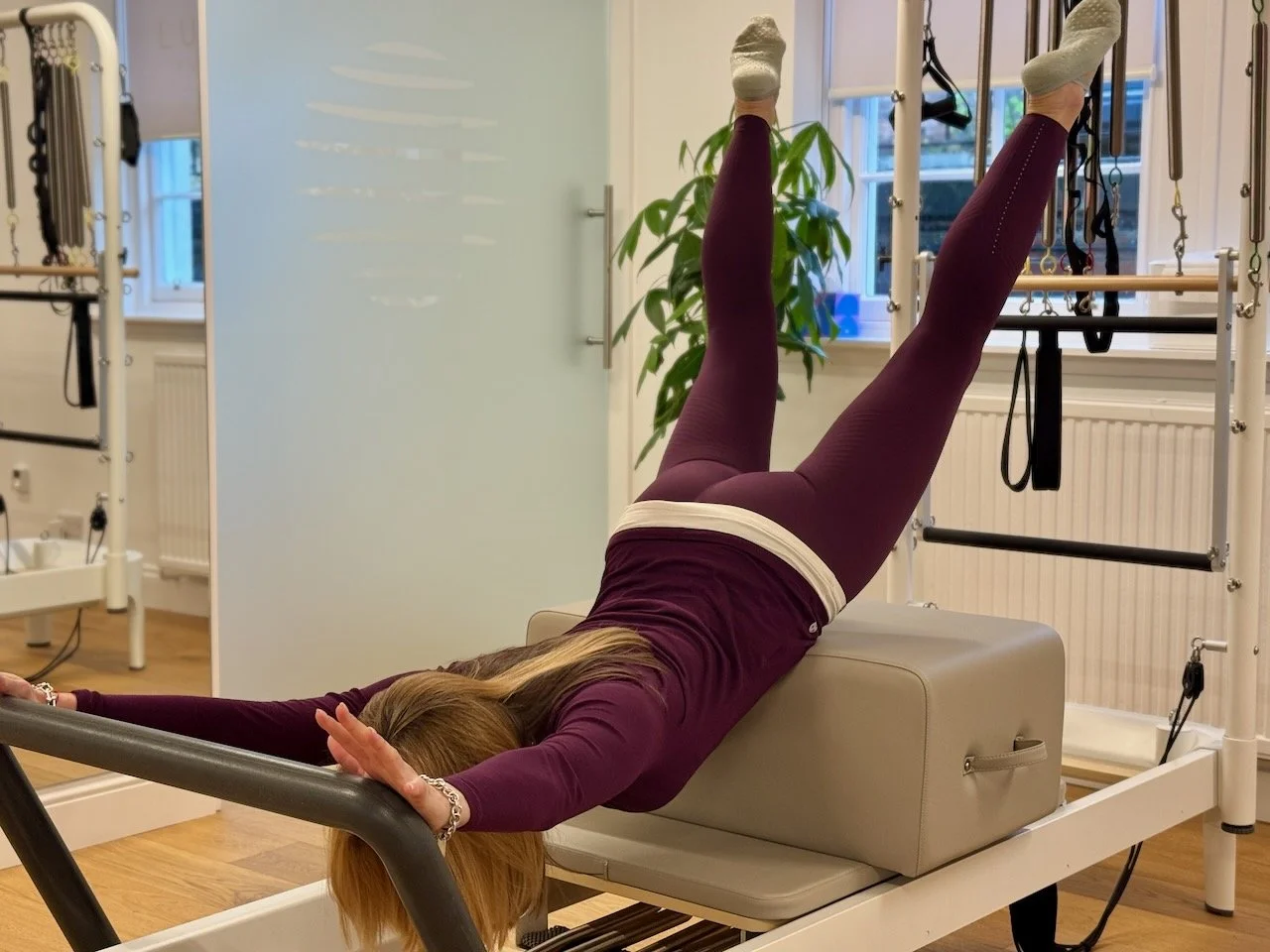
Luma co-founder Lucia Poulter doing Swan dive on the short box. 6 months after a hip replacement
My own recovery: what happened
I had my surgery in July 2025. For someone who teaches Pilates every week and moves for a living, the prospect of major joint surgery was a lot to sit with. But I'd been dealing with the hip for long enough to know that it was the right decision, and I went into it as prepared as I could be: fit, mobile, and with a clear plan for how I was going to approach the recovery.
What surprised me was how quickly things progressed.
Within a week or so after surgery I was doing gentle movement at home. Nothing too demanding, but mindful, careful movement. The kind that activates without overloading. I knew my body well enough to stay well within safe limits, and I had my consultant’s guidance alongside my own experience to draw on.
Within a few weeks I was back on my feet and teaching again.
By the time my follow-up appointments came around, my range of movement had exceeded what my consultant had predicted. The speed of the recovery, and the degree to which I'd regained mobility, went beyond the expected outcome. My consultant was genuinely surprised.
I put it down to three things. My baseline fitness and flexibility going into surgery gave me a head start. The structured, mindful approach I took to early movement meant I wasn't losing ground during the first weeks. And Pilates itself: its emphasis on controlled movement, joint stability, and body awareness is almost uniquely well suited to this kind of recovery.
Today you wouldn't know I'd had the surgery. The range is there, the ease of movement is there. I feel as good as I did before, and in some ways better. It's a reminder of what the body is capable of when you work with it carefully.
Why Pilates works so well for hip recovery
Hip replacement replaces a damaged joint, but surgery alone doesn't restore function. That takes deliberate rehabilitation: rebuilding the muscles around the new joint, retraining movement patterns, and gradually recovering range of motion.
This is exactly what Pilates is designed to do.
Muscle activation around the joint. The hip is surrounded by a complex network of muscles: the glutes, hip flexors, adductors, and deep stabilisers. After surgery, some of these will be inhibited. Either from the procedure itself, from reduced activity during recovery, or from the years of pain and compensation that led to surgery in the first place. Pilates targets these muscles specifically, with exercises that activate them without loading the joint excessively.
Joint stability, not just mobility. A common misconception is that hip recovery is all about getting your range of movement back. It is, but stability matters just as much. A hypermobile joint without adequate muscle support is a vulnerable joint. Pilates builds both simultaneously, which is why it translates so well to long-term function.
Body awareness and movement retraining. After a joint replacement, your brain needs to relearn how to move the new joint. Proprioception, your body's sense of where it is in space, is disrupted by surgery and needs to be rebuilt. The slow, controlled, mindful nature of Pilates is particularly well suited to this. You're not just doing exercises; you're re-educating movement. This was one of the things I noticed most during my own recovery.
Low impact by design. Particularly in the early stages, impact is something to avoid. Pilates, especially Reformer Pilates, is inherently low impact. The spring resistance on the Reformer allows you to work muscles effectively without the joint compression that comes with weight-bearing exercise.
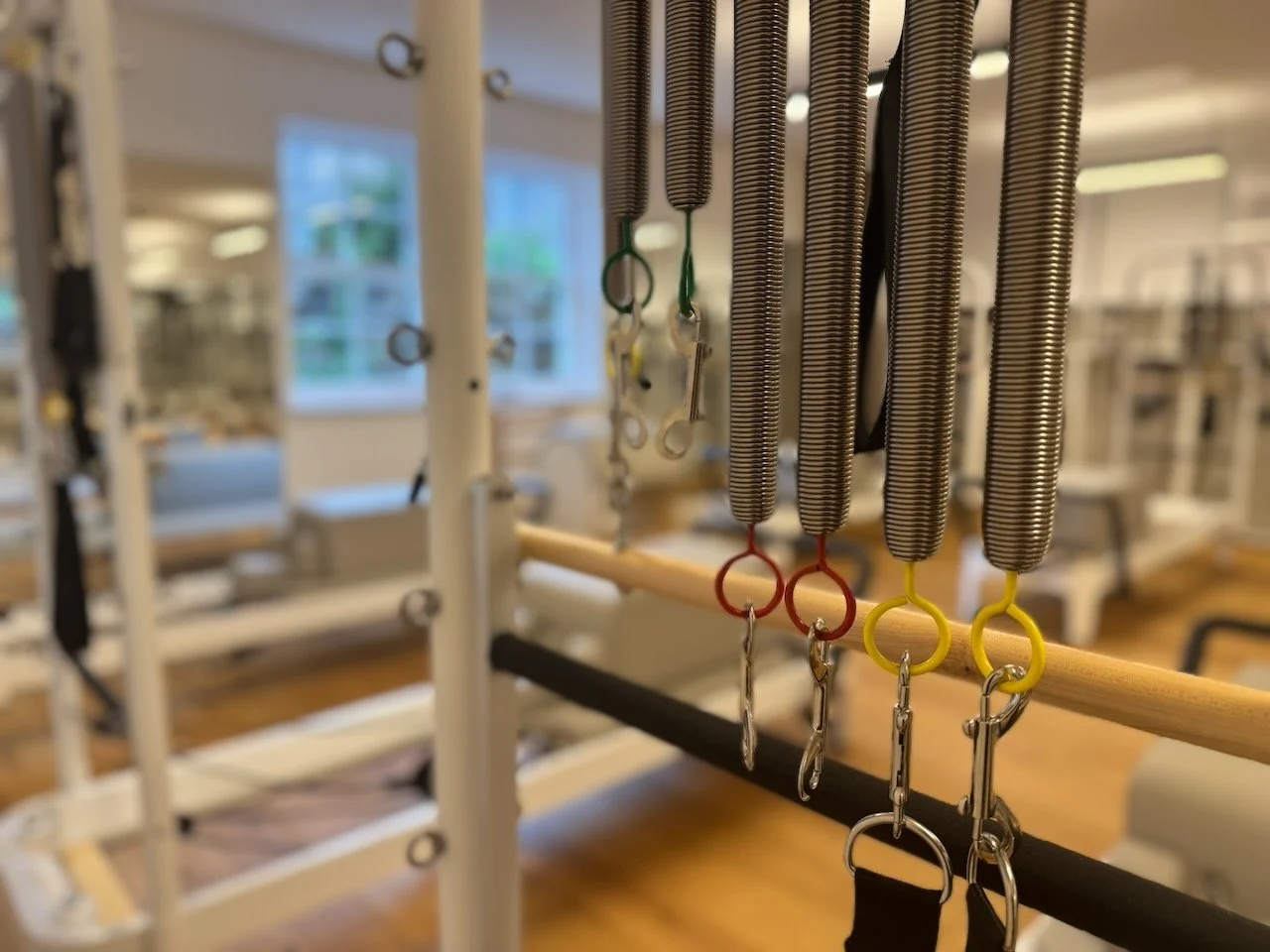
The Reformer's spring-based resistance allows effective muscle work with minimal joint compression
What to expect in class
At Luma, anyone returning to Pilates after hip surgery will be welcomed with that context in mind. We ask all new clients to share any relevant medical history before their first class, and we adapt accordingly.
In the early stages, you can expect:
Emphasis on pelvic stability and core engagement
Gentle hip flexor and glute activation
Supported range-of-movement work
Exercises in supine (lying down) or seated positions that keep load light
Careful attention to any hip precautions your surgeon has given you
As your recovery progresses, classes will gradually introduce more challenge: weight-bearing positions, greater range, and eventually the kind of full-body Reformer work that most of our clients enjoy week to week.
I'd always recommend speaking to your surgeon or physiotherapist before starting or returning to any exercise class after hip replacement. If you'd like to talk through what's right for you before booking, get in touch. I'm happy to help you think it through.
Movements to avoid (and when)
Hip replacement comes with a list of precautions, and these vary depending on the surgical approach your consultant used. For a posterior procedure the most common restrictions in the early weeks are:
Hip flexion beyond 90 degrees: avoid deep forward folds, high knee lifts, or sitting low
Internal rotation: avoid crossing the operated leg over the midline
Combined movements: bending, twisting, and lifting simultaneously
These aren't permanent. Most hip precautions are lifted by your consultant at a follow-up appointment, often around the six to twelve week mark. Once you have clearance, the range of movement that's safe to work in expands significantly.
Always follow the guidance of your surgical team. If anything feels wrong in class, please say so. Your instructor will offer you adjustments right away.
Reformer or Mat Pilates: which is better for hip recovery?
Both have a place. They just serve different moments in recovery.
Mat Pilates is typically where early recovery work begins. Floor-based exercises in lying or seated positions are easy to control and modify. There's no equipment to adjust, which means I can stay focused entirely on you and your movement.
Reformer Pilates tends to come in as recovery progresses. The spring resistance gives you support, allowing you to work at varying levels of difficulty, and many Reformer exercises are performed lying down, which is ideal for hip rehab. The footwork series, in particular, is excellent for rebuilding leg strength and hip stability without axial load. It was one of the first things I returned to in my own recovery.
At Luma, we offer both. If you're in the earlier stages of recovery, our Mat Pilates classes are a good starting point. As your confidence grows, Reformer Pilates offers more variety and progressive challenge. Get in touch and we can help you work out which is right for where you are.
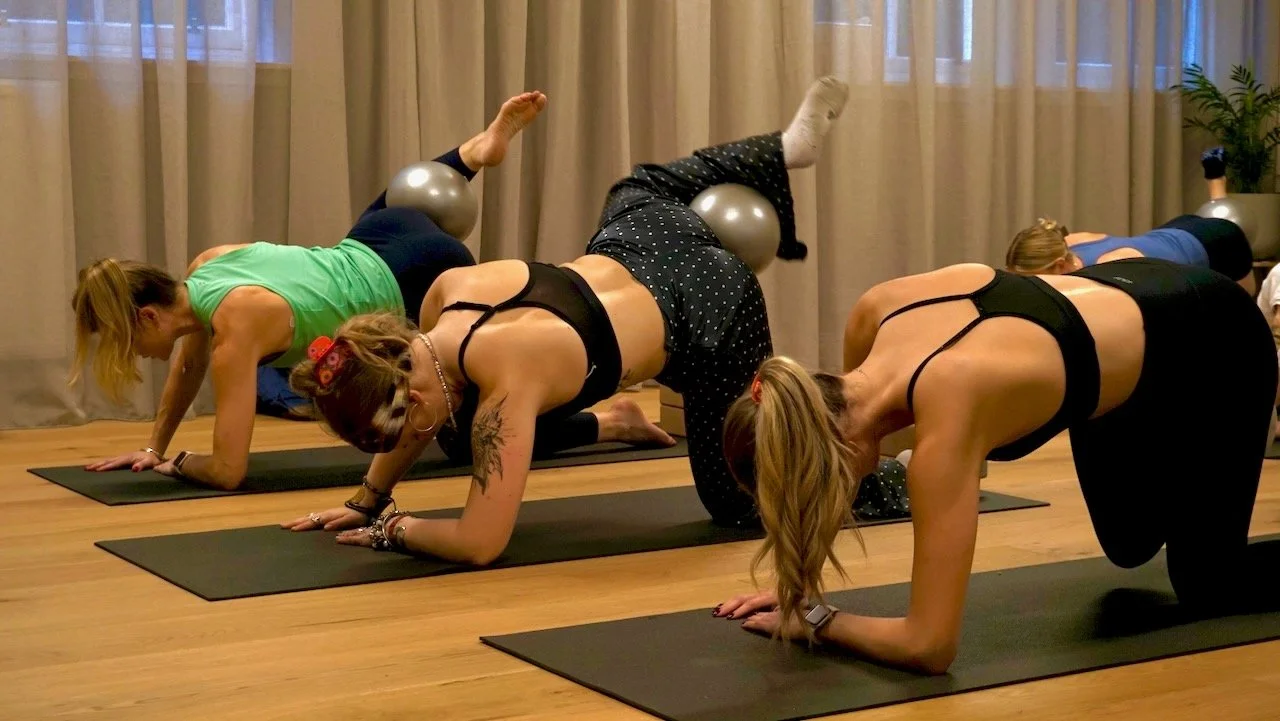
Mat Pilates at Luma Pilates, Edinburgh's New Town. Small props like the Pilates ball add resistance and feedback to floor-based work
When to start Pilates after hip replacement
There's no universal answer. It depends on your surgery, your surgeon's guidance, and how your recovery is going. That said, here are some general markers:
In the first one to two weeks: gentle breathing work, pelvic floor activation, and very light movement are often fine, but check with your physiotherapist first. This is where I began.
Weeks two to six: gentle, supervised mat work may be appropriate. Movement at this stage should be careful, controlled, and well within your precaution limits.
Six to twelve weeks: most people with uncomplicated recoveries can begin attending a structured Pilates class, provided hip precautions are respected and your instructor is aware of your history.
After consultant clearance: once your hip precautions are lifted, a wider range of Pilates work opens up, including Reformer. This is typically the point where recovery starts to feel like progression.
If in doubt, ask your consultant or physio. And when you're ready to talk to us, get in touch or view our class schedule.
Frequently asked questions
Is Pilates safe after a total hip replacement? Yes, when done with appropriate guidance and within the precautions your surgeon has given you. Many physiotherapists actively recommend Pilates as part of hip replacement rehabilitation.
How long after hip replacement can I start Pilates? Gentle mat work may be appropriate within two to four weeks for some people. Reformer Pilates typically follows once your consultant is happy with your recovery, often around six to twelve weeks post-surgery. Always check with your surgical team first.
What hip movements should I avoid after surgery? The most common early restrictions are hip flexion beyond 90 degrees, internal rotation, and combined bending and twisting. These precautions vary by surgical approach and are usually lifted at a follow-up appointment.
Can Pilates improve my range of movement after a hip replacement? Yes. Targeted Pilates work, particularly around hip stability, glute activation, and movement retraining, can contribute to meaningful improvement in range of motion. My own recovery exceeded my consultant's predictions.
Do I need to tell my Pilates instructor about my surgery? Yes, always. At Luma we ask about medical history before your first class, and we adapt accordingly. The more we know, the better we can support you.
Is Reformer or Mat Pilates better for hip replacement recovery? Mat Pilates is usually the better starting point. Reformer Pilates offers more progressive challenge and is excellent as recovery advances. Many clients use both in combination.
Written by Lucia Poulter
Lucia is co-founder and lead instructor at Luma Pilates. Lucia had a total hip replacement in July 2025 and returned to teaching within weeks. Her recovery exceeded her consultant's expectations. She teaches Reformer Pilates at Luma.