Can You Do Pilates and Yoga During Pregnancy?
Short answer
Yes. For most women with uncomplicated pregnancies, both Pilates and Yoga are safe and effective during pregnancy. Reformer Pilates adapts trimester by trimester, building the pelvic floor and deep stabiliser strength directly relevant to birth and recovery. Yoga addresses the nervous system, breath, and mobility in ways that complement the Pilates work well. Always get clearance from your midwife or GP before starting.
The evidence on this is clear and consistent: moving well during pregnancy is one of the best things you can do. Regular, appropriate exercise is associated with better birth outcomes, reduced risk of gestational diabetes, lower rates of pelvic girdle pain, improved sleep, and faster recovery after birth.
The question is not whether to move. It is how, and how to adapt as your body changes across the three trimesters.
This guide covers what Pilates offers during pregnancy and how the practice shifts trimester by trimester. It also covers how Kat Aydin's prenatal Yoga sessions at Luma can complement that work. There is a note on medical clearance at the end. Please read it, whatever your situation.
Why Pilates during pregnancy
Pregnancy asks a great deal of the body. The pelvis widens, the centre of gravity shifts forward, the deep abdominals are progressively stretched and unloaded, and the ligaments throughout the pelvis and lower back soften as relaxin levels rise. The cardiovascular system is working harder. The postural demands of carrying a growing baby are real and cumulative.
Pilates maps onto these changes more directly than most forms of exercise. The deep stabiliser work at the heart of every session, pelvic floor activation, spinal stability, controlled breath, is exactly what the pregnant body needs. The Reformer's adjustable resistance means the work can be modified precisely as things change. And because Pilates is low impact, it stays accessible right through to the third trimester for most women.
The pelvic floor is worth a particular mention. Pregnancy loads it significantly, regardless of how you manage the rest of your exercise. A practice that trains the pelvic floor consistently throughout pregnancy, and that develops its full cycle of engagement and release rather than just bracing it, is one of the most useful investments you can make in your postnatal recovery.
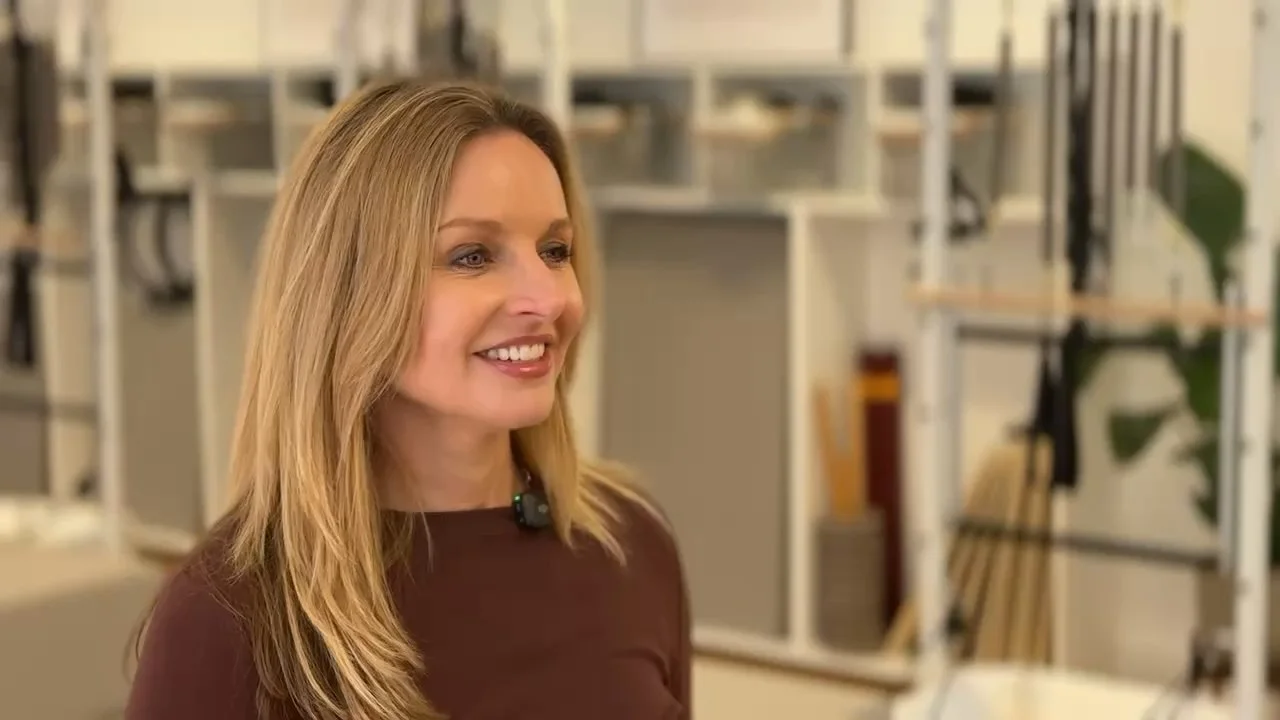
Lucia Poulter, lead instructor at Luma Pilates. She has guided many clients through Reformer Pilates across all three trimesters
Why Yoga during pregnancy
Yoga addresses the dimensions of pregnancy that Pilates approaches less directly. The breath work activates the parasympathetic nervous system, which has a measurable effect on stress levels, sleep quality, and mood. Sustained holds and supported poses develop the kind of body awareness and present-moment attention that many women find genuinely useful during labour. And the emphasis on hip opening, chest mobility, and spinal flexibility addresses the areas where the pregnant body most commonly carries tension and restriction.
There is also the nervous system piece, which matters more than it is often given credit for. Pregnancy, for most women, is not a time of low stress. The psychological demands are real and sustained. A practice that actively supports the nervous system alongside the physical preparation is worth having.
At Luma, Kat Aydin holds specialist certifications in Prenatal and Postnatal Yoga, Restorative Yoga, Yin Yoga, and Yoga for Perimenopause and Menopause, and brings a therapeutic, tailored approach to her private sessions. For many clients, Pilates and Yoga together offer something more complete than either practice alone.
First trimester
The first trimester is often the one that looks least like pregnancy from the outside and feels most demanding from the inside. Fatigue and nausea are common. Exercise capacity sometimes drops considerably.
For most women, the Pilates practice in the first trimester is largely unchanged. Most exercises are appropriate, adjustments are minimal, and the work can continue at the same level when energy allows. Listen to your body when it asks for less. Stay hydrated. Avoid overheating.
Tell your instructor you are pregnant as soon as you feel ready to. The earlier they know, the better they can support you. Not by removing things unnecessarily, but by understanding where you are and making appropriate adjustments as they are needed. If you are new to Pilates, Reformer Fundamentals is where all new clients at Luma begin.
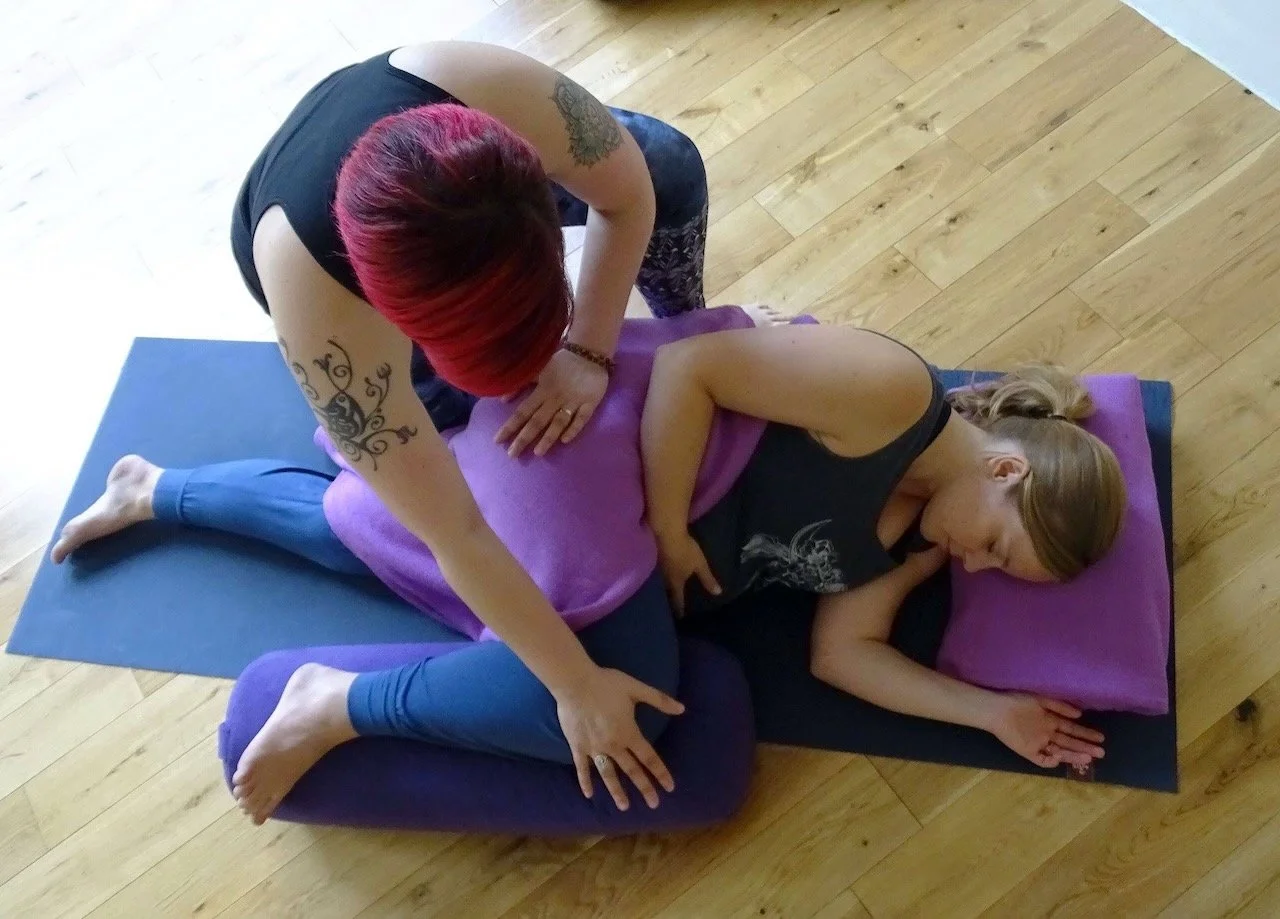
Kat Aydin working with a client in the first trimester. Supported, bolstered positions make Yoga safe and restorative from the very start of pregnancy
Second trimester
For most women the second trimester brings energy back, and a body that is clearly and visibly pregnant. Many clients find this the most rewarding phase to practise. The deep stabiliser work speaks directly to the postural demands that are building, and body awareness and pelvic floor connection often improve considerably during this period.
The main technical adjustments from this point relate to position and intra-abdominal pressure. Lying flat on your back for extended periods is generally avoided from around sixteen to twenty weeks, not because brief supine positions are harmful, but because the weight of the uterus on the inferior vena cava can restrict blood flow and cause dizziness. A well-trained instructor will adapt naturally.
If there is any doming at the midline during abdominal work, it is a sign that the load is more than the linea alba can currently manage. A good instructor will spot it and modify the exercise. It is not something to push through.
Cardio-intensive sequences and breath-holding are also modified during this trimester. The Reformer has enough range to challenge the body genuinely without moving into territory that raises intra-abdominal pressure unnecessarily.
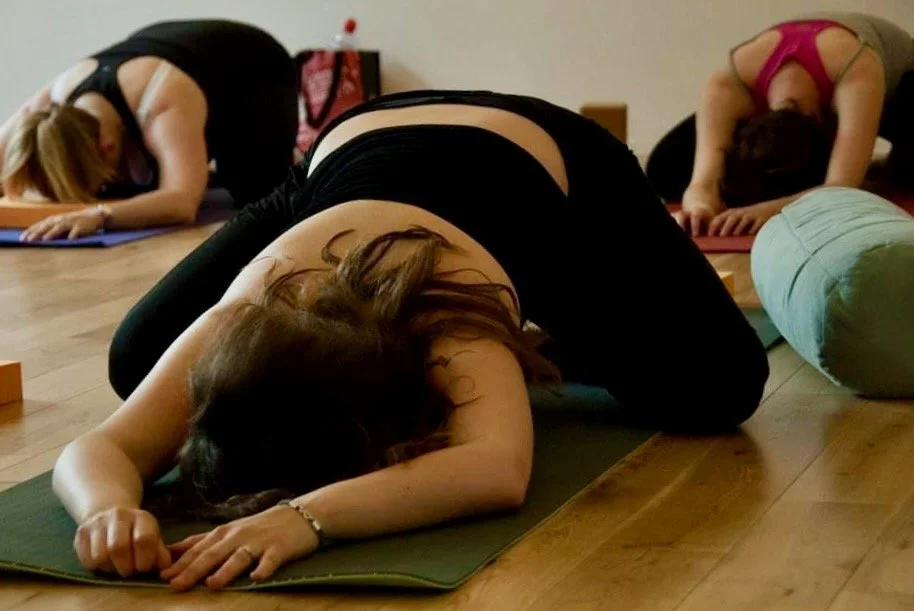
Child's pose in a second trimester Yoga class. One of the most reliably restorative positions during pregnancy
Third trimester
The third trimester asks the most of your instructor. The centre of gravity has shifted considerably, balance is affected, and the body is carrying significantly more load than usual. The practice is substantially modified. But it doesn’t have to stop.
The focus shifts toward preparation: pelvic floor work, spinal mobility, hip opening, and the breath patterns used in labour. Positions that feel genuinely comfortable take priority. The instructor's role becomes less about challenge and more about support.
Many clients continue through to thirty-eight or thirty-nine weeks. Others stop earlier. There is no single right answer. What matters is having an instructor who knows their work and communicates well enough that you can be honest about how you feel, session by session.
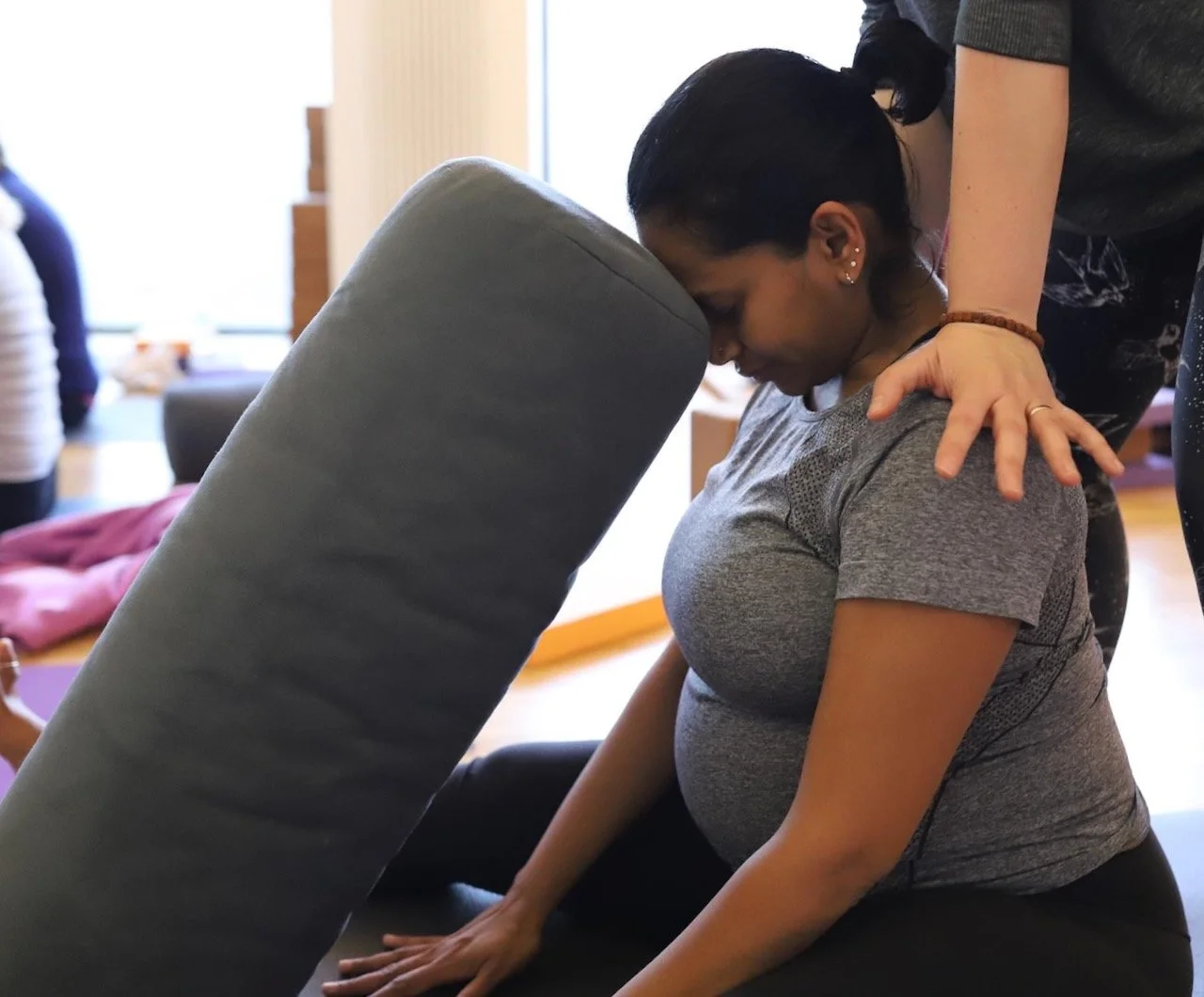
Kat Aydin supporting a client in the third trimester. Bolster work becomes central as the practice adapts to the changing body
What we offer at Luma
Lucia Poulter has worked with pregnant clients throughout her twenty-six years of teaching and holds Comprehensive BASI certification. Prenatal Pilates sessions at Luma are available as private 1:1 appointments, which allows the work to be built entirely around your trimester, your history, and your goals. If there is enough demand, we would consider adding dedicated group prenatal classes to the timetable. If that’s something you would like, get in touch and we’ll add you to the list.
If that is something you would like, get in touch and we will add you to the list.
Alongside our Pilates classes, Kat Aydin offers private prenatal Yoga sessions at Luma. Kat holds specialist certifications in Prenatal and Postnatal Yoga, Yin Yoga, Vinyasa, Restorative Yoga, Yoga for Perimenopause and Menopause, and Qi Gong for Yoga Teachers. For many clients, Pilates and Yoga together offer a more complete approach to pregnancy movement than either practice alone.
Private Pilates sessions cost £90 for a 50 minute 1:1 and £135 for a 1:2. Private Yoga sessions are £100 for a 60 minute 1:1 and £140 for a 1:2. For clients who would like to continue attending group classes during pregnancy with appropriate modifications, get in touch before booking so we can advise on the most suitable class and make sure your instructor is briefed.
A note on medical clearance
This guide is written for women with uncomplicated pregnancies. If you have been advised to restrict exercise, or if you have any condition affecting your pregnancy, including placenta praevia, pre-eclampsia, a history of premature labour, or significant pelvic girdle pain, please speak to your midwife or obstetrician before starting or continuing any exercise programme. A good instructor will ask. But the responsibility to seek that clearance is yours, not theirs.
FAQ
-
Yes, for most women with uncomplicated pregnancies. The Reformer is low-impact and highly adaptable, and the practice can be modified trimester by trimester as your body changes. Always get clearance from your midwife or GP before starting, and tell your instructor you are pregnant as early as you feel comfortable doing so.
-
Yes. Prenatal Yoga is safe and beneficial for most pregnant women. It supports the nervous system, develops breath awareness, and addresses the hip opening and spinal mobility that the pregnant body needs. At Luma, Kat Aydin offers private prenatal Yoga sessions with specialist certification in Prenatal and Postnatal Yoga.
-
There’s no single answer. Many clients continue into the third trimester, some to thirty-eight or thirty-nine weeks. Others stop earlier. What matters is having an instructor who communicates well and adapts the work to how you feel session by session. If you have any concerns, speak to your midwife or GP.
-
Yes, as early as you feel ready to. The earlier your instructor knows, the better they can support you. Not by removing things unnecessarily, but by understanding where you are and making appropriate adjustments as they are needed.
-
Yes, though we would recommend starting with private sessions rather than group classes. This allows the work to be built entirely around your trimester, your history, and your current level of fitness. Get in touch before booking and we will advise on the best starting point.
-
Pilates focuses primarily on the deep stabiliser and pelvic floor strength directly relevant to carrying a baby and recovering after birth. Yoga addresses the nervous system, breath, and mobility in ways that complement the Pilates work. For many clients, both together offer a more complete approach to pregnancy movement than either practice alone.
Written by Lucia Poulter
Lucia is lead instructor and co-founder at Luma Pilates. She holds Comprehensive BASI certification and has worked with pregnant clients throughout her twenty-six years of teaching. She teaches Reformer Pilates at Luma.