Pilates for Sciatica in Edinburgh: Does It Help?
Short answer
Yes, with the right approach. Pilates can help build the core and gluteal strength that supports the lumbar spine and pelvis, and the controlled, low-impact nature of the practice makes it appropriate even during a flare. The key is working with an instructor who understands the condition, modifying movements that aggravate symptoms, and not pushing through pain. If your sciatica is severe, undiagnosed, or accompanied by bladder or bowel changes, seek medical advice before starting.
Sciatica is something I see regularly at Luma, and it tends to arrive with a particular kind of frustration. The pain along the back of the leg, the numbness, the burning sensation that makes sitting through a meeting or sleeping on one side feel impossible. Most people who come to us with it have already tried rest, painkillers, and possibly physiotherapy. Some have been told to keep moving but are not sure what moving safely looks like.
Pilates is one of the most consistently recommended forms of exercise for sciatica, and in my experience it is one of the most effective. But the recommendation comes with an important qualification: the approach matters. What helps sciatica in a well-taught Pilates class is quite different from what makes it worse.
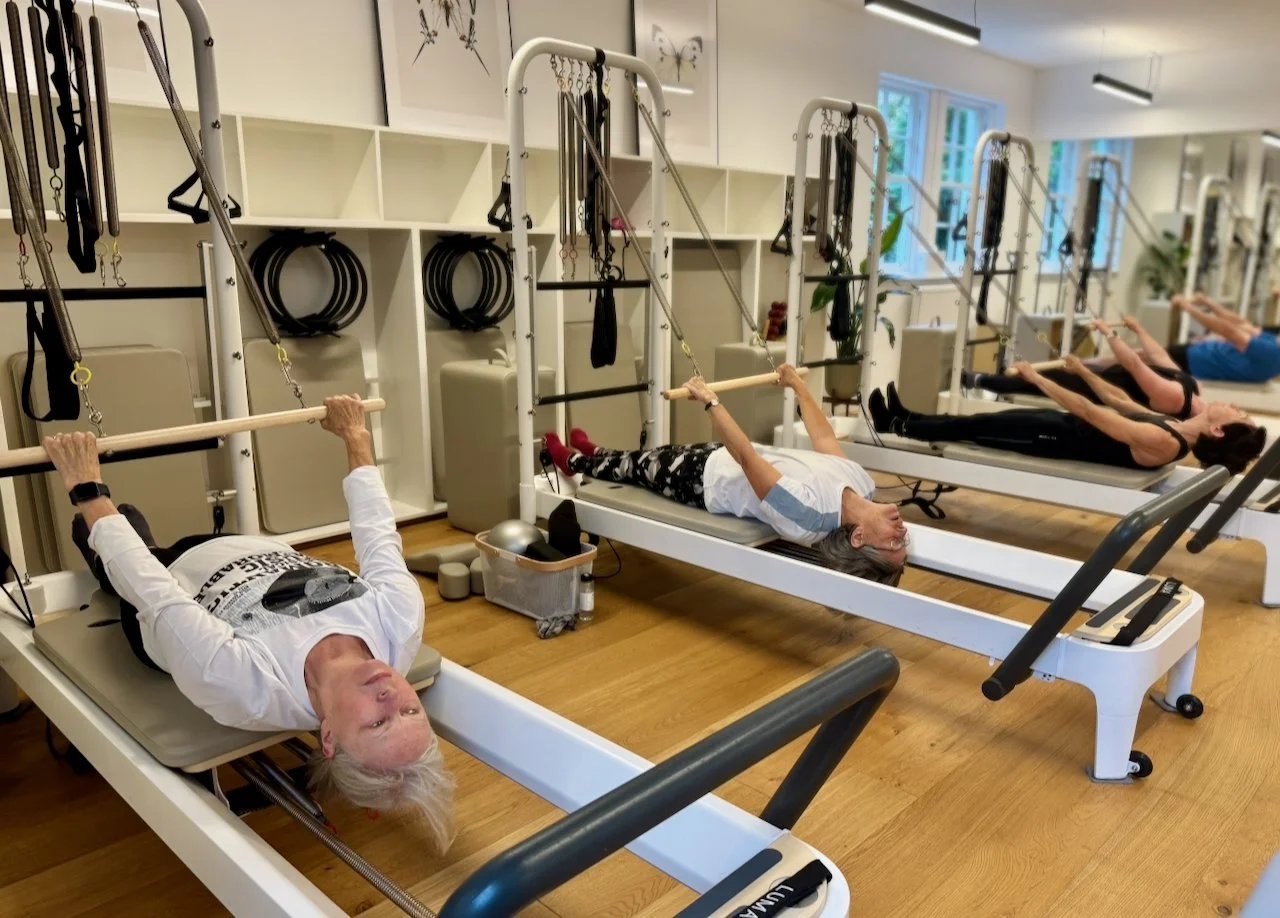
Tower class at Luma Pilates, Edinburgh. Supported, controlled, low-impact work that suits most sciatic presentations
What is sciatica?
The sciatic nerve is the longest nerve in the body, running from the lower spine through the buttock and down the back of each leg. Sciatica refers to pain, numbness, tingling, or weakness that travels along this path, typically on one side.
The most common cause is compression or irritation of the nerve root in the lumbar spine, usually from a disc bulge or herniation at L4/L5 or L5/S1, or from spinal stenosis, where narrowing of the spinal canal puts pressure on the nerve. Symptoms resembling sciatica can sometimes arise from structures outside the lumbar spine, which is one reason a clear diagnosis matters.
Understanding the cause is worth pursuing because it shapes how the condition is managed. If you have not had a diagnosis, it is worth getting one from your GP or a physiotherapist before starting any structured exercise programme.
Why Pilates helps
Sciatica has different causes and presentations, and what helps one person may not help another. What the evidence and clinical guidance consistently support is that staying active and building strength and body awareness is better than rest for most people with sciatica. That is where Pilates has a useful role.
Pilates is built around activating the deep spinal stabilisers and developing controlled, coordinated movement through the lumbar spine and pelvis. Strengthening the core and gluteal muscles can help people maintain function, manage symptoms more comfortably, and gradually build confidence in how they move. The practice also develops awareness of spinal alignment: how the spine sits and moves, which is useful regardless of the specific cause of symptoms.
The Reformer can be particularly helpful because the spring resistance and lying position make it easier to adjust the range and load of each exercise in response to how someone is feeling. Footwork, leg press, and hip series exercises are often well tolerated and build the kind of strength that supports recovery. That said, what works varies from person to person, and your instructor will adjust based on how you respond throughout the session.
The evidence
NHS guidance on sciatica recommends staying active and continuing to move as normally as possible. Rest is not advised as a primary treatment for most presentations. This is the clearest and most defensible point the evidence supports: for most people with uncomplicated sciatica, keeping moving is better than stopping.
Research into exercise-based approaches for lumbar pain and radiculopathy is ongoing and the picture is not uniform across all study types. What the broader body of evidence suggests is that structured movement, particularly approaches that build strength and body awareness, can help people manage symptoms and maintain function. Pilates-based exercise has been examined in this context, with studies finding it can be a useful component of a management approach for some presentations of lumbar pain.
The honest framing is that Pilates is one appropriate option among several for people with sciatica who have been advised to keep active. It is not a cure, and it works best alongside rather than instead of medical assessment and guidance.
What to modify and what to avoid
Teaching Pilates to a client with sciatica requires a different set of priorities from general Pilates instruction. The specific modifications depend on the cause, the current stage of symptoms, and how an individual responds. Rather than a fixed set of rules, the approach is guided by symptom response throughout.
Sustained forward flexion of the lumbar spine may need to be modified for some people, particularly those with disc-related presentations. Exercises where the lower back rounds under load can increase symptoms in some cases. Your instructor will watch how you respond and adjust accordingly.
Neutral spinal alignment is a useful starting position for most exercises and something instructors will cue consistently. It is not a rigid rule so much as a useful default that many clients find reduces discomfort.
Symptom response is the guide. If a movement increases leg symptoms, causes sharper pain, or produces numbness that worsens during the exercise, that is a signal to stop and modify. A degree of awareness or mild local sensation is different from symptoms travelling further down the leg or intensifying. The latter is worth flagging to your instructor immediately.
Building gluteal and hip strength progressively is generally well tolerated and forms a central part of the work. Footwork, hip abduction, and leg press series are often a good starting point.
High-impact activity is worth avoiding during a flare for most people, not because Pilates involves much of it, but because the transition back to running or gym training is worth approaching gradually once symptoms have settled.
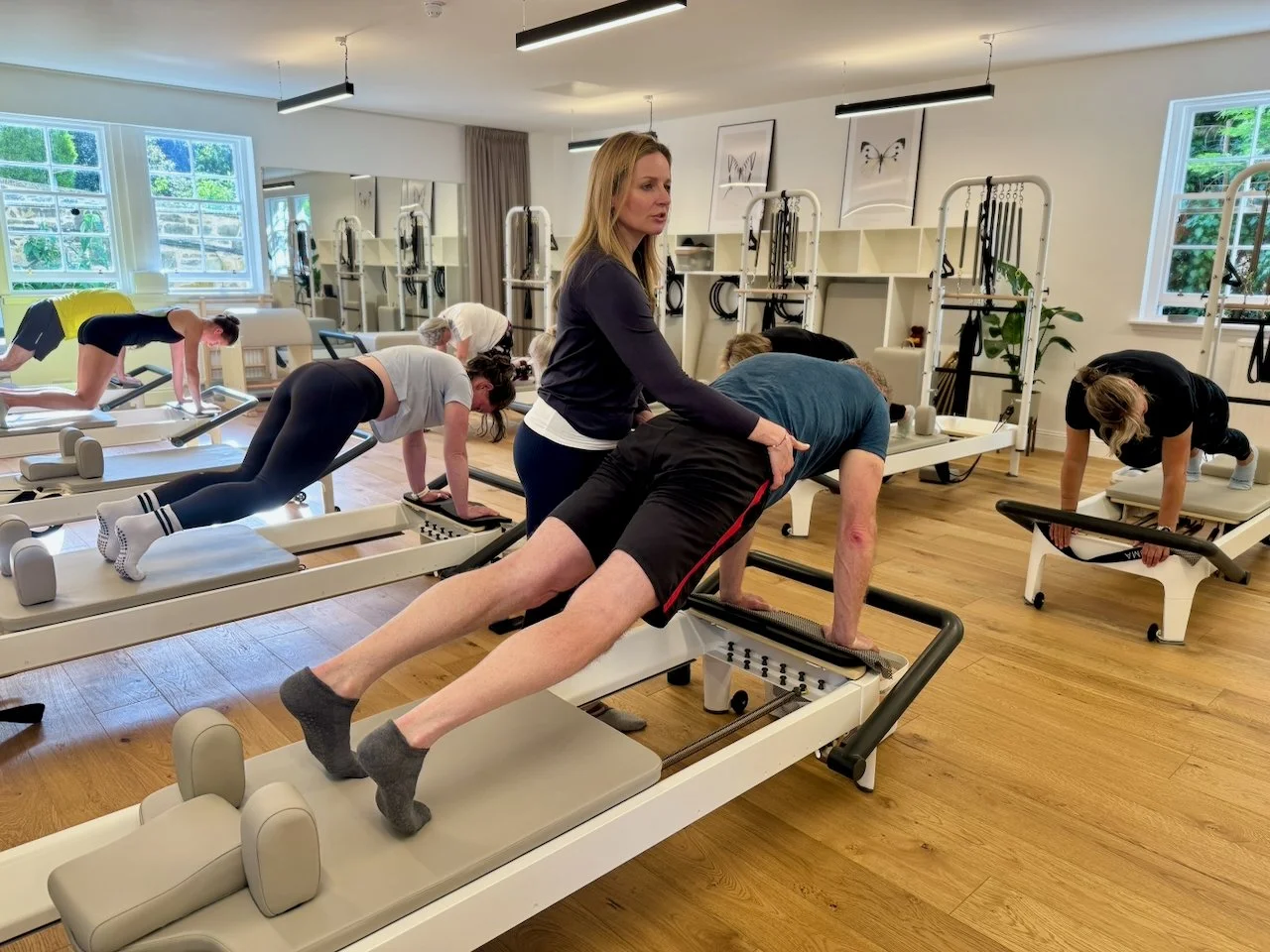
Lucia Poulter cueing hip and glute work at Luma Pilates, Edinburgh. Building the strength that supports people managing sciatic symptoms
When to see your GP first
Most sciatica is manageable with movement and time. But certain symptoms require medical attention before starting any exercise programme, and some require urgent assessment.
Seek emergency medical assessment immediately if you experience bladder or bowel changes alongside your leg pain, or numbness or tingling in the saddle area (inner thighs and groin). These can indicate cauda equina syndrome, a serious condition that requires urgent treatment.
See your GP promptly if you experience:
Sciatica following a fall, accident, or trauma.
Progressive weakness in the leg, or weakness that is worsening rather than varying.
Symptoms on both sides simultaneously.
Sciatica accompanied by unexplained weight loss, fever, or night pain that wakes you from sleep.
If your sciatica has already been assessed by a GP or physiotherapist and you have been advised to keep active, Pilates is an appropriate next step. Share any guidance you have received with your instructor before your first session.
What to expect at Luma
If you come to Luma with sciatica, the most important thing you can do is tell your instructor before the session begins. The foundational work, footwork, pelvic stabilisation, and hip strengthening, can support strength and movement while symptoms settle, and is where we will spend the most time.
Exercises that involve lumbar flexion under load will be modified or replaced. Your instructor will monitor how you are responding throughout and adjust in real time. If a particular movement increases your leg symptoms, we stop and find an alternative.
Reformer Fundamentals is the right starting point for most clients with sciatica. The foundational work in that class builds useful strength and control. If you would prefer to begin with a private session so your instructor can assess your specific presentation before joining a group class, that is also a good option.
We work regularly with clients managing lower back pain and hip pain, both of which share significant overlap with sciatic presentations. The approach is consistent: careful, precise, and built around what your body actually needs rather than a generic sequence.
Get in touch before your first class if you would like to discuss your situation first.
Frequently asked questions
Is Pilates good for sciatica? Yes, with the right approach. Pilates can help build the core and gluteal strength that supports the lumbar spine and pelvis, and the controlled, low-impact nature of the practice makes it appropriate even during a flare. The key is working with an instructor who understands the condition, modifying movements that aggravate symptoms, and not pushing through pain.
Can Pilates make sciatica worse? It can, if the approach is wrong. Movements that aggravate symptoms or push into pain can make things worse. In a well-taught class where your instructor knows about your symptoms and adjusts accordingly, this should not occur.
Should I do Pilates during a sciatica flare? In most cases, gentle movement is appropriate and beneficial during a flare. Complete rest is not recommended by NHS guidance. The class should be modified based on how you are responding, and you should tell your instructor about your symptoms before the session begins.
How long before I notice improvement? Sciatica trajectories vary considerably depending on the cause, severity, and the individual. Some people notice a change in symptoms relatively quickly; for others progress is slower and less linear. Consistency matters more than speed.
Is Reformer or Mat Pilates better for sciatica? The Reformer can be particularly useful because the resistance and range of each exercise are easy to adjust in response to symptoms, and many exercises are performed lying down which some people find more comfortable during a flare. Mat Pilates is also appropriate for many people. What matters more than the format is whether the exercises are well suited to your specific presentation.
Do I need a diagnosis before starting? It is advisable to have your sciatica assessed by a GP or physiotherapist before starting, particularly if your symptoms are severe, undiagnosed, or accompanied by any of the red flag symptoms listed above. If you have already been assessed and advised to keep active, Pilates is an appropriate choice.
Written by Lucia Poulter
Lucia is lead instructor and co-founder at Luma Pilates, with 26 years of teaching experience and Comprehensive BASI certification. She works regularly with clients managing sciatic symptoms in both group and private sessions. In her experience, clients who approach it with patience and consistency, building the right strength rather than pushing through pain, make the most meaningful progress.