Barre Classes in Edinburgh: A Guide
Short answer
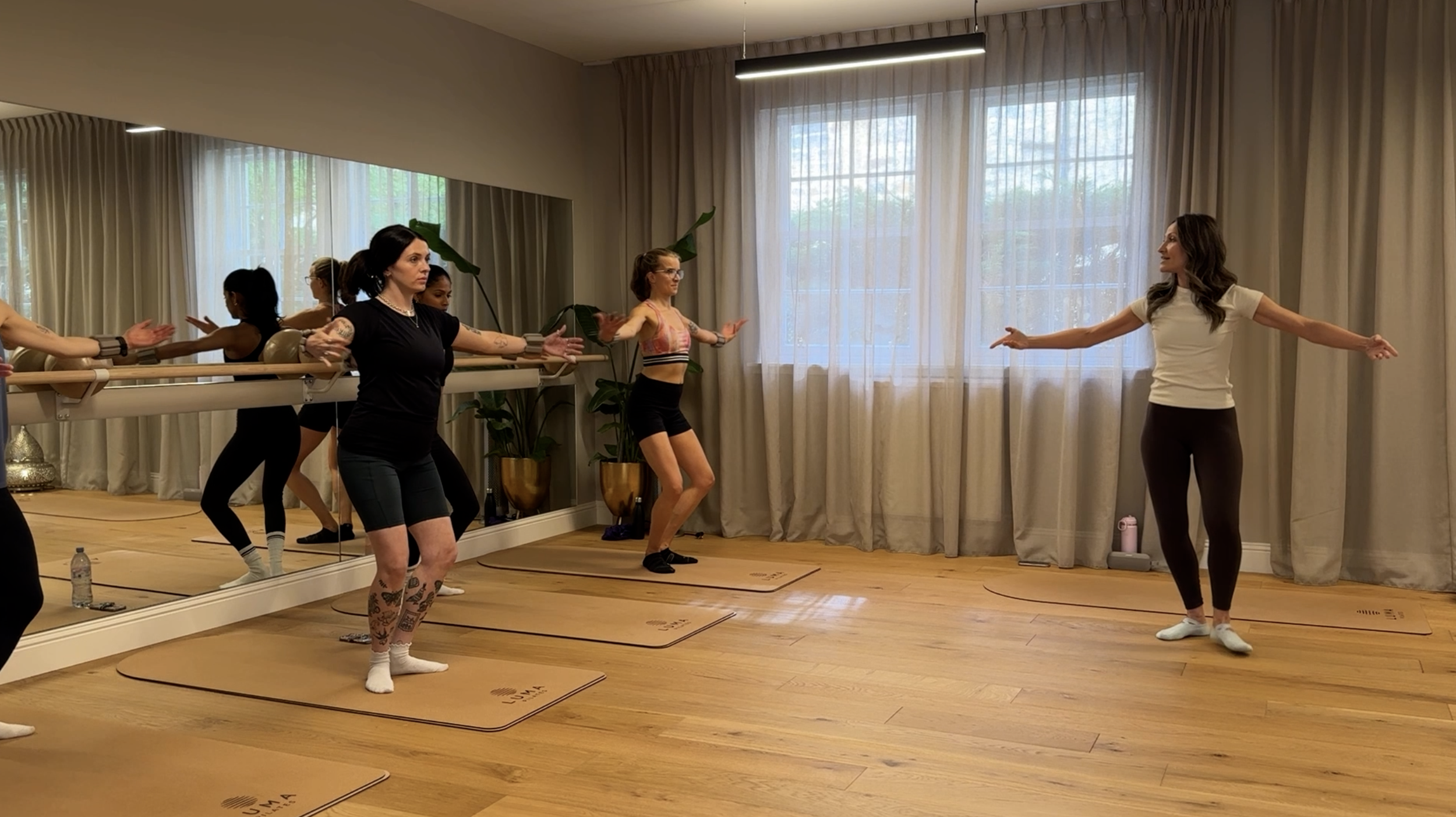
Barre classes in Edinburgh combine ballet-inspired movement, Pilates principles and light resistance work into a low-impact full-body workout. At Luma we run weekly 45-minute barre sessions, including a gentler Level 1 option for beginners. No dance background needed.
What is barre?
Barre is a group fitness format built around small, precise, high-repetition movements. It takes its name from the ballet barre, the horizontal rail used in classical dance training for balance and support, and draws on ballet conditioning alongside elements of Pilates, yoga and functional strength work.
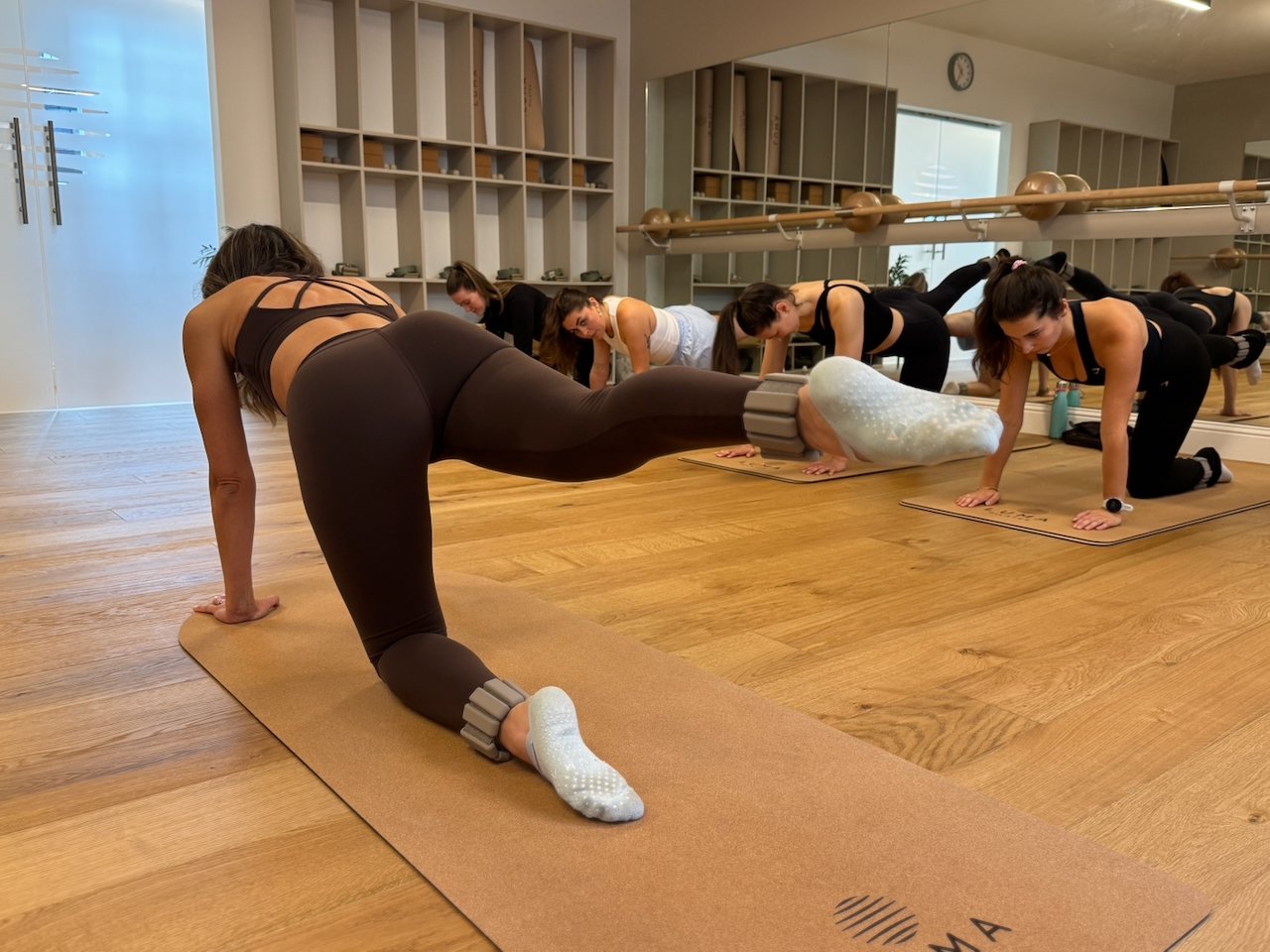
The movements are low-impact. There are no jumps, no heavy loads and no choreography to memorise. Instead, you work through isolated contractions of specific muscle groups (thighs, glutes, core, arms) with small ranges of motion and a high number of repetitions. Those tiny pulses are deceptively hard.
Unlike ballet itself, barre classes require no dance training. You follow the instructor, hold the barre for balance where needed, and work at your own pace. The format is accessible to most people and adapts well to different fitness levels.
Barre classes at Luma
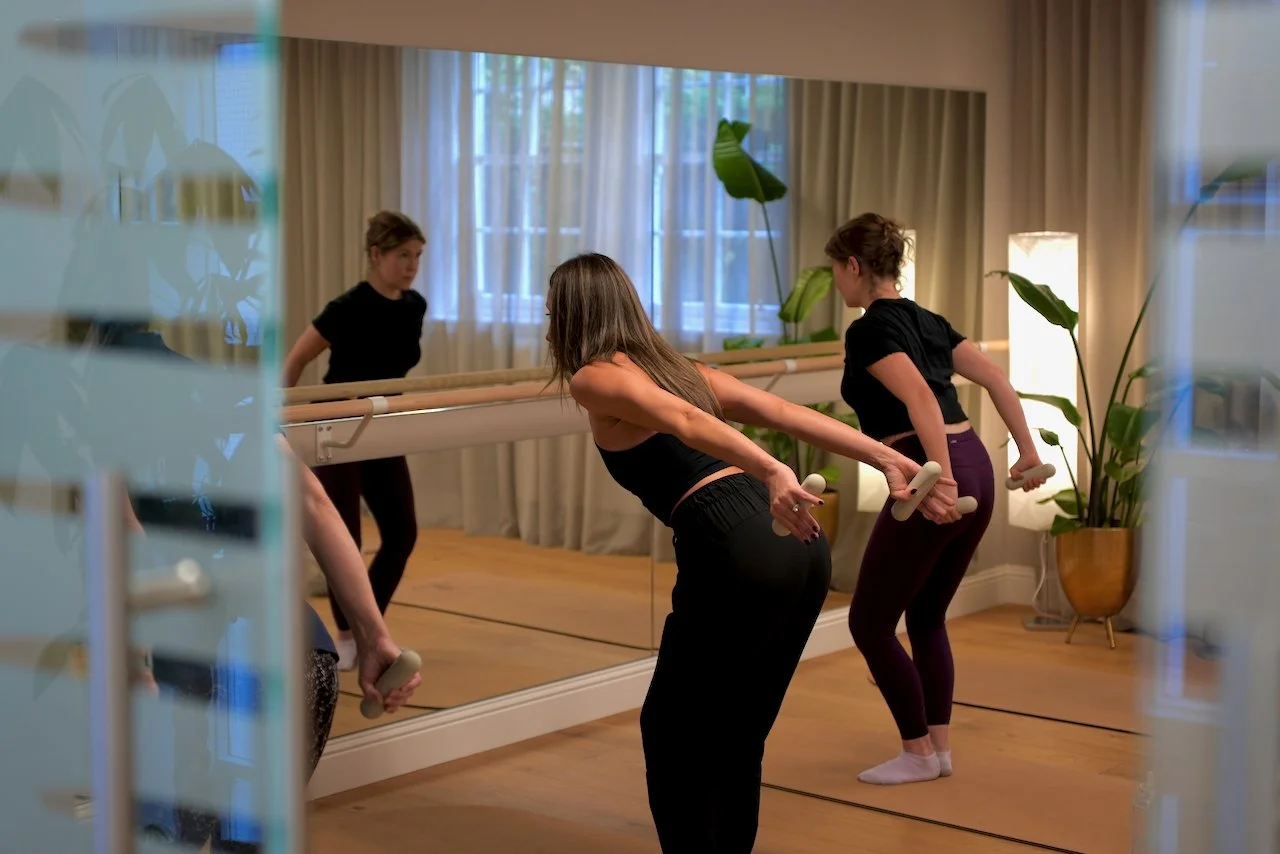
Luma’s barre programme is taught by two experienced instructors who also teach other classes at the studio, so sessions are grounded in movement quality and anatomy rather than pace alone.
We run two formats:
| Class | Level | What it is |
|---|---|---|
| Barre | All levels | The full Luma Barre class. Ballet-inspired movement with Pilates principles, light weights and resistance work. Precise and demanding. 45 minutes. |
| Barre Level 1 | Beginner | A gentler-paced introduction focused on alignment, posture and controlled movement. Ideal if you are new to barre or prefer more instruction and rest. Move up to the full class when you are ready. 45 minutes. |
Both classes are small-group sessions, never more than 10 people, at our studio on Northumberland Street NE Lane in Edinburgh's New Town. Morning sessions run Wednesday, Thursday and Friday, with a Wednesday lunchtime class also available.
View all current sessions and book on the timetable.
Your instructors
Two instructors teach barre at Luma: Serena and Liron both have a professional dance background, and more than 10 years of experience to the studio. You can see more on our Barre class page.

What to expect in a Luma Barre class
Each class runs for 45 minutes and follows a consistent structure, though the specific exercises vary session to session. Here is a typical breakdown:
| Phase | Approx. time | What happens |
|---|---|---|
| Warm-up | ~5 min | Gentle mobilisation and postural set-up. Gets the body warm and establishes the movement quality we carry through the whole class. |
| Arms and upper body | ~8 min | Light hand weights or resistance bands. High-rep sequences targeting the shoulders, biceps, triceps and upper back. |
| Barre work | ~18 min | The main section. Standing at or near the barre: plié sequences, leg lifts, attitude work, balance challenges. Targets the thighs, glutes and hip stabilisers. This is where the burn lives. |
| Centre and mat work | ~10 min | Floor-based core work drawing on Pilates principles. Abdominal engagement, obliques and deep stabilisers. |
| Stretch and cool-down | ~4 min | Hip flexors, quads, hamstrings and shoulders. You will want this. |
Throughout the class your instructor is cueing alignment: not just what to do, but how your body should feel doing it. The movements are small and controlled, and the quality of what you do matters more than the size of the range.
This is what we mean by correction-led teaching. Your instructor may also use tactile cueing: a light, hands-on touch that shows your body where to go. It always works alongside verbal cues, and it is always optional, so tell your instructor if you would rather not be touched. Our guide to why hands-on teaching matters in Pilates explains how it works.
Benefits of barre
Barre sits in its own category: muscular endurance, mobility, postural conditioning and stability, all in one low-impact session. It is not cardio and it is not heavy strength training. What it does well, it does consistently. Regular clients typically notice:
Improved posture. The emphasis on spinal alignment, shoulder position and core engagement carries directly into how you stand and sit the rest of the day.
Stronger legs and glutes. The isometric holds and high-rep sequences target the smaller stabilising muscles that conventional gym work often misses.
Better balance. Single-leg work and progressively reduced barre support build proprioception over time.
Core stability. The deep stabiliser muscles are worked throughout, not just in the floor section.
Flexibility and mobility. The stretch component addresses hip flexors, hamstrings and thoracic mobility – areas most people need more of.
Low injury risk. No impact, no heavy loads and an instructor watching your movement quality throughout. Barre adapts well if you have joint sensitivities or are returning from injury.
Barre vs Pilates: what’s the difference?
Both formats are low-impact, both prioritise alignment and both are taught in small groups at Luma. But they feel different and target different things.
| Barre | Reformer Pilates | Mat Pilates | |
|---|---|---|---|
| Equipment | Ballet barre, light weights, mat | Reformer machine (spring resistance) | Mat only |
| Movement origin | Ballet conditioning | Joseph Pilates system | Joseph Pilates system |
| Movement style | High-rep, small range, isometric holds | Controlled, full-range, spring-loaded | Bodyweight, mat-based sequences |
| Standing work | Significant | Minimal | Some |
| Lower body focus | Very high | Moderate | Moderate |
| Core focus | Strong | Very strong | Very strong |
| Balance training | High | Moderate | Moderate |
| Pairs well with | Mat Pilates, Yoga | Barre, Yoga | Barre, Reformer, Yoga |
Many Luma clients combine classes across the week. Barre and Mat Pilates complement each other well. Barre covers the standing work and leg endurance that mat does not, while Mat Pilates develops the deep core control that makes barre technique sharper.
If you are deciding where to start, our classes page gives a full overview.
Who is barre for?
The low-impact format makes barre accessible to most people, including those with joint sensitivities or who have not exercised regularly for a while. At Luma, barre clients include:
People new to structured movement who want something effective but gentle on the joints
Pilates clients adding variety and more standing and leg work to their week
Clients in their 40s, 50s and 60s looking to maintain bone density, balance and functional strength
People who want to work harder than a yoga class without going into a gym setting
Those returning from injury who need supervised, low-impact movement (please email us before booking)
The one thing you do not need is any dance experience. Most Luma barre clients have never danced. The class works regardless.
Barre can also be adapted during pregnancy, but please get clearance from your midwife or GP first and email us before your first class so we can advise you on the right class.
What to wear to barre
Grip socks are essential. They keep you stable on the floor and at the barre rail. If you do not have a pair, we sell them at the studio. Beyond that, wear something you move comfortably in: fitted leggings are practical because they let your instructor see your alignment, and a fitted top or sports bra works well for the upper body sequences.
Our full what to wear guide covers everything in more detail, and most of it applies directly to barre.
What barre classes cost
Barre is priced with our other Mat, Barre and Yoga classes. Here’s what you pay.
| Option | Price |
|---|---|
| First 3 classes (new clients) | £30, and they can be any Mat, Barre or Yoga class |
| Single class | £20 |
| 5 class pack | £90 (£18 a class), valid for 60 days |
| 10 class pack | £160 (£16 a class), valid for 120 days |
| Subscriptions | From £54 a month for 2 classes. Cover all class types, with a 3 or 12 month commitment |
Class packs run from the date you buy them, not from your first class, and unused classes cannot be rolled over or refunded after they expire. Student concessions are available on class packs, so contact the studio for details.
If you mainly take barre or other Mat, Barre and Yoga classes, a class pack gives the lowest price per class. Subscriptions cover all class types, so they make most sense if you also take Reformer classes. Our guide on how to choose between class packs and memberships can help you decide.
Reformer Pilates costs more, at £30 for a single class, because of the specialist equipment. Our guide to Reformer Pilates prices in Edinburgh has the full comparison. Current prices are always on the prices page.
Getting started
The easiest way to find out whether barre suits you is to try a class. Here is how to begin at Luma.
1. Pick your class. If you are new to barre, or you want more instruction and rest, start with Barre Level 1. If you have taken barre or Pilates classes before and want a more demanding session, book the full Barre class. You can move between the two as you build confidence.
2. Book on the timetable. Barre runs on Wednesday, Thursday and Friday mornings, with a Wednesday lunchtime class too. Classes are capped at 10 people, so spaces are limited and it is worth booking ahead. You can see every session and book on the timetable.
3. Know what it costs. Our first 3 classes are from £30, and they can be any Mat, Barre or Yoga class, which gives you time to try barre properly before you commit. After that, a single class is £20 and class packs start at £90 for 5 classes. See what barre classes cost above or the prices page.
4. Bring grip socks. They are the only specialist kit you need, and we sell them at the studio if you do not have a pair. Wear something comfortable you can move in. Our what to wear guide has more detail.
5. Tell us about anything we should know. If you are pregnant, returning from injury or have joint sensitivities, please email us before the class starts so we can advise you on the right class. It also gives our instructors notice so they can offer the right modifications.
If you would like to try barre in a relaxed setting, our next First Friday is Barre with Serena on 7 November at 4pm, and all levels are welcome.
Not sure which class is right for you? Get in touch and we will point you in the right direction.
Barre glossary
A few terms you will hear in class:
| Term | What it means |
|---|---|
| Plié | A bend of the knees with feet turned out. Grand plié is deep; demi-plié is shallow. The most fundamental barre movement. |
| Relevé | Rising onto the balls of the feet. Challenges calf strength and ankle stability. |
| Turnout | Rotating the legs outward from the hip. In barre class, you work to your comfortable range, not a full ballet 180 degrees. |
| Attitude | A leg lifted behind or to the side with the knee bent. Used in leg lifts and balance work. |
| Tuck | A posterior pelvic tilt: scooping the pelvis slightly under. Used in seat work to increase glute engagement. Your instructor will cue how much. |
| Pulse | A tiny, rapid repetition, usually 1 to 2 centimetres of movement. The source of the famous barre burn. |
| Neutral spine | The natural S-curve of the spine, maintained during mat work. Shared vocabulary with Pilates. |
| Seat work | Barre shorthand for exercises targeting the glutes. Usually done at the barre or on all fours on the mat. |
| Tactile cueing | A light, hands-on touch from your instructor that shows your body where to go or helps you feel a muscle working. Used alongside verbal cues, and always optional. |
For Pilates-specific terms, the Luma Pilates glossary covers everything you will encounter in our other classes.
Key takeaways
Barre is low-impact, ballet-inspired movement built on small, precise, high-repetition exercises. You do not need any dance experience to take a class.
Luma barre classes are 45 minutes and capped at 10 people, so your instructor can see your alignment and adjust the work for you.
We run a full Barre class and a gentler Barre Level 1. If you are new to barre or want more instruction and rest, start with Level 1 and move up when you are ready.
Barre and Pilates complement each other. Barre builds standing leg endurance, balance and posture, while Mat or Reformer Pilates develops the deep core control that sharpens your barre technique.
Grip socks are the only specialist kit you need, and we sell them at the studio.
A single barre class is £20, and a 10 class pack brings it down to £16 a class.
If you are pregnant or returning from injury, please email us before you book. Barre can be adapted, but we want to understand your situation first.
Frequently asked questions
What are barre classes?
Barre classes combine ballet-inspired movement, Pilates principles and light resistance work. They use high-repetition, small-range movements and isometric holds to target the legs, glutes, core and upper body. They are low-impact, 45 minutes long, and suitable for all fitness levels.
Where can I find barre classes in Edinburgh?
Luma Pilates offers weekly barre classes at 15 Northumberland Street NE Lane, Edinburgh EH3 6LN. Sessions run Wednesday, Thursday and Friday mornings, plus a Wednesday lunchtime class. We also run a Barre Level 1 option for beginners.
Do I need a dance background to join a barre class?
No. Most Luma barre clients have never danced. Classes are designed for all fitness levels and the instructor cues every movement clearly. No prior experience is required.
What is the difference between barre and Pilates?
Barre is inspired by ballet conditioning and uses the barre rail for balance, light weights, and high-rep lower body sequences. Pilates focuses more on core control, spinal health and full-body integration, with or without the Reformer machine. Both are low-impact. Many clients combine barre with Mat or Reformer Pilates across the week.
Is barre suitable for beginners?
Yes. Luma's Barre Level 1 class is designed specifically for beginners or those who prefer a slower pace with more instruction and rest. When you are ready, you can move up to the full Barre class.
What should I wear to a barre class?
Grip socks are essential for stability on the floor and at the barre rail. Fitted leggings and a fitted top work best. Grip socks are available to purchase at the Luma studio.
How long are barre classes at Luma?
All Luma barre classes are 45 minutes, including both the standard Barre class and Barre Level 1.
How much do barre classes cost in Edinburgh?
A single barre class at Luma is £20. A 5 class pack is £90 and a 10 class pack is £160, which works out at £16 a class. New clients can try their first 3 classes from £30, and they can be any Mat, Barre or Yoga class. Subscriptions, which cover all class types, are on the Luma prices page. Reformer Pilates costs more, and our guide to Reformer Pilates prices in Edinburgh has the full breakdown.
How many times a week should I do barre?
Many people do one to three barre classes a week. Barre is low-impact, but it works the muscles through lots of repetitions, so build up gradually and leave time to recover if you feel sore. If you are new to barre, start with one class a week and add another when it feels comfortable.
Is barre good for bone density?
Barre can be part of a bone-friendly routine, but it is not a bone density treatment on its own. Bones respond to load, and barre includes standing, weight-bearing work and muscle strengthening. Guidance for bone health generally recommends a mix of weight-bearing, impact and progressive strength training, and the evidence for any single class improving bone density is limited. If you have osteoporosis or a history of fracture, please email us before booking and speak to your GP. Our guide to Pilates for osteoporosis covers the cautions in more detail.
Can I do barre if I am pregnant?
Barre can be adapted during pregnancy. Please get clearance from your midwife or GP first and email us before your first class so we can advise you on the right class and let your instructor know.
Written by Lucia Poulter
Lucia is the lead instructor and co-founder of Luma Pilates in Edinburgh’s New Town. She has been teaching Pilates for 26 years and holds Comprehensive BASI certification. She also champions the benefits of movement classes like Barre and Yoga, which is why they sit alongside Pilates on our timetable. Not sure whether barre is right for you? Get in touch and we will help you choose the right class.