Why Hands-On Teaching Matters in Pilates
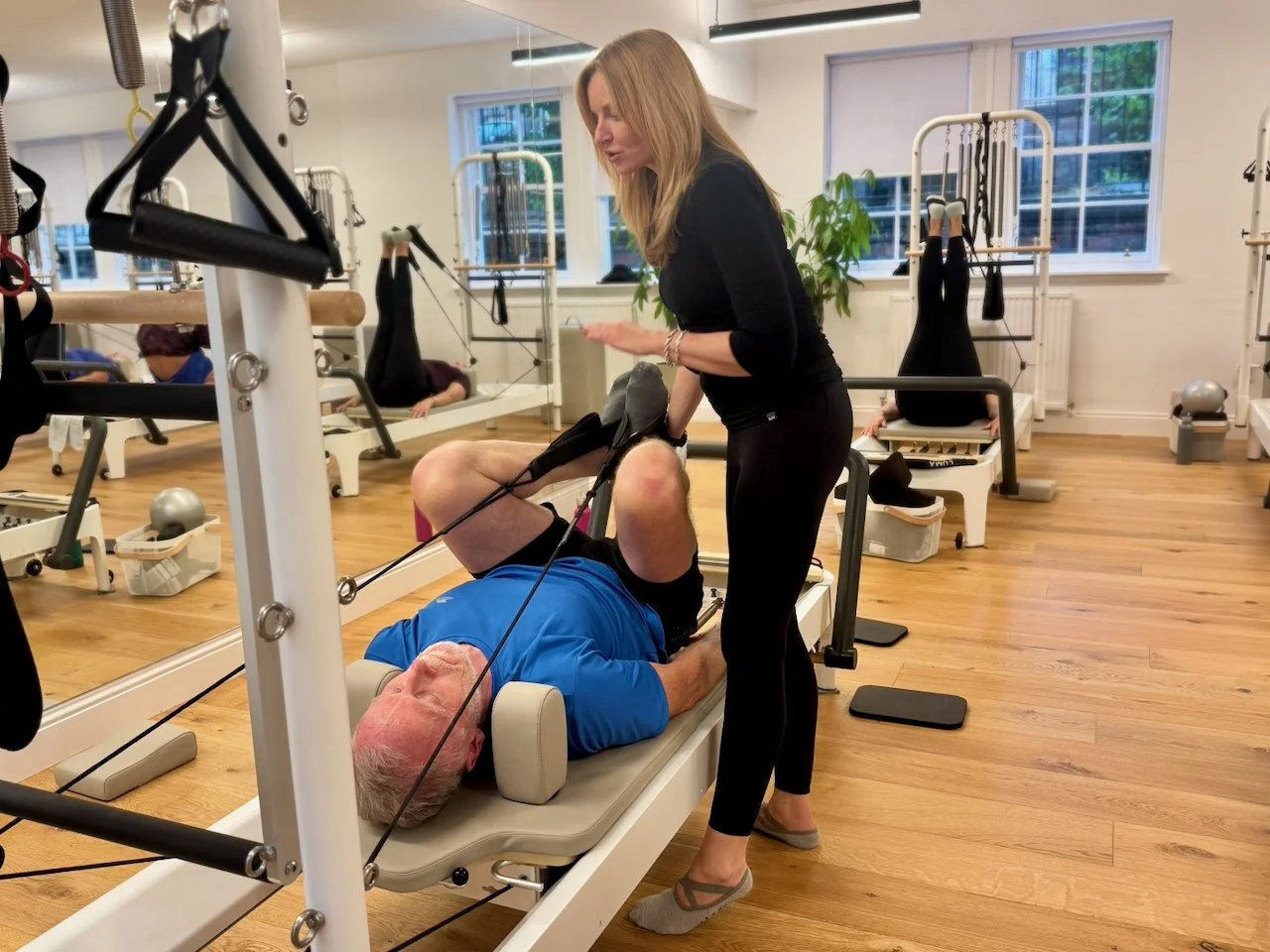
Hands-on correction during a small group Reformer class at Luma
Short answer
Yes. Hands-on teaching gives the body direct proprioceptive feedback that verbal instruction cannot replicate. In Pilates, where much of the work involves deep stabilising muscles that are difficult to feel without physical guidance, tactile cueing accelerates learning and builds better movement habits. It is only possible in small classes or private sessions.
When you learn a new movement, hearing a description of it is rarely enough. You can understand the instruction completely and still not be able to do it, because the body learns through sensation, not words. This is especially true in Pilates, where much of the work involves muscles and movement patterns that most people have never consciously used before.
Hands-on teaching, sometimes called tactile cueing, is the practice of using physical contact to guide a student into correct alignment, activate the right muscles, or adjust a movement pattern. It is one of the most powerful tools available to a Pilates instructor, and one of the clearest differences between teaching that produces real change and teaching that produces only surface-level imitation of the exercises.
What hands-on cueing actually does
A verbal cue tells you what to do. A tactile cue shows your body where to go.
When an instructor places a hand on the lower back to cue a neutral spine, the student feels what neutral actually is rather than trying to interpret an abstract description of it. When a hand is placed on the ribcage to prevent it from flaring, the student gets immediate proprioceptive feedback that no amount of words can replicate. The movement becomes embodied rather than intellectual.
This matters particularly in Pilates because so much of the work involves the deep stabilising muscles of the trunk: the transversus abdominis, the multifidus, the pelvic floor. These muscles are not easy to feel or activate voluntarily, especially for someone new to the practice. Tactile cueing can make the difference between a student who vaguely engages their core and one who finds, for the first time, a genuinely deep connection with those muscles.
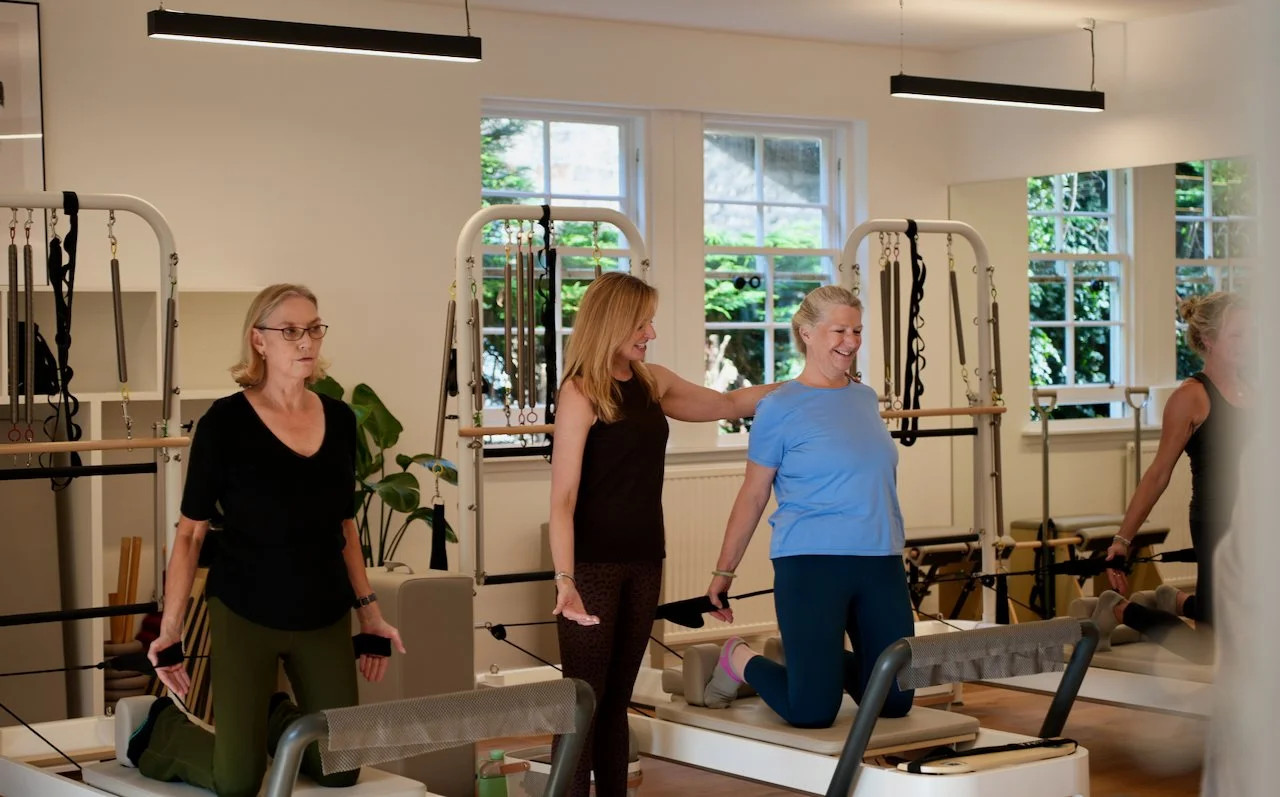
A tactile cue for spinal alignment – the kind of correction only possible in a small group
Why class size changes everything
Hands-on teaching requires time and proximity. In a class of twenty, it is physically impossible to give each student more than one or two adjustments across a session. In a class of six or eight, an instructor can move through the room continuously, giving each student multiple tactile cues per exercise.
This is why class size matters so much for actual learning. Small classes are not just more personal in the social sense. They are structurally different in terms of what quality of instruction is possible. The instruction a student receives in a small group class, where an attentive instructor can adjust their hip position in a side-lying exercise or redirect their shoulder engagement in a plank, produces faster skill acquisition and better movement habits than the same exercises done in a large group without contact.
The difference between a private session and a small group class is not only price. It is how much of the session can be devoted to correction that is specific to how your body moves.
When verbal and tactile cueing work together
Good instructors use both. Verbal cueing sets intention and direction. Tactile cueing refines execution. The combination is more effective than either alone.
An experienced instructor who has taught Pilates for many years develops a refined ability to read how a body is moving, identify what is missing or compensating, and make precise, purposeful adjustments. This is not something that can be learned quickly, and it is not something that every instructor has. It requires a depth of anatomical knowledge, a high volume of hours teaching diverse bodies, and the clinical judgment to distinguish between a limitation that needs accommodation and a habit that needs changing.
The difference between instructors trained to a comprehensive standard and those who have completed shorter courses shows most clearly here. Tactile cueing applied without that foundation can reinforce rather than correct a problem.
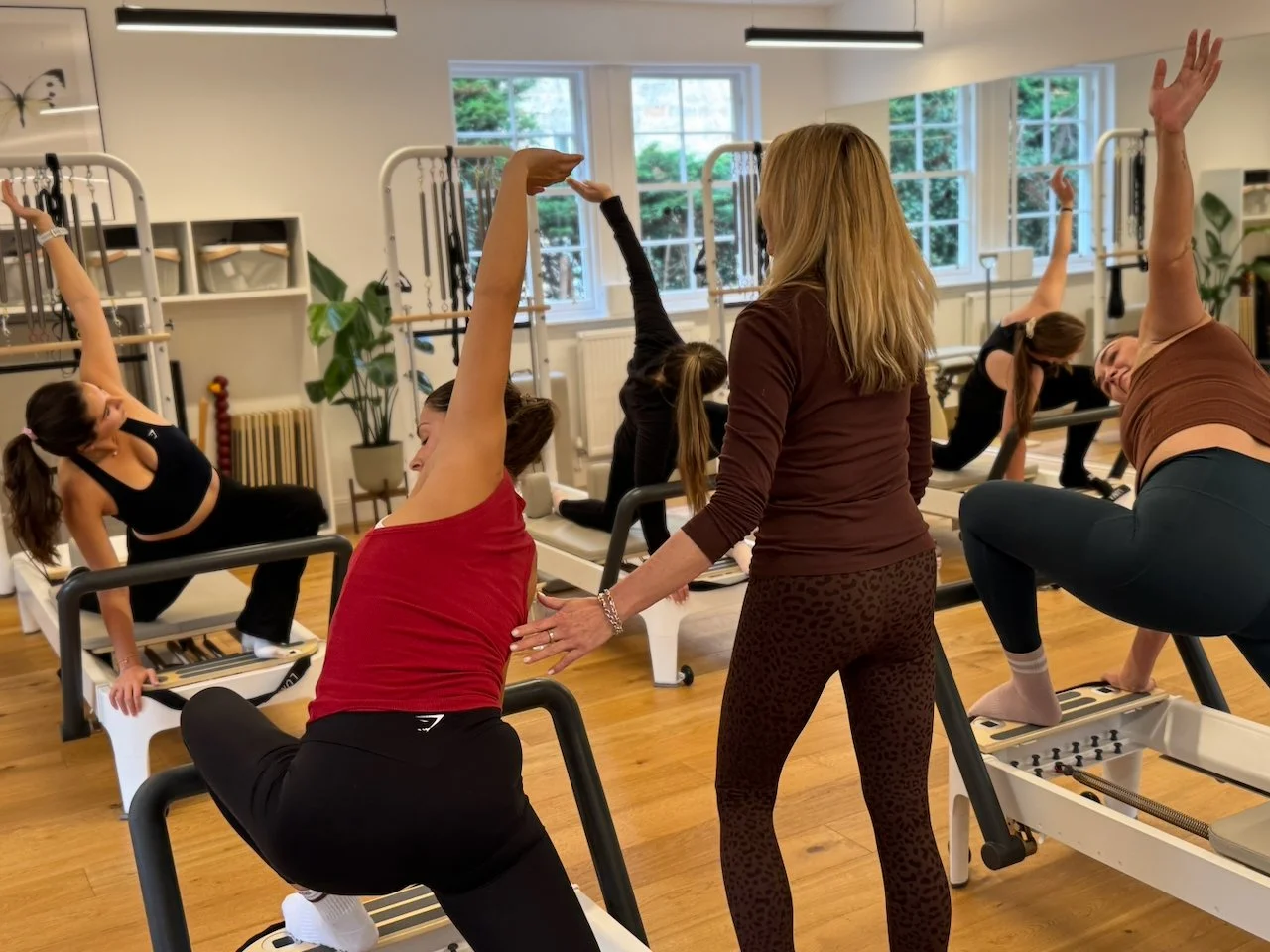
Lucia Poulter moving through the class during a lateral stretch – one cue, one client, while others continue working
Is hands-on teaching always appropriate?
No. Some students prefer not to be touched, and any instructor should ask and respect that preference. Some conditions require modified or absent contact. The presence of hands-on teaching as a tool in a studio's approach does not mean it is applied indiscriminately.
What matters is that the instructor has the training, the judgment, and the class structure that makes hands-on teaching possible when it is appropriate. A studio that teaches in small groups, with instructors who have deep clinical and movement training, can offer this when it is right for the individual. A large-format class, however skilled the instructor, structurally cannot.
What to look for in a Pilates studio
If learning Pilates well is the goal, class size and instructor experience are the two variables that matter most. Look for studios that cap their class sizes, prioritise hands-on instruction as part of their teaching practice, and employ instructors with comprehensive training rather than short-course certificates.
If you want to understand what correction-led teaching looks like in practice, your first class is the clearest way to assess it. How often does the instructor move through the room? Do adjustments change something you can feel immediately? That is what you are looking for.
Written by Lucia Poulter
Lucia is the lead instructor and co-founder of Luma Pilates in Edinburgh's New Town. She has been teaching Pilates for 26 years and holds a BASI Comprehensive certification, with training on classical apparatus including the Cadillac. Hands-on teaching and correction-led instruction are central to how she works with every client, in every class. Questions about whether Luma is right for you? Get in touch.