Pilates for Hypermobility in Edinburgh: What You Need to Know
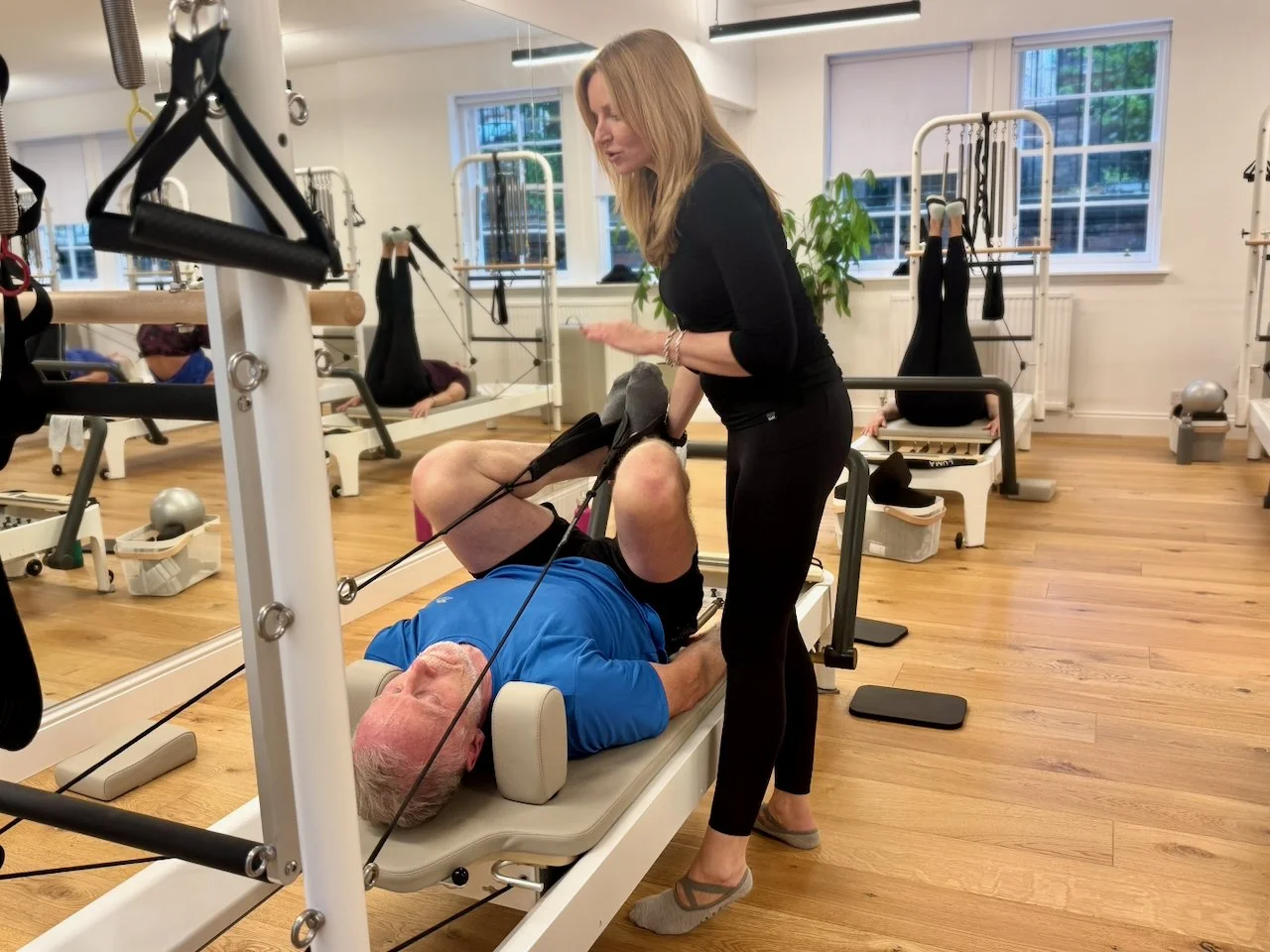
Lucia Poulter cueing Short Spine Massage at Luma Pilates, Edinburgh. The precise instruction that makes the difference
Short answer
Yes, with the right approach. Pilates is widely recommended for hypermobility because it builds the joint-stabilising strength that hypermobile bodies often lack, without pushing into the end-range positions that cause problems. The key is working within a controlled range, with an instructor who understands the condition. If you have a diagnosis of hypermobile Ehlers-Danlos Syndrome (hEDS) or a related connective tissue condition, speak to your physiotherapist or GP before starting.
Hypermobility is more common than most people realise. Joint hypermobility, the ability to move joints beyond the normal range, affects a significant proportion of the population. For many people it causes no problems at all. For others it is the underlying reason for years of pain, instability, fatigue, and injury that has never quite been explained.
It is also one of the presentations I see most consistently at Luma, often in people who have not yet put a name to it.
Pilates is one of the most consistently recommended forms of exercise for hypermobility. But the recommendation comes with an important qualification: the approach matters. Pilates done well for hypermobility looks quite different from general Pilates. Understanding why changes what you should look for in a class.
What is hypermobility?
Hypermobility exists on a spectrum. At one end is benign joint hypermobility, sometimes called being "double-jointed," which is common, often hereditary, and for many people causes no significant problems beyond a tendency toward sprains or joint discomfort.
Further along the spectrum is hypermobility spectrum disorder (HSD), where hypermobility is accompanied by symptoms such as chronic joint pain, fatigue, skin changes, or autonomic issues. At the more complex end is hypermobile Ehlers-Danlos Syndrome (hEDS), a heritable connective tissue condition characterised by joint hypermobility, chronic pain, and a range of systemic features. hEDS is diagnosed clinically and requires management by a specialist team.
The Ehlers-Danlos Society and NHS guidance both recognise exercise, and specifically strengthening exercise, as a core part of managing hypermobility across the spectrum. The key is choosing the right kind of exercise and approaching it correctly.
Why Pilates is recommended for hypermobility
The core problem in hypermobility is not too much flexibility. It’s too little stability. When joints move beyond their normal range, the muscles around them need to work harder to control that movement and protect the joint. In hypermobile bodies, those stabilising muscles are often weak, poorly coordinated, or simply not accustomed to doing the job they need to do. The result is joints that feel unstable, fatigue easily, and are prone to pain and injury.
Pilates addresses this directly. The practice is built around deep stabiliser activation, controlled movement through a defined range, and precise muscular coordination. These are exactly the qualities that hypermobile joints need.
Specifically, Pilates helps by building strength in the deep spinal stabilisers, the hip stabilisers, and the muscles around the shoulder girdle, the areas most commonly affected by hypermobility-related instability. It develops proprioception, the body's sense of where its joints are in space, which is frequently impaired in hypermobility. And it does so in a low-impact, controlled format that avoids the loading that makes higher-impact exercise problematic for hypermobile bodies.
What Pilates does not do, when taught correctly for hypermobility, is push into end-range positions. Stretching a hypermobile body further is not the goal and can cause harm. The goal is stability, control, and strength through a functional range.
The evidence
The research base for exercise in hypermobility is clear in its direction. The NHS and the Ehlers-Danlos Society both recommend low-impact strengthening exercise as a primary intervention for managing hypermobility-related pain and instability. Multiple studies published in peer-reviewed journals, including research available via PubMed and Dovepress, support exercise-based approaches for improving function and reducing pain in people with hypermobility spectrum disorders.
Pilates specifically has been studied in this context. Research has found that Pilates-based exercise improves proprioception, joint stability, and functional movement in hypermobile populations. The controlled, stabiliser-focused nature of the practice makes it particularly well suited compared to general gym exercise or higher-impact aerobic activity.
The clinical consensus is that movement is beneficial and rest is not. The challenge is finding the right movement, at the right intensity, with appropriate modifications. That is where the instructor matters as much as the method.
What to modify and what to avoid
Teaching Pilates to a hypermobile client requires a different set of priorities from general Pilates instruction. In my experience, the most important adjustments are these.
Work within a functional range, not full range. For most people, increased range of movement is a goal. For hypermobile clients, it is not. Exercises should be performed through a comfortable, controlled range, never pushed to the end of joint range where passive structures are providing the support rather than active muscle.
Avoid passive stretching. Stretching a hypermobile body into positions it can already reach passively does nothing useful and risks irritating already unstable joints. The focus should be on active flexibility: strength through range, rather than passive extension.
Prioritise stabiliser activation before dynamic movement. Before loading any exercise, the stabilising muscles need to be engaged and working. This means spending more time on the foundational activation work and less time rushing toward dynamic or loaded exercises.
Watch for hyperextension. Hypermobile clients often habitually lock out joints, particularly knees and elbows, into hyperextension. A good instructor will cue consistently for a soft, supported joint position rather than full extension.
Manage fatigue carefully. Fatigue is a significant factor in hypermobility, particularly for clients with HSD or hEDS. Sessions that start well can deteriorate quickly if the client tires and stabiliser control is lost. Shorter, more frequent sessions often work better than longer ones.
Avoid high-impact variations. Jumping, rapid direction changes, and any exercise that loads the joint at end range are generally contraindicated. These are rare in Pilates but worth flagging explicitly.
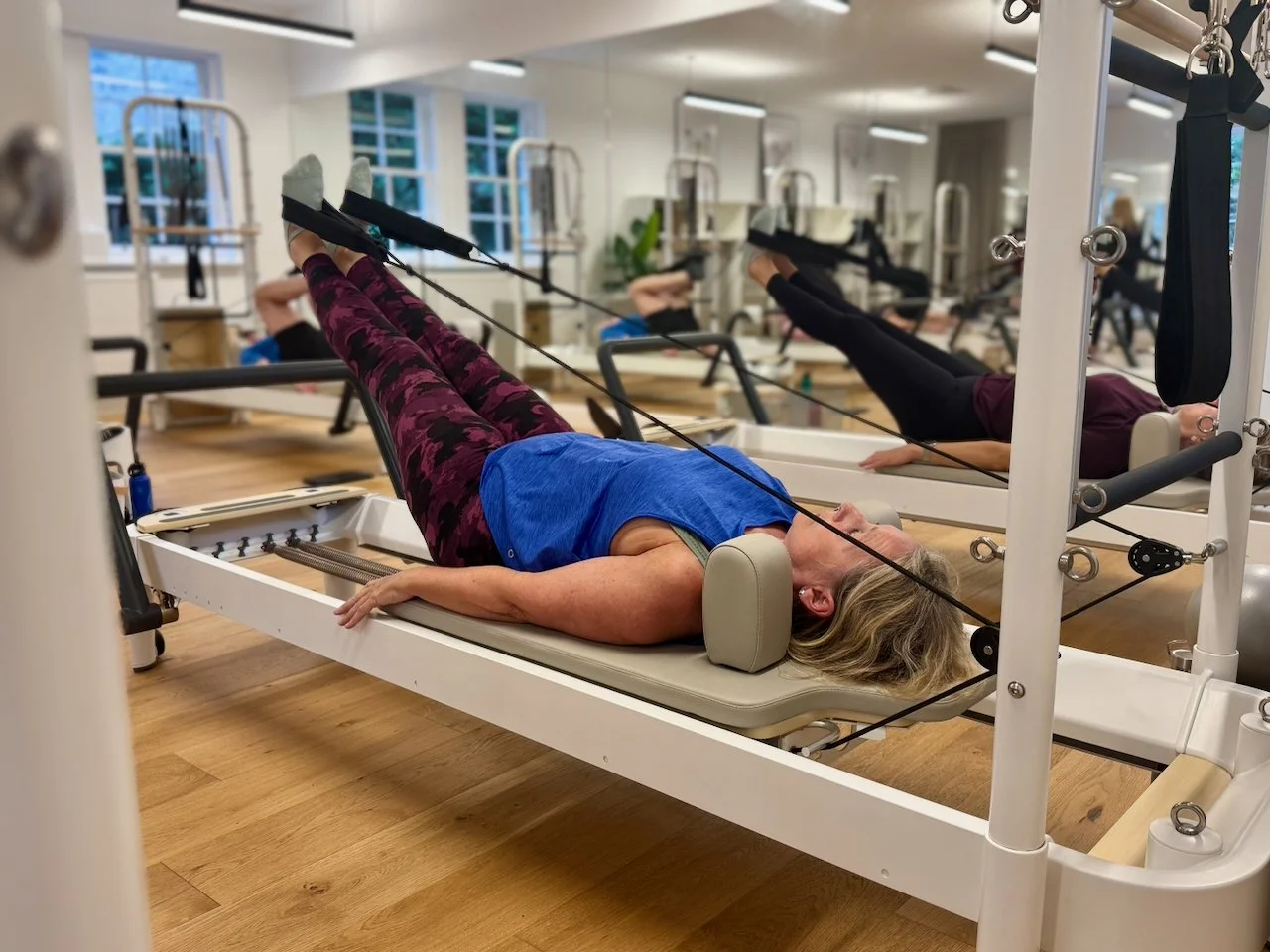
Leg strap work on the Reformer at Luma Pilates, Edinburgh. Controlled range, supported position, precise loading
If you have hEDS or a connective tissue diagnosis
If you have been diagnosed with hEDS, Marfan syndrome, Loeys-Dietz syndrome, or another heritable connective tissue disorder, please speak to your physiotherapist or specialist before starting Pilates. This is not because Pilates is contraindicated – in most cases it’s not – but because your clinical team should be involved in any new exercise programme, and their guidance shapes how your instructor works with you.. Our guide to Pilates vs physiotherapy covers how the two disciplines work together.
A physiotherapist who specialises in hypermobility can provide specific guidance on which exercises to prioritise, which to avoid, and what signs to watch for. Sharing that guidance with your Pilates instructor before your first class gives us the context we need to support you properly.
If you’re waiting for a diagnosis or currently being assessed, it is still worth starting Pilates, provided your instructor knows about your symptoms. The stabiliser and proprioception work is appropriate and beneficial regardless of where on the spectrum you sit.
At Luma, we ask about medical history as standard before your first class. If hypermobility, HSD, or hEDS is part of your history, tell us. It changes how we work with you from the very first session.
What to expect at Luma
If you come to Luma with hypermobility, the work will look similar to what any other client does, but the emphasis shifts. You will spend more time on stabiliser activation. Your instructor will cue you consistently toward a supported joint position rather than full range. Exercises that would typically be progressed by increasing range will instead be progressed by increasing load or complexity within a controlled range.
Reformer Pilates is particularly well suited to hypermobility work. The spring resistance allows for precise loading through a defined range, and the carriage system makes it easier to control and modify movement in real time. Footwork, which builds leg and glute strength in a lying position with no axial load on the joints, is one of the most consistently useful exercises for hypermobile clients.
Reformer Fundamentals is the right starting point. The foundational work in that class, spinal stabiliser activation, pelvic alignment, and controlled movement through functional ranges, is directly relevant to hypermobility and gives you the physical vocabulary to get more from every class that follows.
Our classes are small group, which means your instructor can monitor how you are moving throughout and adjust in real time. If you would prefer one-to-one attention before joining a group class, a private session gives your instructor the space to assess your specific presentation in detail. View our pricing for private session rates.
Get in touch before your first class if you would like to talk through your situation first.
Frequently asked questions
Is Pilates good for hypermobility? Yes. Pilates builds the joint-stabilising strength that hypermobile bodies often lack, improves proprioception, and develops controlled movement through a functional range. It is widely recommended by physiotherapists and the NHS as an appropriate form of exercise for hypermobility. The approach needs to be adapted, but the method is well suited to the condition.
Can Pilates make hypermobility worse? It can, if the approach is wrong. Pushing into end-range positions, passive stretching, or high-impact variations are all contraindicated for hypermobile clients. In a well-taught class with an instructor who understands hypermobility, none of these should be an issue.
Should I tell my instructor about my hypermobility? Yes, always. At Luma we ask about medical history before your first class. Hypermobility changes the emphasis of the work significantly, and the more your instructor knows, the better they can support you.
Do I need a diagnosis before starting? No. Many people with hypermobility are undiagnosed or in the process of being assessed. Pilates is appropriate and beneficial regardless of formal diagnosis. If you have been diagnosed with hEDS or a heritable connective tissue disorder, involve your physiotherapist or specialist before starting.
Is Reformer or Mat Pilates better for hypermobility? Both can be appropriate. Reformer Pilates offers more precise control over range and load, which makes it particularly useful for hypermobility work. Mat Pilates is a good complement and is accessible without equipment. Many clients benefit from both.
How quickly will I notice a difference? Most clients notice improved joint stability and reduced pain within four to six weeks of consistent practice. Proprioception improvements can happen faster. Building lasting muscular strength takes longer, typically three to six months of regular practice.
Written by Lucia Poulter
Lucia is lead instructor and co-founder at Luma Pilates, with 26 years of teaching experience and Comprehensive BASI certification. She works regularly with clients managing hypermobility and related connective tissue conditions. In her experience, the right Pilates practice makes a significant difference to how hypermobile clients feel and move, and the clients who benefit most are those whose instructors understand what the condition actually requires.