Pilates and Yoga for Stress and Anxiety
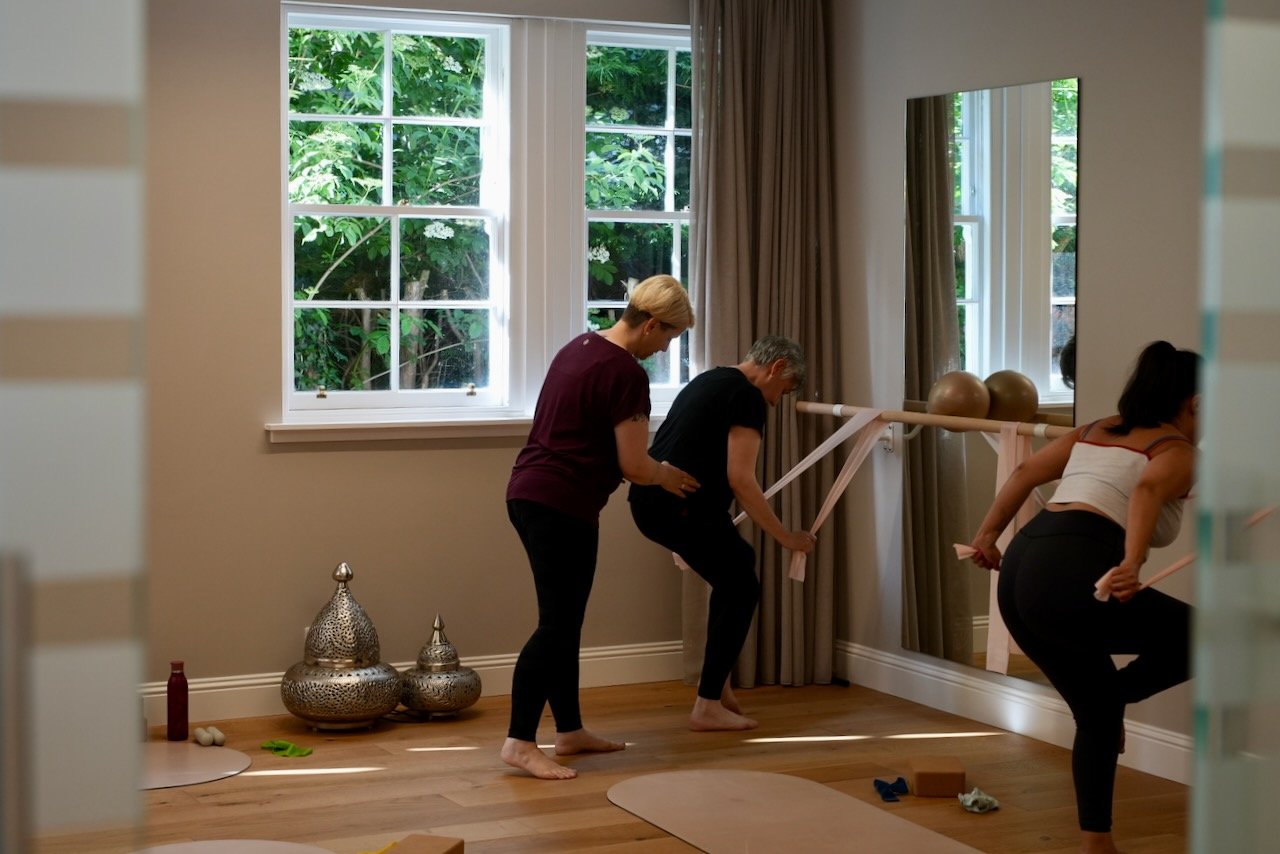
Kat Aydin working in a group Yoga class in Luma Studio B. The kind of attentive, unhurried practice that makes a difference to how you feel
Short answer
Both Pilates and Yoga have well-understood effects on the nervous system. Yoga addresses stress and anxiety most directly through parasympathetic activation, breath work, and the psychological dimension of a sustained practice. Pilates develops the physical resilience, body awareness, and regulated movement that reduce the physical load stress places on the body. Practised alongside each other, they offer one of the most complete responses to stress and anxiety available in a movement context.
I've been teaching Pilates for 26 years. In that time I've worked with clients at every stage of life and through every kind of difficulty. What I can say, with complete conviction, is that the practice of Pilates and Yoga offers something that goes well beyond the physical. When life is genuinely challenging, the mat and the Reformer have a way of holding you. I've experienced that myself, and I've watched it happen for clients more times than I can count.
My understanding of stress and anxiety goes beyond movement. I also hold a BSc in Psychology from the University of Buckingham and a Diploma in Clinical Hypnotherapy, and am registered with the General Hypnotherapy Register and the Complementary and Natural Healthcare Council. The combination of my Pilates and Yoga training alongside a formal grounding in how the mind works, shapes everything about how I approach this area of practice.
This guide is an attempt to explain why, in terms that are specific and honest rather than vague and aspirational.
What stress actually does to the body
Stress is not just a feeling. It is a physiological state with specific physical consequences.
When the nervous system perceives a threat, real or imagined, it activates the fight-or-flight response. Heart rate increases. Muscles tighten. Breathing becomes shallower and faster. The deep stabilising muscles disengage as the body prepares to respond to perceived danger.
In short bursts, this is adaptive. The problem is that modern life keeps that response activated for extended periods, through work pressure, financial worry, relationship difficulty, or simply the relentless pace of a busy city life. The body stays in a state of low-level alert. Cortisol levels remain elevated. Sleep deteriorates. The upper back and shoulders carry chronic tension. The thoracic spine stiffens. The breath stays shallow.
Most people who carry chronic stress carry it in their body long before they name it in their mind. And the body, given the right practice, can begin to release it.
What Pilates does for stress
Reformer Pilates addresses the physical consequences of stress through several specific mechanisms.
It reactivates the deep stabilisers. The muscles closest to the spine are among the first to disengage under chronic stress. Pilates reactivates and strengthens them directly, restoring the physical sense of support and groundedness that stress erodes. Many clients describe feeling more physically settled after a Reformer class than they have in weeks.
It releases chronic muscular tension. The upper back work, the shoulder opening, and the hip work that runs through every Reformer class address precisely the areas where the body stores stress most visibly. The physical release is real and consistent.
It regulates the breath. Breath is central to Pilates from the first class. Learning to breathe fully and intentionally, rather than shallowly and reactively, has a direct effect on the nervous system. Controlled breathing activates the parasympathetic nervous system, the rest-and-digest state that is the physiological opposite of the stress response.
It demands presence. A Reformer class requires your full attention. The precision of the movement, the awareness of alignment, the focus on what the body is doing right now. All of it creates a quality of presence that's genuinely incompatible with the ruminating, forward-projecting quality of anxious thinking. Many clients describe the Reformer as the only hour in their week when they're completely in their body rather than in their head.
It builds physical resilience. The relationship between physical resilience and psychological resilience is well established. A body that is strong, mobile, and well-regulated is simply better equipped to handle the demands that stress places on it. Consistent Reformer practice builds that resilience over time.
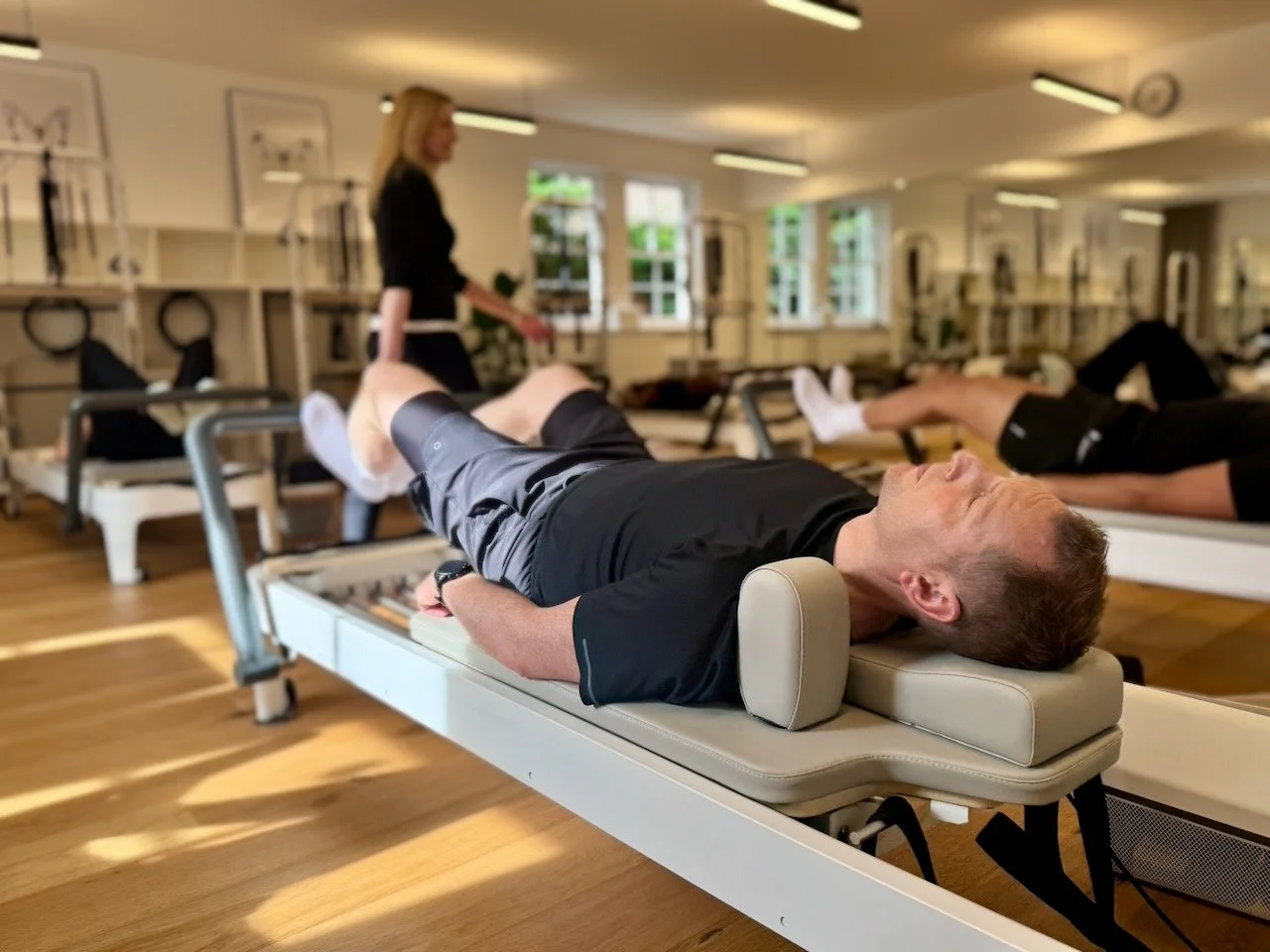
Lucia Poulter cueing a Reformer class at Luma Pilates. Mindful movement in practice
What Yoga does for stress and anxiety
Yoga addresses stress and anxiety more directly than Pilates, and through mechanisms that are distinct and complementary.
Kat Aydin is a fully qualified Yoga for Perimenopause and Menopause instructor at Luma, with a deep specialism in the relationship between Yoga practice and the nervous system. Her understanding of this territory is clinical as well as experiential, and it informs everything she teaches.
In Kat's experience, the most significant thing Yoga offers people managing stress and anxiety is a direct route to the parasympathetic nervous system. Where the stress response governs fight-or-flight, the parasympathetic governs rest, recovery, and regulation. A well-taught Yoga class, with sustained holds, conscious breath, and deliberate slowing of the nervous system, activates that response in ways that are measurable and consistent.
Breath work. Controlled breathing techniques, particularly extended exhalation, directly activate the vagus nerve, the primary pathway of the parasympathetic nervous system. The effect on heart rate, cortisol levels, and the subjective experience of anxiety is both immediate and cumulative with regular practice.
Sustained holds. Holding poses for extended periods in a supported way teaches the nervous system to tolerate discomfort without escalating into a stress response. Over time, this capacity transfers. The body learns to stay regulated under pressure rather than defaulting to fight-or-flight.
Connective tissue release. Slow, sustained movement through the body's fascia has a direct effect on the nervous system. Yoga's sustained, multidirectional work releases the deep physical tension that anxiety accumulates in ways that faster-paced movement does not reach.
Presence and self-awareness. Yoga's emphasis on breath, attention, and the present moment is not incidental. It is the practice. The research on mindfulness and anxiety reduction is extensive and consistent. A regular Yoga practice develops the capacity for present-moment awareness that is one of the most effective tools available for managing anxiety long term.
Kat's classes at Luma bring this depth of understanding to every session. View our Yoga classes to see when she is teaching.
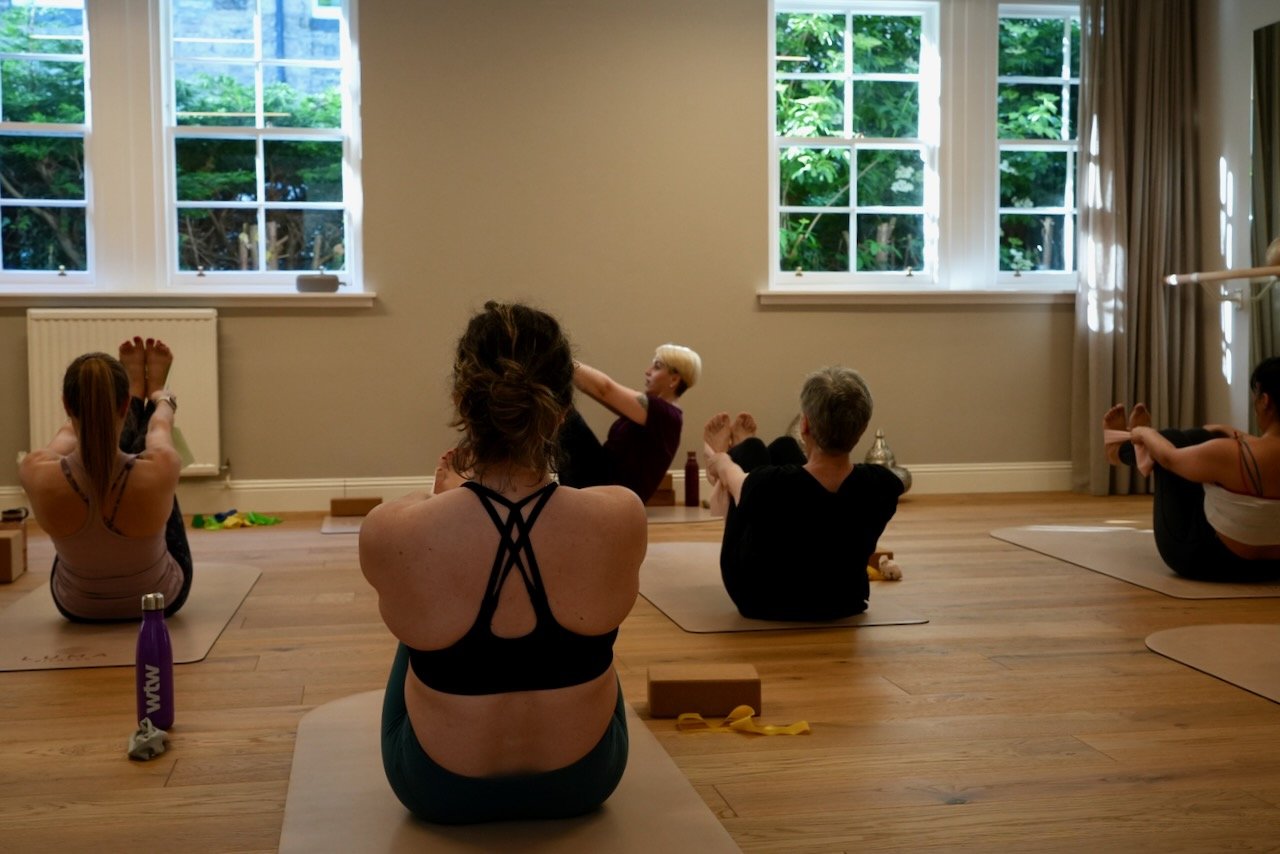
Kat cueing a Yoga class at Luma Pilates. Movement that works on the nervous system as much as the body
The combination
Pilates and Yoga address stress and anxiety from different angles, and the combination is more powerful than either in isolation.
Pilates builds the physical resilience and body awareness that reduces the physical load of stress. It reactivates the stabilisers, releases the chronic tension, and develops the breath regulation that shifts the nervous system toward a more regulated state. Yoga deepens that shift directly, activating the parasympathetic nervous system through breath work, sustained holds, and the quality of presence that a well-taught class develops.
Clients who practise both consistently tend to report changes that go beyond the physical: better sleep, reduced background anxiety, a greater capacity to manage difficulty without being destabilised by it. These aren't small things.
At Luma, both disciplines are available under the same roof, taught by instructors who understand how they complement each other. Our introductory offer covers both: 3 Reformer or Tower classes for £48, or 3 Barre or Yoga classes for £30.
Where to start
The right starting point depends on where you are and what you need most.
If the physical dimension of stress is what you feel most acutely, the tension in the upper back, the shallow breathing, the body that never quite switches off, Reformer Fundamentals is the place to begin. Three sessions is enough to feel the difference.
If the psychological dimension is more pressing, the anxiety, the sleep, the sense of being unable to slow down, start with Kat's Yoga classes. Her understanding of the nervous system and how to work with it is exactly what this guide has been describing. View our Yoga classes to see when she is teaching.
If you’re not sure, do both. The introductory offer covers either discipline: 3 Reformer or Tower classes for £48, or 3 Barre or Yoga classes for £30. Many clients find that starting with one and adding the other within a few weeks is the most natural progression.
Get in touch if you would like to talk it through first. View our full schedule or browse all classes.
Written by Lucia Poulter
Lucia is lead instructor and co-founder at Luma Pilates, with 26 years of teaching experience and Comprehensive BASI certification. She has taught Pilates throughout her adult life and holds a BSc in Psychology and a Diploma in Clinical Hypnotherapy, which informs how she approaches this area of practice, particularly when life is at its most challenging. She teaches Reformer Pilates at Luma.