Yoga vs Pilates for Posture
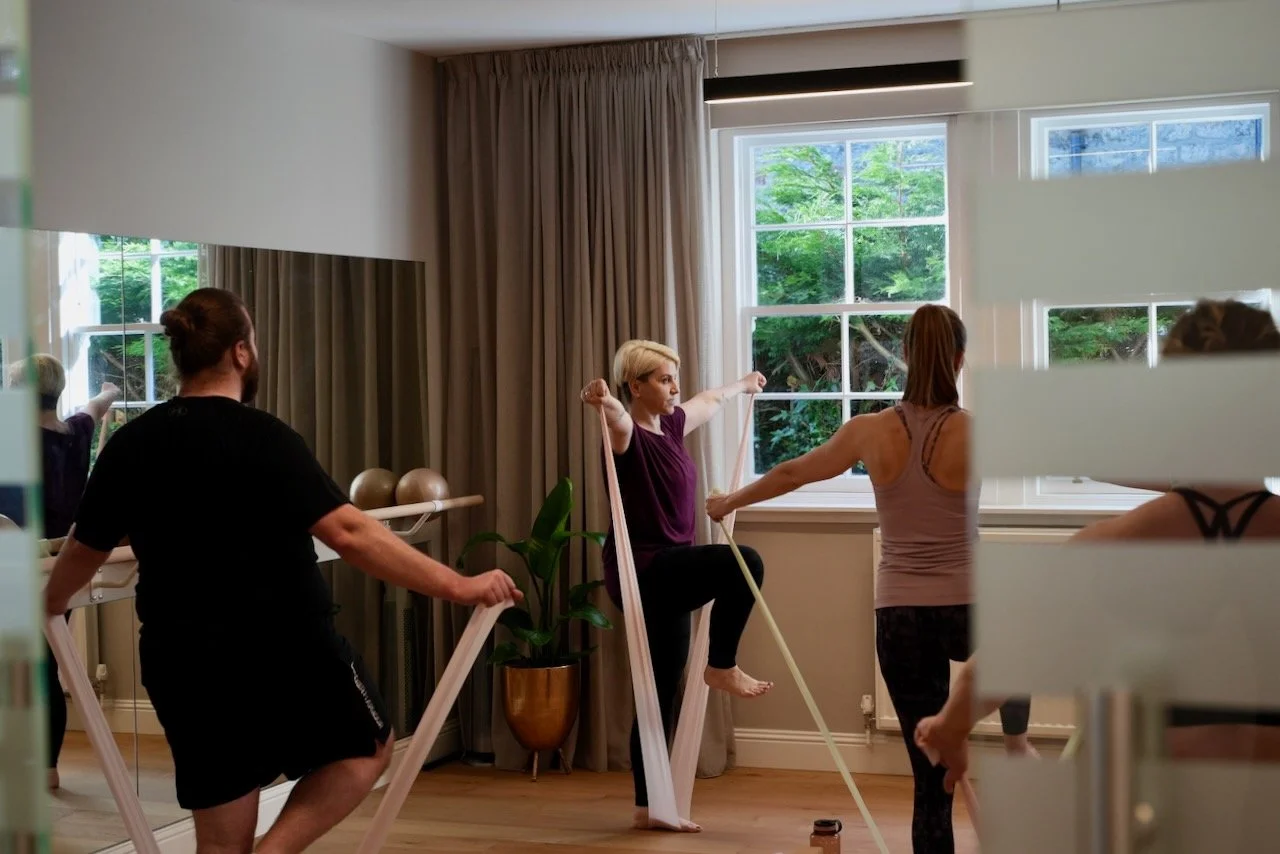
Kat Aydin cueing clients in Studio B at Luma Pilates. Alignment as the starting point, not an afterthought
Short answer
Both Yoga and Pilates can support better posture, but they tend to do so in different ways. Pilates places more emphasis on strength, control and alignment around the trunk, spine and pelvis, while Yoga often places more emphasis on mobility, flexibility and body awareness. Which is more useful depends on what is contributing to your posture, and many people find the two approaches complement each other well.
What they have in common
Both Yoga and Pilates develop body awareness, teach breath control, and require sustained attention to alignment. Both can help develop greater body awareness, control and comfort in different positions. Both involve practising in a way that is slower, more intentional, and more internally focused than most conventional exercise.
If you currently do neither and you're trying to improve your posture, either is a better starting point than most alternatives.
How Yoga improves posture
Yoga improves posture primarily through flexibility and body awareness. Many Yoga practices open the chest and shoulders, particularly backbend-oriented sequences, which directly counteracts the rounding that comes from desk work and screen time. The standing poses develop hip stability and balance. Sustained holds build endurance in the postural muscles.
At Luma, our Yoga classes are taught by Kat Aydin and Liron Bleischer, each with their own specialism and style. View our Yoga classes.
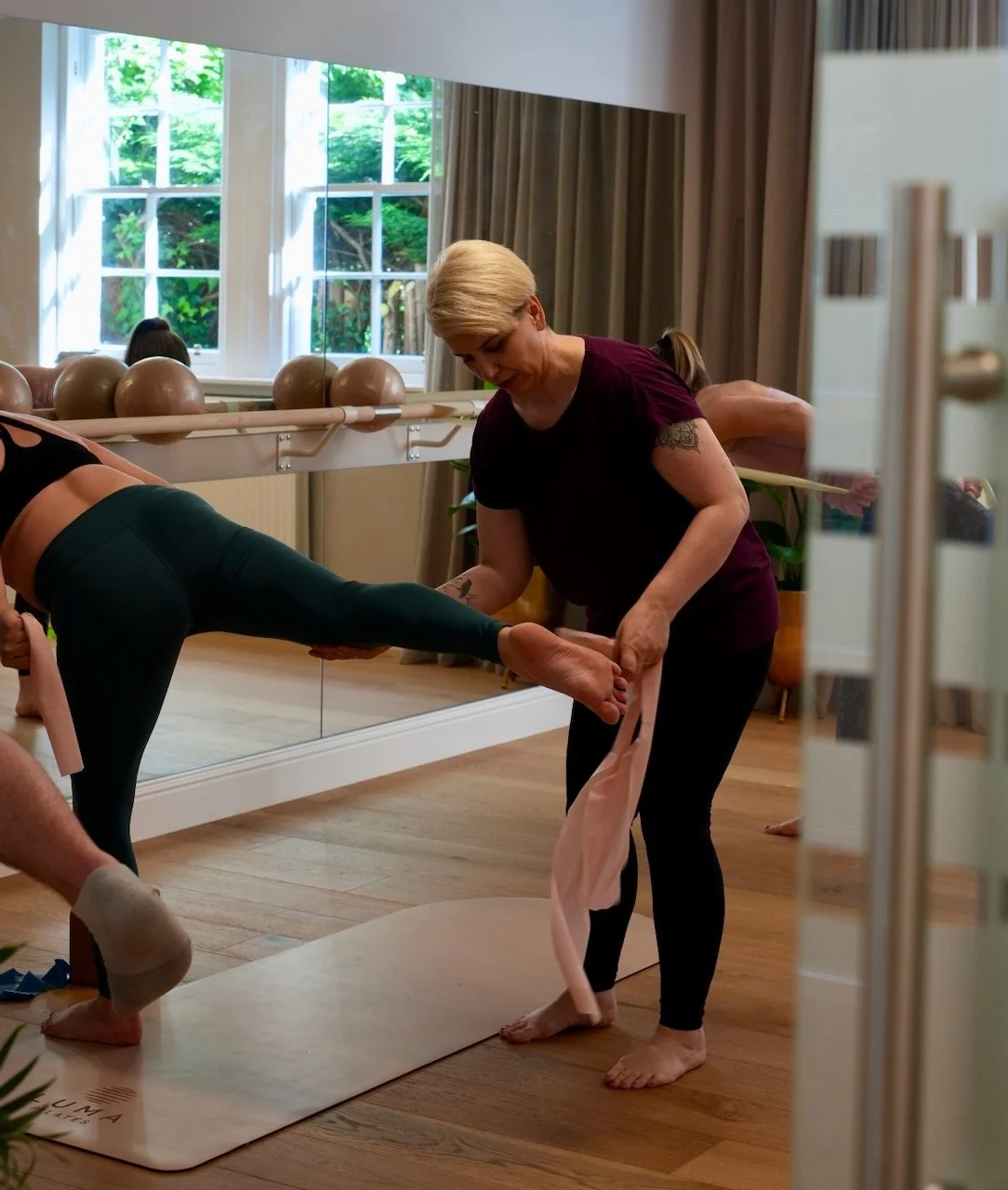
Kat making a hands-on adjustment at the barre. The detail that makes the difference
How Pilates improves posture
Pilates improves posture primarily through targeted muscular strengthening, particularly of the muscles involved in trunk control and spinal support. Where Yoga tends to address flexibility and mobility first, Pilates addresses the muscular infrastructure that makes good posture possible without effort.
The Reformer is particularly effective here because spring resistance allows for precise loading of the muscles around the shoulder girdle, the thoracic spine, and the deep hip stabilisers. These areas can be useful to work on when strength and control are part of the picture. See our full guide to why Pilates improves posture for more detail.
Anna Marchington has spent over 20 years working with clients whose postural patterns are connected to chronic tension or old injury. In her experience, Pilates can help build the strength and control needed to make different postural habits feel easier to sustain.. The goal is not to remind someone to hold themselves in a better position, but to build the physical capacity to be there without thinking about it.
Serena Crolla, who teaches both Reformer and Barre at Luma and brings a background in professional dance to everything she does, approaches postural work from a movement quality perspective. In her classes, alignment is not an afterthought but the starting point. Clients who come to Barre alongside their Reformer practice consistently find the two reinforce each other in ways that accelerate postural change.
| Factor | Yoga | Pilates |
|---|---|---|
| Main mechanism | Flexibility, mobility and body awareness | Targeted strengthening of the postural muscles |
| Addresses | Tightness pulling you out of position | Weakness in the muscles that hold you upright |
| Particularly good for | Chest opening, thoracic mobility, hip flexibility | Deep spinal stabilisers, shoulder girdle, posterior chain |
| For desk-related posture | Releasing a shortened chest and stiff upper back | Rebuilding the strength to sit and stand tall |
| Speed of change | Usually gradual and influenced by the style and frequency of practice | Usually gradual and influenced by the exercises, frequency and starting point |
| Fills the gap of | The tightness strengthening leaves | The stability new mobility needs |
Which is better for posture?
It depends on what your posture actually needs.
Posture is influenced by a mix of factors, including strength, mobility, movement habits, comfort and the demands you place on your body day to day.
Pilates can be particularly useful when the goal is to develop trunk control, spinal support and strength around the shoulders, hips and pelvis. Reformer work also allows resistance to be adjusted and movement to be practised with a high degree of control.
Yoga can be particularly useful for developing mobility, body awareness and comfort across a wider range of positions. For people who spend long periods sitting, practices that explore the chest, upper back and hips may feel especially useful.
Neither approach addresses every factor on its own, and they do not need to compete. Practised together, they can complement each other well.
Because posture is influenced by several factors, some people find that combining strength-focused and mobility-focused work gives them a broader approach. Pilates without the flexibility work leaves the underlying tightness in place. Yoga without the strengthening work builds mobility the body doesn't yet have the stability to maintain.
Practised together, they cover the full picture.
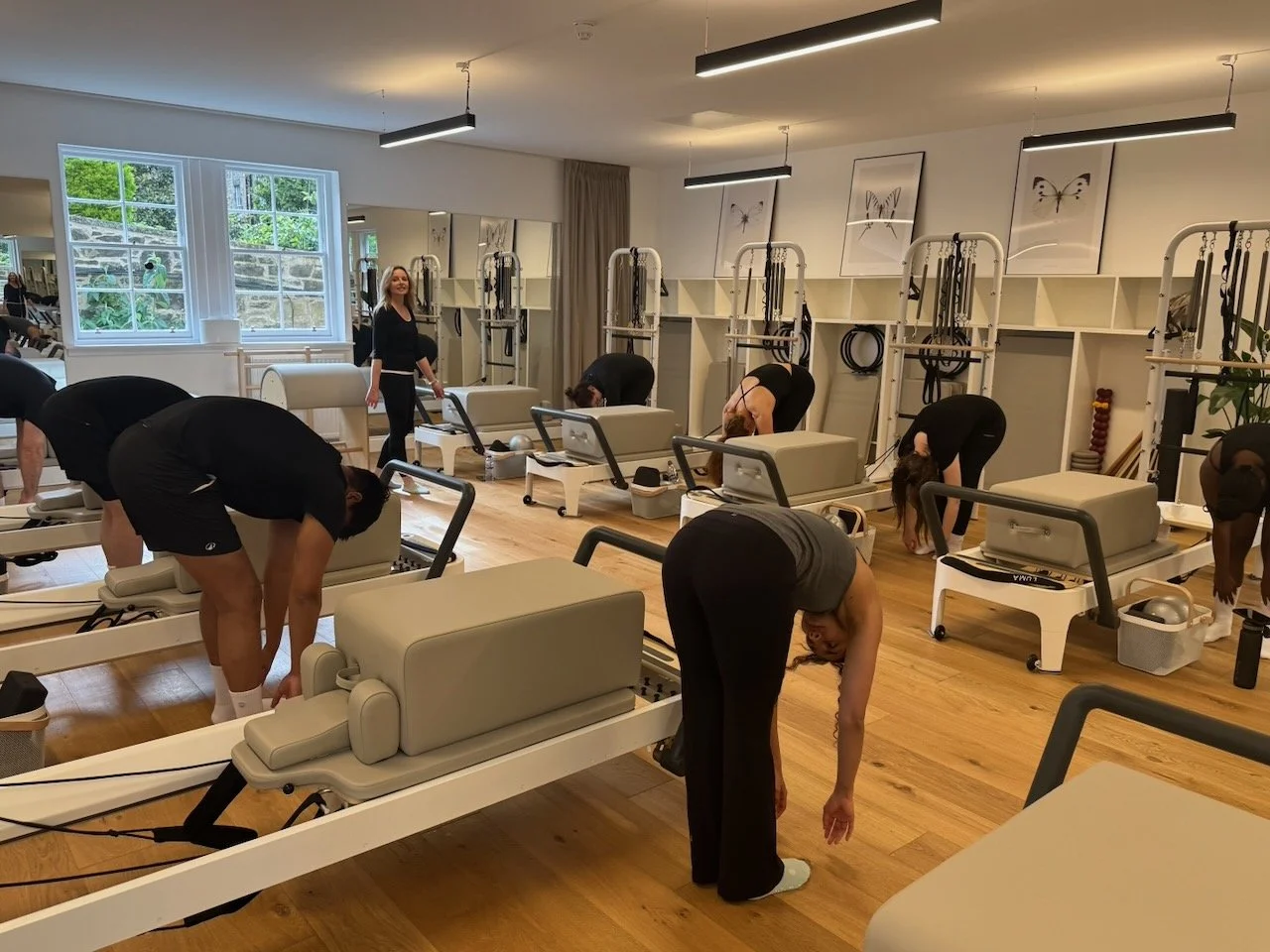
Lucia Poulter cueing a full class roll down in Studio A at Luma Pilates. The spinal mobility work that clients notice long after they leave
Where to start
If posture is your primary goal and you're new to both, we'd recommend starting with Reformer Fundamentals and adding a Yoga class once you're comfortable with the Reformer. The two practices build on each other in a way that quickly becomes intuitive.
Our introductory offer covers both: 3 Reformer or Tower classes for £48, or 3 Barre or Yoga classes for £30. View our timetable, browse all classes, or get in touch.
Written by Lucia Poulter
Lucia is lead instructor and co-founder at Luma Pilates, with 26 years of experience teaching Reformer Pilates and a background in Ashtanga Yoga. She has practised both disciplines throughout her teaching career and has a clear view of what each one does well. Her honest answer to the question in this guide's title: both, if you can.