Reformer Pilates vs the Gym: Which Is Right for You?
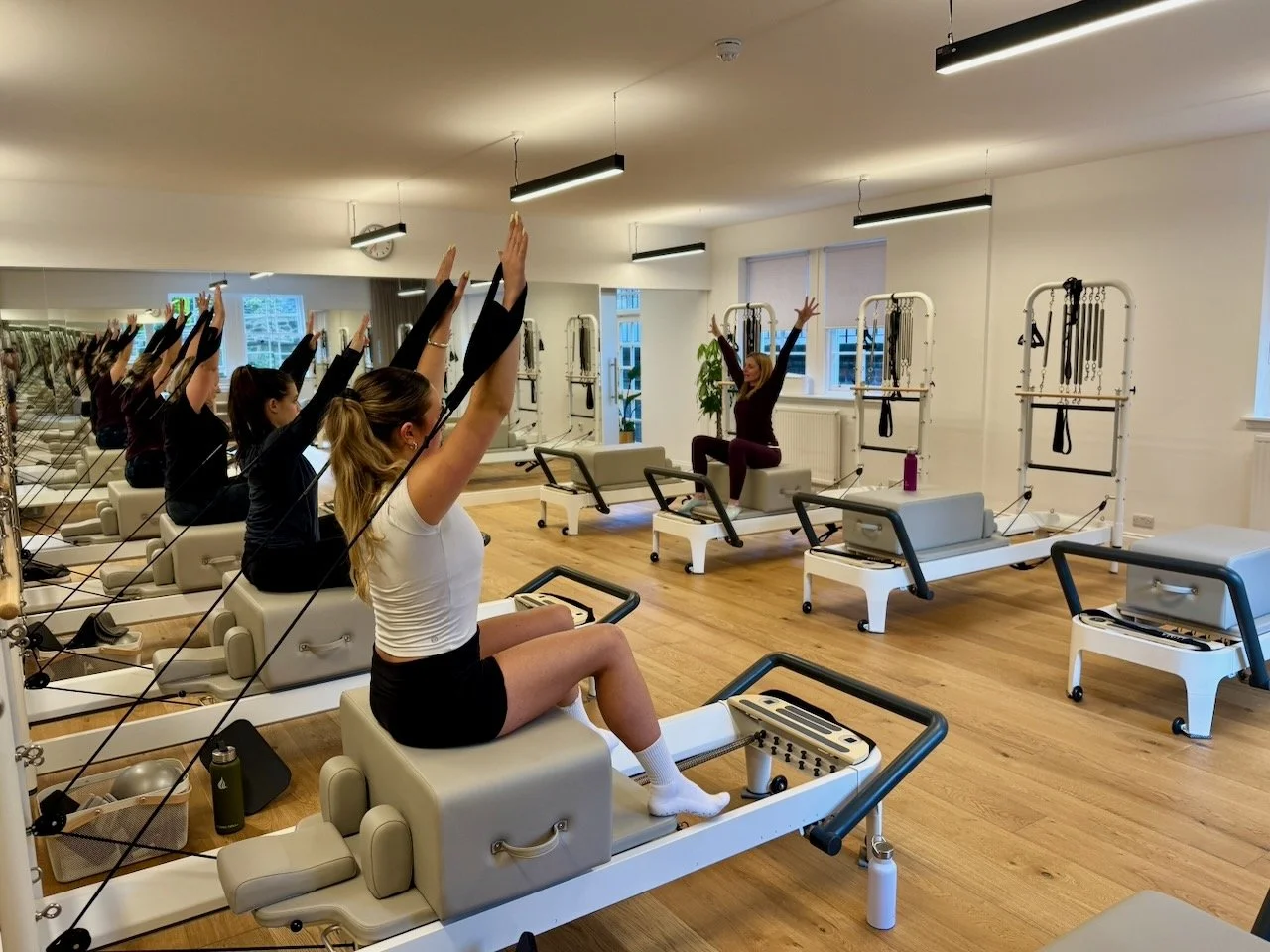
A group reformer Pilates class at Luma Pilates, Edinburgh
Short answer
They are different tools built for different purposes. The gym builds maximal strength and cardiovascular fitness efficiently. Reformer Pilates trains the body in three dimensions, develops the stabilising muscles gym programmes tend to miss, and addresses movement quality gaps that accumulate over years of training. Most people find the combination more effective than either in isolation.
Reformer Pilates and the gym both build strength, but they work differently. The gym uses progressive overload with external weight to build muscle mass and cardiovascular fitness. The Reformer uses spring resistance to train full-body control, posture, and the stabilising muscles most gym programmes miss. If your goal is maximum muscle or heavy lifting, the gym wins. If you want better posture, movement quality, and low-impact strength, Reformer Pilates is hard to beat. Most people benefit from both.
In this guide
- What the gym does well
- What the gym tends to miss
- What the Reformer does
- Can you combine Reformer Pilates and gym training?
- Is Reformer Pilates enough for strength training?
- Can Reformer Pilates replace the gym?
- Is Reformer Pilates a real workout?
- Trying Reformer Pilates in Edinburgh
- Getting started
What the gym does well
A gym is an efficient environment for building maximal strength and cardiovascular fitness. Progressive overload – adding weight over time – is the most reliable mechanism for building muscle mass and bone density. If your primary goal is to get stronger in a measurable, loadable way, or to improve your VO2 max, a well-structured gym programme delivers that.
The gym also offers variety and autonomy. You can organise your own session, work at your own pace, and focus on the movements you choose.
What the gym tends to miss
Most gym programmes are built around bilateral, sagittal plane movements: squats, deadlifts, bench press, rows. These are valuable, but they develop strength in a limited range of directions and movement patterns. The stabilising muscles, particularly those around the spine, the deep hip rotators, and the shoulder girdle, are rarely trained directly, and often left behind.
Over time, this creates asymmetries. Strong in certain patterns, weak in others. The result tends to show up as injury, plateau, or the persistent tightness that foam rolling never quite resolves. If lower back pain or poor posture are part of that picture, those guides explain what is typically going on and what Reformer Pilates addresses specifically.
What the Reformer does
The Reformer trains the body in three dimensions, across a much wider range of movement patterns. The research supports this distinction. Systematic reviews comparing Pilates with conventional resistance training have found that Pilates produces equivalent or superior gains in flexibility, balance, and functional movement, while also improving core stability and postural alignment in ways that standard gym programmes do not. A Cochrane review found Pilates to be more effective than minimal intervention for musculoskeletal outcomes. For gym-trained individuals, Pilates tends to address the specific gaps – stabiliser weakness, movement asymmetry, restricted range – that resistance training does not reach.
Spring resistance allows for eccentric loading, strengthening muscles as they lengthen. Gym machines and free weights rarely replicate this effectively. The carriage creates an unstable surface that demands stabilisation from the deep spinal stabilisers on every repetition.
The Reformer is also precise. Every exercise has a specific intention, a specific alignment requirement, and a specific set of muscles it's designed to reach. In a well-taught class, nothing is incidental.
In my view, the gym builds the engine while Pilates builds the chassis. Most people have been working on the engine for years and wondering why the handling feels off.
| Factor | Reformer Pilates | Gym Workouts |
|---|---|---|
| Primary goal | Movement quality, stability, functional strength | Maximal strength and cardiovascular fitness |
| Loading method | Spring resistance, including eccentric loading | Progressive overload with external weight |
| Movement planes | Three-dimensional, wide range of patterns | Mostly bilateral, sagittal-plane lifts |
| Stabilising muscles | Trained directly, every repetition | Rarely targeted directly |
| Cardiovascular demand | Low; not a cardio workout | High when programmed for it |
| Particularly strong for | Posture, injury prevention, correcting imbalances | Muscle mass, bone density, raw strength |
| Format | Instructor-led, small groups | Self-directed, at your own pace |
| Fills the gap of | Stabiliser and mobility work the gym misses | The heavy loading Pilates does not provide |
Can you combine Reformer Pilates and gym training?
Many of our clients at Luma train in the gym and do Reformer Pilates alongside it. The combination tends to be more effective than either in isolation. Pilates addresses the gaps that gym training creates – the stabilisers, the imbalances, the movement quality– while the gym provides the loading stimulus that Pilates does not replicate.
If you’re new to the Reformer, our guide to whether beginners can do Reformer Pilates covers exactly what to expect. And if you are weighing up whether it is worth adding to your existing training, our guide to whether Reformer Pilates is worth it gives an honest answer.
Anna Marchington works with a significant number of gym-trained clients at Luma and sees the same pattern consistently. The clients who make the fastest progress in the gym after starting Pilates are rarely the ones who were training hardest. They are the ones whose posterior chain and stabiliser weaknesses had been quietly limiting them for years. Once those gaps close, the training they were already doing starts to produce results it previously could not.
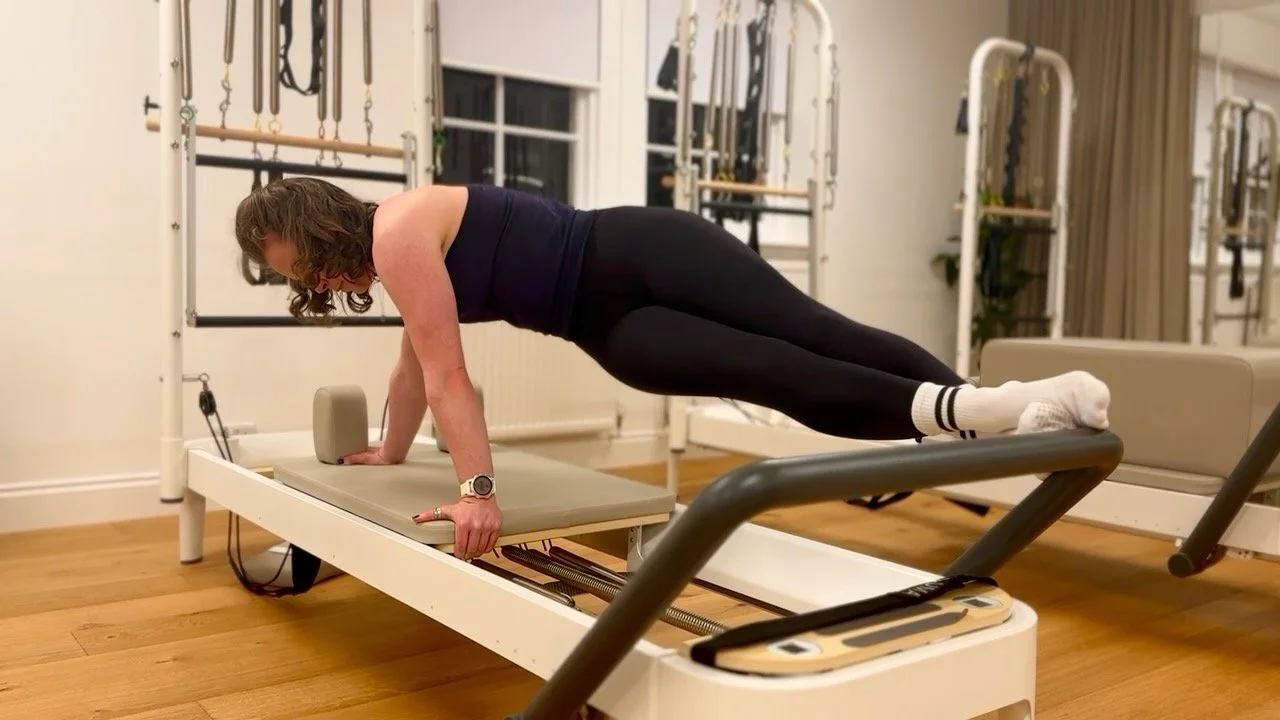
Our client Emma performing The Snake on a blue spring. The kind of movement that takes months to earn
Is Reformer Pilates enough for strength training?
Reformer Pilates develops functional strength, stability and muscular endurance through spring resistance and eccentric loading. It trains strength differently from the gym rather than replacing it. For some people it is sufficient as a primary strength practice. For those whose goal is maximum muscle mass or heavy lifting, adding gym work makes sense.
Can Reformer Pilates replace the gym?
If you're starting from scratch and can only commit to one, the choice depends on your primary goal.
For general fitness, strength, and body composition, a gym programme with good coaching is highly effective. For injury prevention, postural correction, movement quality, and building the foundational strength that makes everything else more effective, Reformer Pilates is hard to beat.
If you're dealing with a specific physical issue: lower back pain, poor posture, a recovering injury, or persistent muscular imbalance, Reformer Pilates is almost always the better starting point, because it addresses the underlying cause rather than working around it.
Is Reformer Pilates a real workout?
Yes. This question comes up regularly, and it's worth addressing directly. Reformer Pilates is physically demanding. The spring resistance, the range of movement, the precision required, and the sustained engagement of the stabilising muscles all add up to genuine work. Most clients leave their first class surprised by how much they felt.
It is not a cardio workout in the conventional sense. You won't be raising your heart rate to training zones in a standard Reformer class. But as a strength and conditioning tool, it is serious and effective.
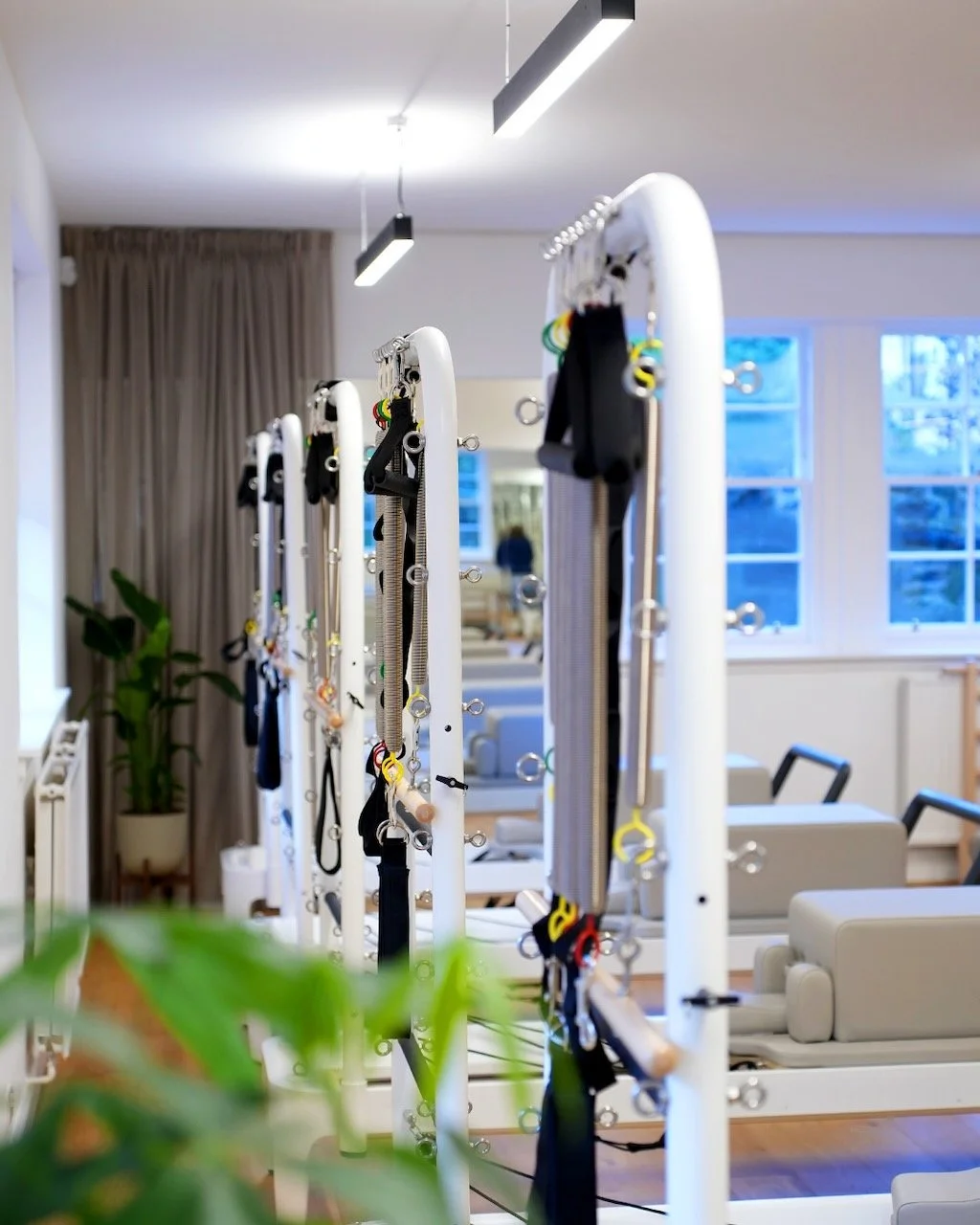
Close-up of the Tower mechanism on our Reformers at Luma Pilates, Edinburgh
Trying Reformer Pilates in Edinburgh
If you're based in Edinburgh and want to try the Reformer alongside your existing training, Luma Pilates is in the New Town at 15 Northumberland Street NE Lane. Our classes are small, instructor-led, and designed for people who already train. You won't be asked to slow down, just to train differently.
New clients start with Reformer Fundamentals, which gives you the technique and vocabulary to get the most from every class that follows. Our intro offer is 3 Reformer/Tower classes for £48. You can also browse our Reformer Pilates prices and membership options or read what to expect as a beginner before booking.
Getting started
Our Reformer Fundamentals class is designed for exactly this kind of crossover client – people who are fit, active, and used to training, but new to the Reformer. The principles are different from the gym, and Fundamentals gives you the vocabulary to get the most out of every class that follows.
View the schedule, browse all classes, or get in touch if you'd like to talk it through.
Written by Lucia Poulter
Lucia is lead instructor and co-founder at Luma Pilates, with 26 years of teaching experience and Comprehensive BASI certification. She works with clients across every level, from complete beginners to athletes using Pilates to sharpen performance in other disciplines. In her experience, the people who get the most from the Reformer are usually the ones who already train hard elsewhere and finally understand why the gaps exist.