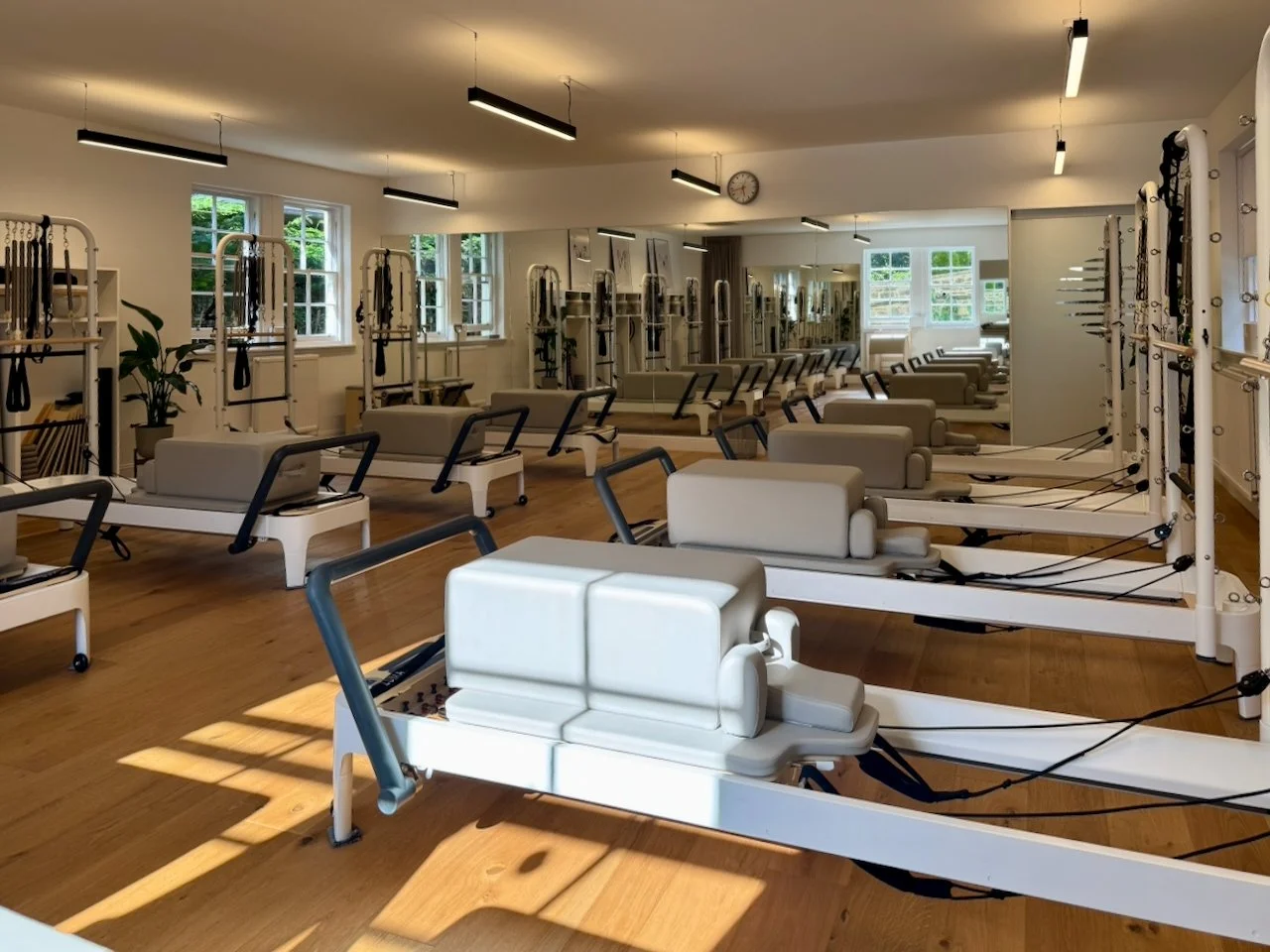
Studio A at Luma Pilates, Edinburgh. This is where the work happens
Short answer
Pilates counts as exercise, and like any physical activity it contributes to energy expenditure. Whether it moves the scales depends on many factors beyond the class itself. What the research does support is that Pilates can contribute to changes in body composition, build strength and muscular endurance, and create the kind of consistent movement habit that supports longer-term health. It is not a special fat-loss method, but it is a genuinely useful part of a broader approach to weight management.
At Luma Pilates, clients often ask whether Pilates "counts" if their goal is weight loss. It is a reasonable question, and it deserves a straight answer rather than either an enthusiastic yes or a defensive deflection.
The honest answer is that it counts, but counting is not the same as guaranteeing results. Whether Pilates moves the scales is a different question from whether it makes you stronger, changes how your body feels and functions, or becomes the kind of exercise you actually keep doing. Those things are related, but they are not the same thing.
I would rather give you the full picture than tell you what you might want to hear.
Does Pilates count as exercise for weight loss?
Yes. Like any physical activity, Pilates contributes to energy expenditure. A Reformer class involves sustained muscular effort across the whole body and, like any physical activity, uses energy.
It is not primarily chosen for maximising calorie expenditure (that’s not what Pilates is designed to do), and a Reformer class will generally burn fewer calories in the same time period than high-intensity cardio. But framing Pilates as a poor choice for weight management because it’s not a maximum-calorie-burn activity misses what it actually does well.
Weight management ultimately depends on sustained energy balance over time: consuming less energy than you use, while building the habits and physical capacity to maintain that. Exercise is one part of that picture. The quality of the exercise, whether you keep doing it, and what it does to your body over months and years matters as much as the calorie count of any single session.
What the research says
The research on Pilates and weight management is worth looking at honestly, because it is more nuanced than either proponents or critics often suggest.
Systematic reviews published in peer-reviewed literature, including research available through PubMed, have examined whether Pilates produces changes in body weight, BMI, and body fat percentage. Some reviews have found reductions in body fat and BMI, particularly in adults with overweight or obesity. Others have found that Pilates was not consistently superior to other forms of exercise or control conditions for weight outcomes specifically.
The overall picture is that Pilates can contribute to changes in body composition for some people in some contexts, but the evidence is not strong enough to make large claims. What the research does support more consistently is that Pilates improves strength, functional movement, and physical capacity, which are meaningful health outcomes regardless of what the scales say.
NHS guidance on weight management frames it around sustained energy balance and increased physical activity rather than attributing weight loss to any specific exercise method. Pilates fits within that broader framework as part of an active lifestyle. It is not a shortcut.
What looks promising
Balance. The 2023 umbrella review found evidence of benefit for balance outcomes, and this is plausible given the proprioceptive demands of Pilates practice. Balance matters more as we age, and the studio work, particularly exercises that challenge stability on the moving carriage, challenges balance and proprioception in ways that may transfer beyond the studio. The evidence is not as strong here as for back pain or core strength, but it points in a consistent direction.
Psychological wellbeing. A 2026 systematic review and meta-analysis examining Pilates across mental health outcomes including anxiety, depressive symptoms, wellbeing, and quality of life found positive effects across these measures. This is worth taking seriously. It is also worth being appropriately careful: exercise in general is associated with improved psychological wellbeing, and it is difficult to separate the effects of Pilates specifically from the effects of regular movement, focused attention, routine, and being part of a group.
I would frame it like this: Pilates may support psychological wellbeing, and there is growing evidence for that. It is not a treatment for anxiety or depression. But for clients managing the kind of low-level stress and mental fatigue that comes with busy modern life, the focused, breath-led quality of the practice (the fact that it demands your full attention and leaves little room for the day's noise) is something many report as genuinely valuable.
Weight loss vs body composition
This is a distinction worth making clearly, because it changes how you think about what Pilates is doing for your body.
Scale weight reflects total mass: muscle, fat, bone, water, and everything else. Body composition refers to the ratio of lean tissue to fat tissue. These two things can move in different directions simultaneously. Someone who builds muscle while losing fat may see no change in scale weight while their body is changing meaningfully. Someone who loses weight on the scales without building strength may be losing as much muscle as fat, which is not a desirable outcome.
Pilates provides resistance that can improve strength and, depending on training and the individual, may contribute to changes in lean tissue over time. The spring resistance of the Reformer allows for precise, progressive loading that develops muscular strength and endurance in a way that is distinct from purely aerobic exercise.
This is why people who do Pilates regularly often report that their body feels different, stronger, more capable, more controlled, before or without any significant change in scale weight. That’s not a failure of the practice. It’s the practice working.
What Pilates is particularly good at
If weight management is a goal, it helps to understand where Pilates fits most usefully.
Building strength progressively. The spring-based resistance of the Reformer allows for precise, graduated loading across the whole body. Over weeks and months, clients develop genuine muscular strength: not the aesthetic kind, but the functional kind that changes how the body works.
Creating consistency. One of the most important factors in any exercise programme is whether you keep doing it. Pilates is low-impact and varied enough to sustain long-term engagement. The clients I have taught for years are not doing it because it is easy. They do it because it keeps working, and because they enjoy it. Consistency over years is worth more than intensity over weeks.
Improving movement quality. Pilates develops proprioception and body awareness, which changes how you move in everyday life. This can make other forms of physical activity feel more accessible and manageable.
Supporting recovery from other exercise. Many clients use Pilates alongside running, cycling, swimming, or gym training. The strength and mobility work it provides complements higher-intensity activity and helps sustain it over time.
The bigger picture
If weight loss is a primary goal, Pilates works best as part of a broader approach rather than in isolation.
Pilates contributes to an active week and can help meet the muscle-strengthening part of physical activity recommendations. Combining it with everyday movement, some cardiovascular activity, and attention to nutrition is a more complete approach than any single exercise method on its own.
What Pilates adds to that picture is not primarily calorie burn. It is strength, structure, body awareness, and the kind of practice that people actually sustain. The clients I have seen change their relationship with their bodies over time are rarely the ones who came looking for a quick result. They are the ones who found something they could keep doing, that kept giving them something back.
If that sounds like what you are looking for, browse our Reformer classes or get in touch to talk through where to start.
Frequently asked questions
Does Pilates help with weight loss? It can contribute to weight management as part of a broader approach that includes regular physical activity and attention to nutrition. It is not a special fat-loss method, and the research on Pilates and weight outcomes is mixed. What it does more consistently is build strength, contribute to changes in body composition, and create a sustainable movement habit.
How many calories does Pilates burn? It varies by session intensity, the individual, and duration. A Reformer class burns fewer calories than high-intensity cardio in the same time period, but calorie burn per session is not the most useful measure of a practice that builds strength and sustains long-term engagement.
Can Pilates change body shape? Pilates can contribute to changes in body composition over time. The resistance-based nature of the practice develops muscular strength and may contribute to changes in lean tissue depending on training and the individual. These changes affect how the body feels and functions, independently of scale weight.
Is Pilates enough exercise on its own? Pilates can be a substantial part of a healthy exercise routine, particularly for strength and movement quality. It is still worth including regular walking or other cardiovascular activity alongside it, particularly if weight management is a goal.
How often do I need to do Pilates to see results? Two or three sessions a week gives you more opportunity to build strength and familiarity with the practice, but consistent weekly sessions can still be valuable. For weight management specifically, what you do outside the studio matters as much as what you do in it.
Written by Lucia Poulter
Lucia is lead instructor and co-founder at Luma Pilates, with 26 years of teaching experience and Comprehensive BASI certification. She has taught clients at every stage of their relationship with exercise and their bodies. In her experience, the most lasting changes come from finding something you can sustain, that challenges you properly, and that gives you something back beyond a number on the scales.